
MASSIMO LUPIDI
// For more than three decades, Italian photographer Massimo Lupidi has explored the natural world through a lens that combines observation, artistic experimentation and a fascination with unusual perspectives. His work encompasses landscape, environmental and fine art photography, with a particular interest in aerial imagery. In his new photo book “Cinque Terre” he offers a different take on this much photographed landscape.
Over the years, Massimo has contributed photographs to numerous exhibitions, magazines and publications, developing a distinctive approach in which technical experimentation serves a deeply personal way of seeing. In 1992, his work received international recognition in the United Nations photography competition Focus on Your World, held in connection with the Earth Summit in Rio de Janeiro. His photographic practice is closely connected to his lifelong passion for painting.
He approaches it as a creative process through which reality can be interpreted and transformed. Composition, geometry, colour, light and abstraction are central to his visual language. His interest in alternative viewpoints has taken him into the air, photographing landscapes from helicopters, ultralight aircraft and paragliders. From these elevated positions, familiar places reveal unexpected patterns, structures and relationships that remain largely invisible at ground level.
“A picture is the expression of an impression.”
Ernst Haas
What draws you to the arts?
I have always had a passion for painting, and over time I carried that passion, creativity, and sensitivity into photography. My previous book, Iceland, is a good example of how painting and art can influence photography. Seeing from above is not the same as seeing from the ground. The photographic imagination is filtered through painting and its creative processes — concepts like spatial composition, aerial perspective, geometric framing, the blending of colours, light and shadow, and abstraction all take on real meaning. Every place has its own unique landscape and character, so when I returned to the Cinque Terre, I had to approach the work from a different perspective.
What do you like best about this project?
I walk my paths and fly above by paraglider, allowing the body and the air to become part of the photographic process. The aerial perspective does not distance the viewer from the land. Instead, it reveals how fragile and constructed the landscape is. From above, the coast becomes less like a postcard and more like evidence of endurance. The view is expansive, but it remains intimate. I smell the scent of citrus fruits and Mediterranean scrub, among broom, wild euphorbia, rockrose, heather, and maritime pines. An intense variety of colors, where, sheltered among the rocks, vines, vegetables, and olive trees grow. A light breeze perfumes the air in five villages called Cinque Terre, along the Ligurian coast of Levante, a few kilometers from La Spezia.
Some images may be cropped for layout – click on the image to see it in original dimensions!
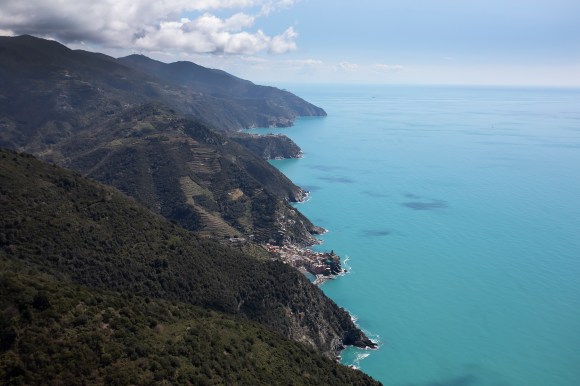
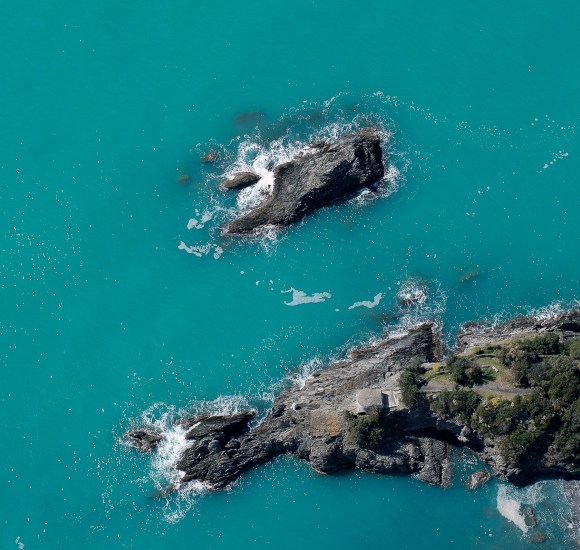
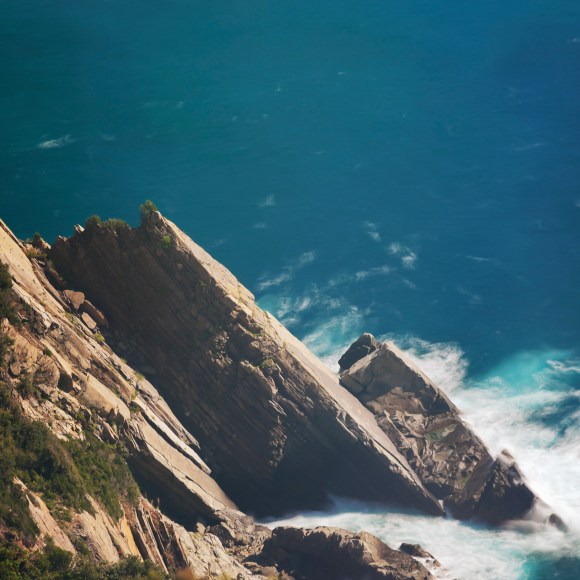
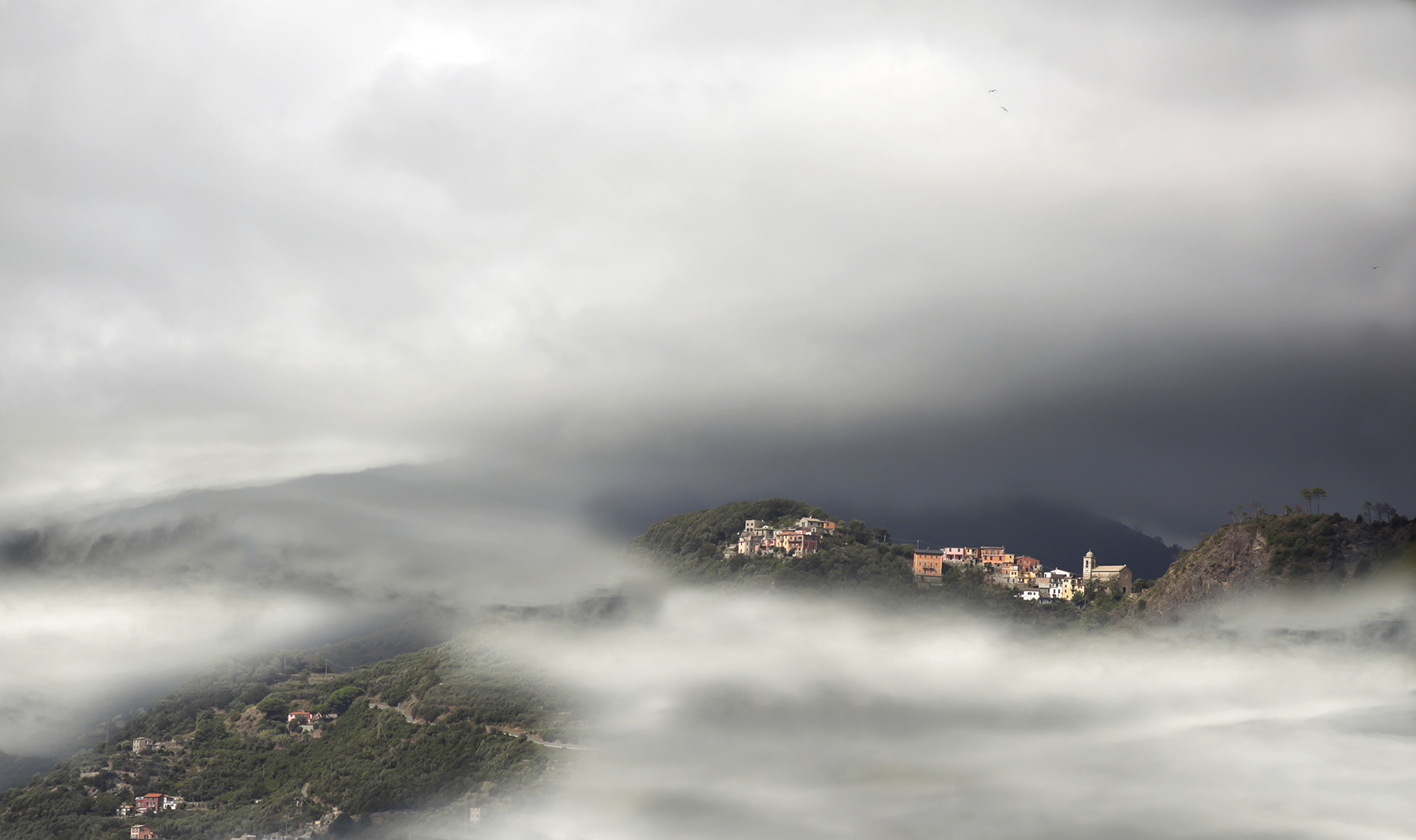
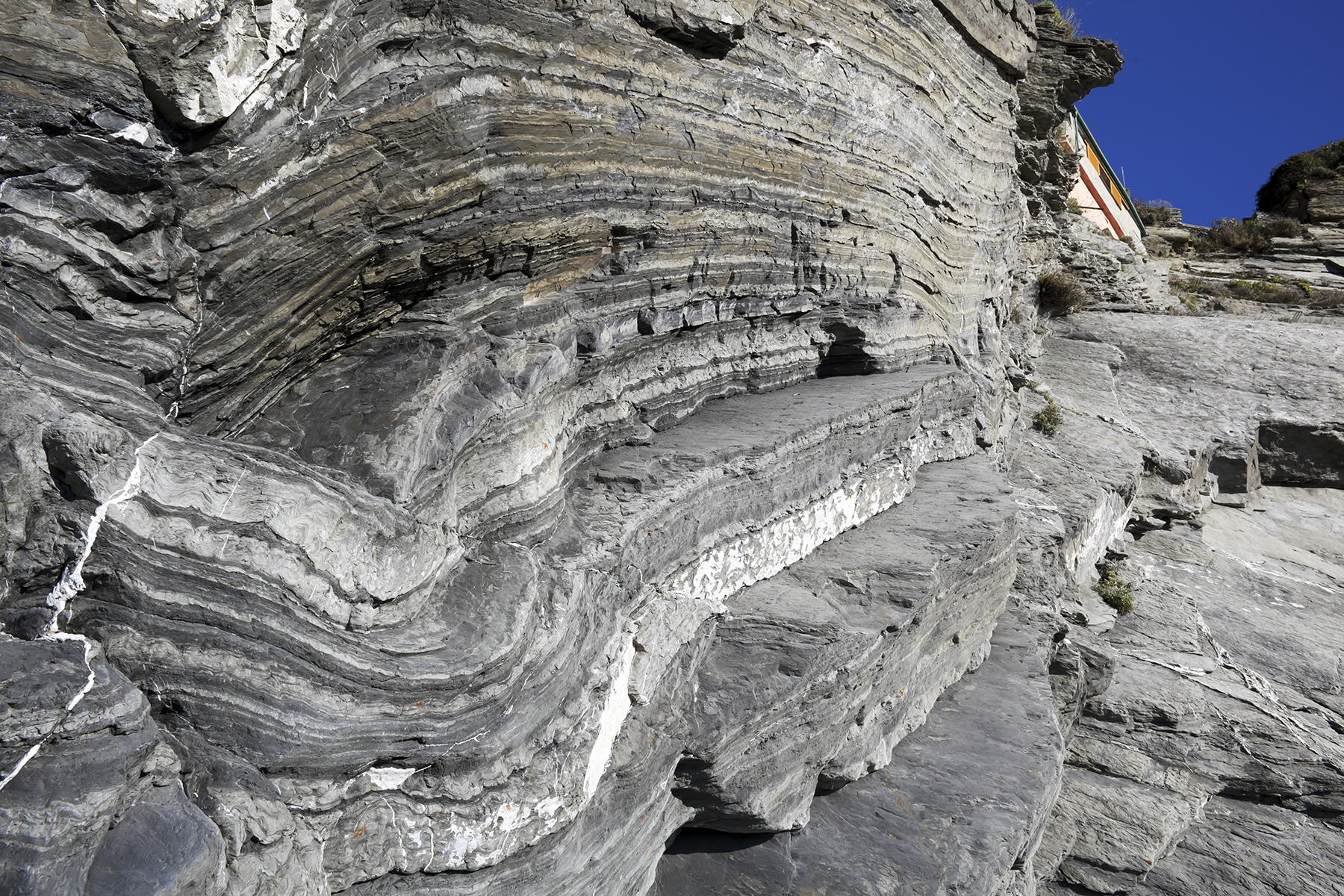
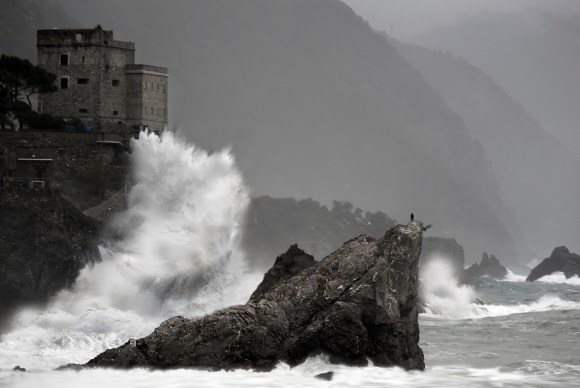
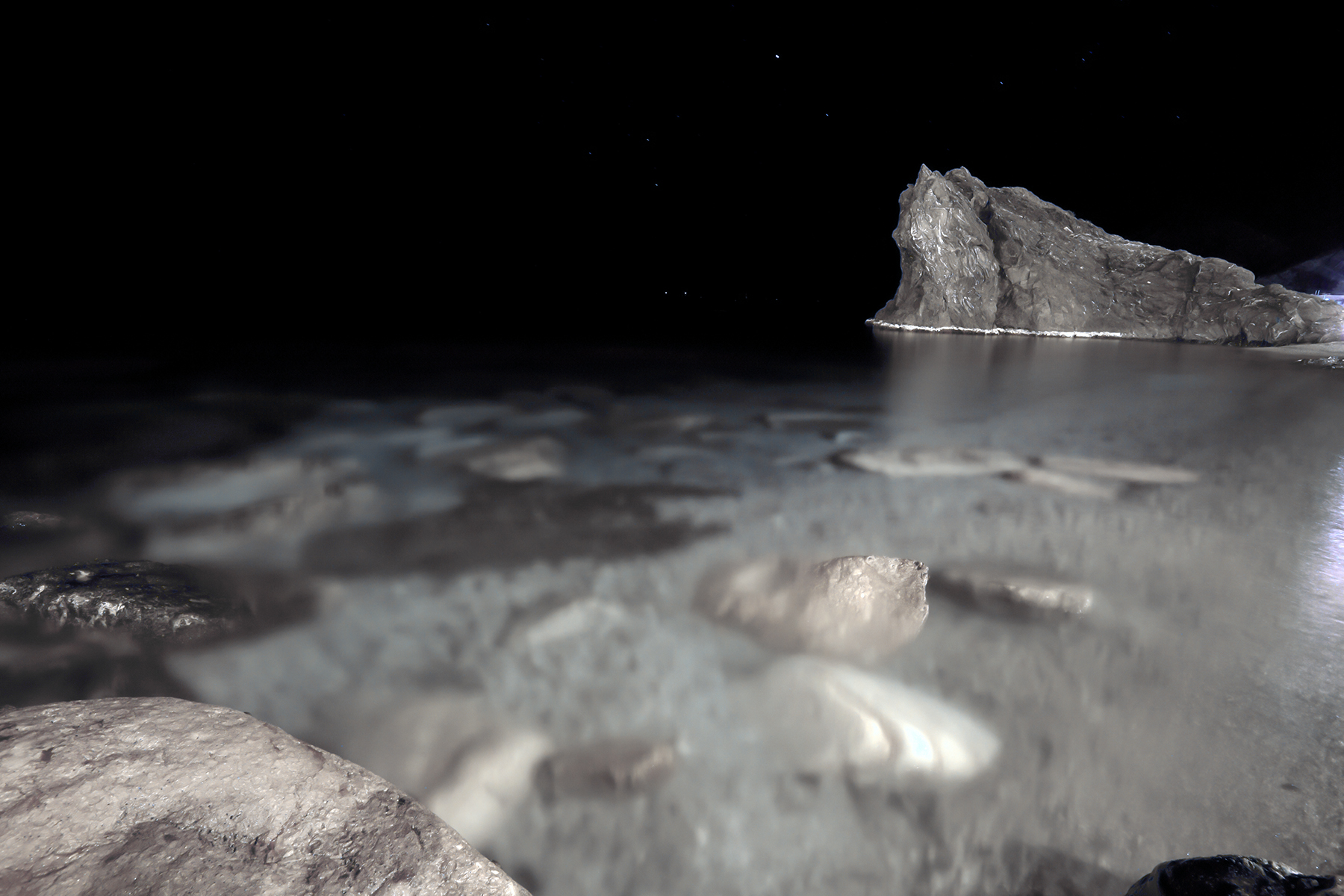
His latest photographic book, Cinque Terre, takes us to one of Italy’s most celebrated coastal landscapes, a place whose beauty has been photographed countless times. But Massimo’s intention invites us to look beyond the familiar postcard imagery and discover a landscape shaped by centuries of human perseverance, where nature and civilisation have developed an extraordinary relationship.
Situated along the eastern Ligurian coast, not far from La Spezia, the five villages of Monterosso al Mare, Vernazza, Corniglia, Manarola and Riomaggiore cling to steep hillsides descending towards the Mediterranean. Today, their colourful houses and dramatic coastal scenery attract visitors from around the world. Historically these settlements were relatively isolated communities, separated by difficult terrain and connected as much by the sea as by the narrow paths crossing the surrounding hills.
Massimo is particularly interested in this history of isolation. He describes the villages as almost like islands, each shaped by the necessity of surviving within a demanding geographical environment. The sea provided sustenance, while generations of inhabitants painstakingly transformed the steep slopes into terraces for vineyards, olive groves and vegetable gardens. Behind the spectacular scenery lies a long history of labour, adaptation and an intimate knowledge of the land.
To understand this landscape, Massimo explores it both on foot and from the air. Walking along the paths towards Punta Mesco, he encounters the scents of Mediterranean vegetation, citrus fruits, broom, rockrose, heather and maritime pines. These sensory impressions become part of his photographic experience, connecting the physical presence of the landscape with the images he creates.
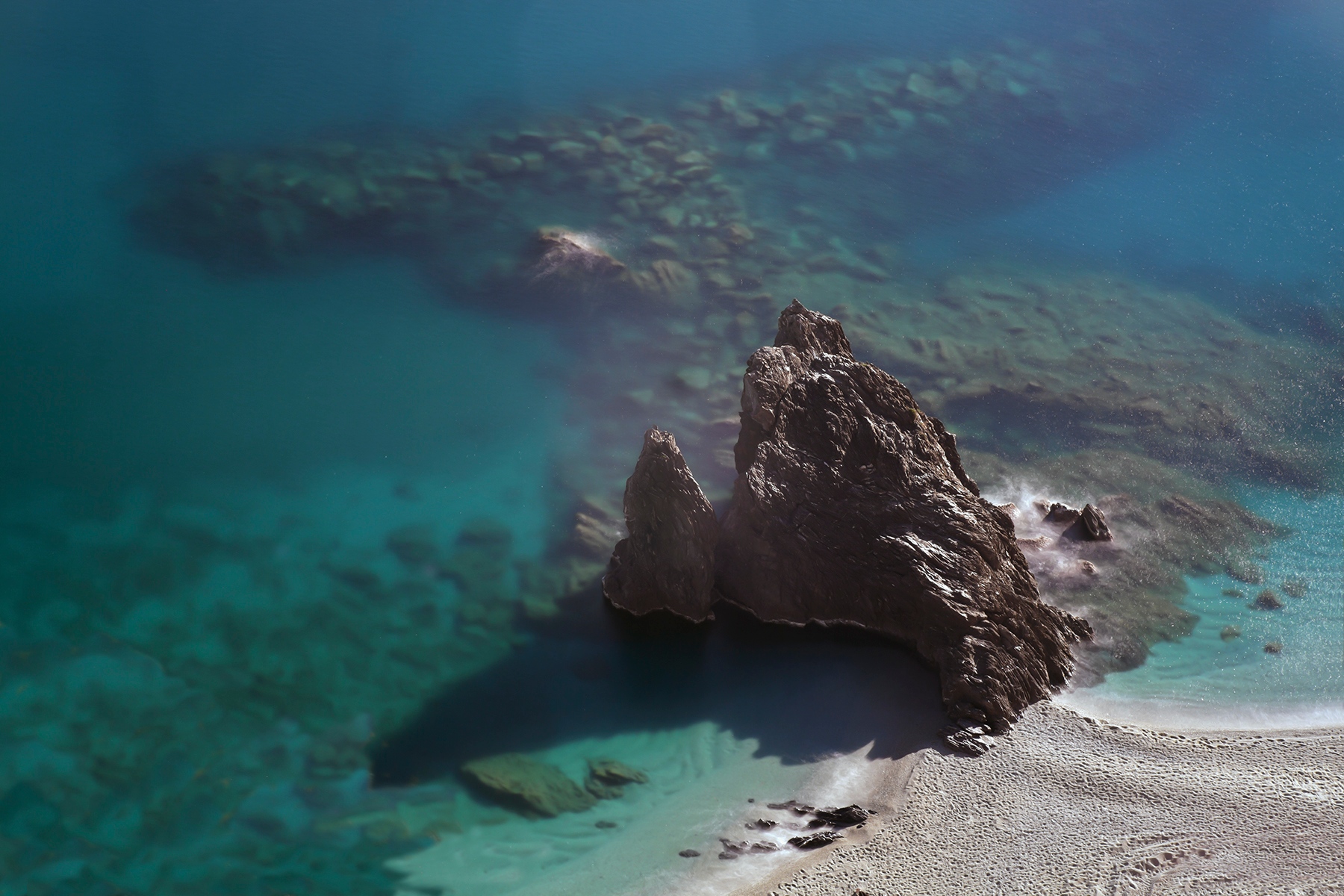
When he takes to the sky with his paraglider, however, the perspective changes dramatically. From above, the coastline becomes an intricate composition of rock formations, water and traces of human intervention.
The aerial viewpoint reveals the underlying geometry of the landscape, but rather than creating a sense of distance, it draws attention to its fragility. The cultivated terraces, the narrow strips of land and the settlements perched between mountain and sea testify to the determination of generations who made their lives in this challenging environment.
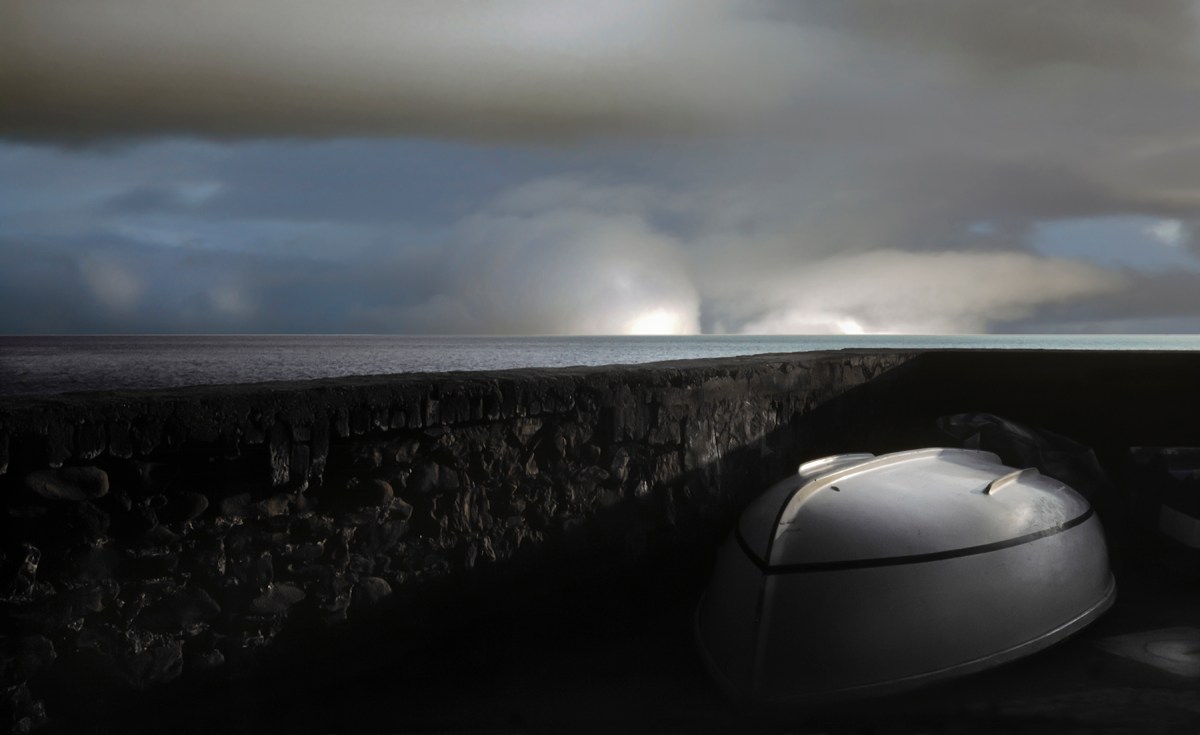
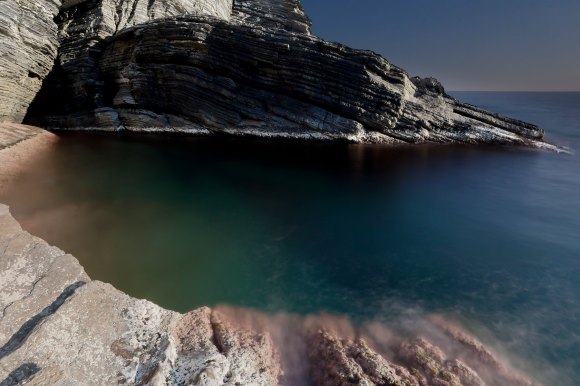
The photographs themselves demonstrate Massimo’s ability to move between different visual interpretations of the same landscape. Almost abstract arrangements of shapes and colours transform a section of coastline into a graphic composition, where the contrast between solid rock and moving water becomes the dominant visual element. Other images take on a much darker, more contemplative atmosphere. At times they evoke the expressive qualities of painting, using shadow, texture and carefully controlled light to create a particular mood. This connection to painting is fundamental to Massimo’s work.
The book also draws inspiration from literature, particularly the poetry of Eugenio Montale, whose work is deeply associated with the Ligurian landscape. Montale’s Ossi di seppia (Cuttlefish Bones) evokes the harsh beauty of the Mediterranean coast, its dry vegetation, rocky terrain and intense light. The physical character of this environment becomes inseparable from the poet’s reflections on existence, memory and the human condition.
For Massimo, this literary connection offers another way of understanding the Cinque Terre. The relationship between nature and human experience can be explored through different forms of expression. His photographs seek to establish a dialogue between the visible world and the emotions it inspires.
In an age when the Cinque Terre are among Italy’s most photographed destinations, Massimo Lupidi offers a more reflective encounter with this familiar landscape. By moving between the intimacy of walking its paths and the expansive freedom of flight, he reveals a place that is both monumental and vulnerable, where natural forces and human history remain inseparably intertwined.
Click on the photos to see the original larger version.

