EMMA VARGA
// Hungarian artist Emma Varga, currently based in London, works at the intersection of photography, science, and conceptual image-making. Her images move between attraction and repulsion, beauty and violence, vulnerability and control. Rather than offering clarity or resolution, her practice confronts viewers with systems of power that are often normalized to the point of invisibility.
Educated in Fine Art Photography in Budapest and currently pursuing an MA in Art and Science at Central Saint Martins, Emma creates staged and manipulated works that deliberately resist comfort.
She works primarily with photography, not as a documentary tool, but as a conceptual and performative medium through which to provoke, construct, and question. Her practice focuses on staged image-making that unsettles and reframes perceptions of the body, identity, victimhood, and systems of power. Rather than offering answers, her work uses photography as a space for ambiguity and confrontation.
Science has also played a significant role in shaping her artistic approach. Growing up in an environment strongly influenced by scientific thinking, Emma initially distanced herself from it before later recognizing that art and science do not have to exist in opposition.
Her recent work increasingly incorporates scientific tools, particularly microscopes, combining scientific and artistic methodologies to question anthropocentrism, posthumanism, and the unstable boundary between humans and animals.
Central to her practice is also a rejection of photographic perfection. Varga deliberately distances herself from polished surfaces, retouching, and conventional beauty ideals. Instead, she embraces destruction, decay, disturbance, and material intervention, often physically altering or damaging her own images.
Her works resist comfort and easy consumption, creating visual spaces that feel fragile, unsettling, and unresolved.
“The grotesque, […], is nothing other than man’s assertion of some absurdity about the world, in order to better approximate the reality of the world.”
István Örkény
What draws you to the arts?
Art pulls me in because it breaks rules, spits in the face of the ordinary, and gives me a raw, electric space to question everything.
What do you like best about this project?
I wanted to provoke, raise awarness to the central theme, did not want to give answers/relief, I wanted to raise more questions. Also I want to explore the intersections of art and science, many people think there is a dichotomy between the two fields, I want to show that they can support eachother.
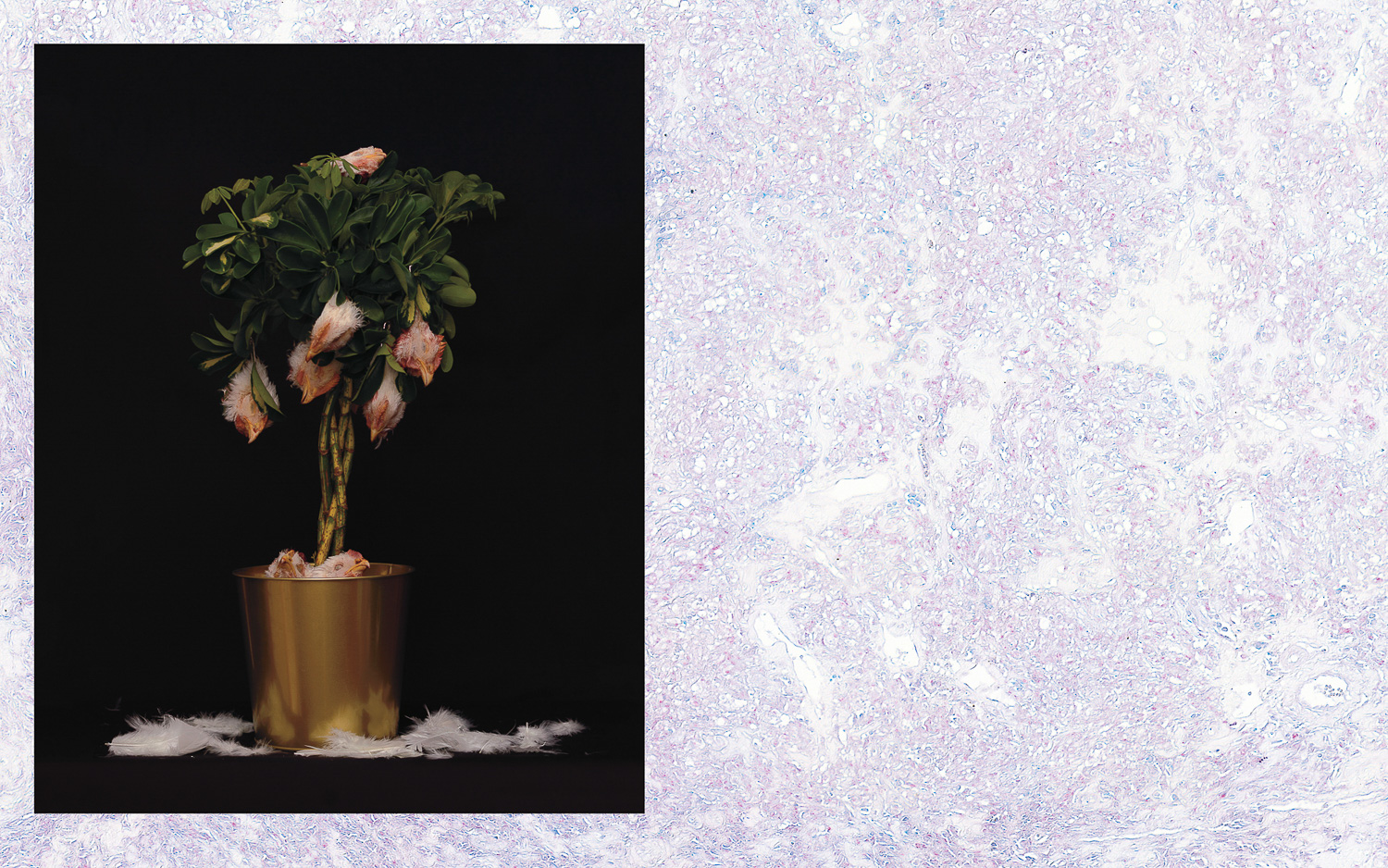
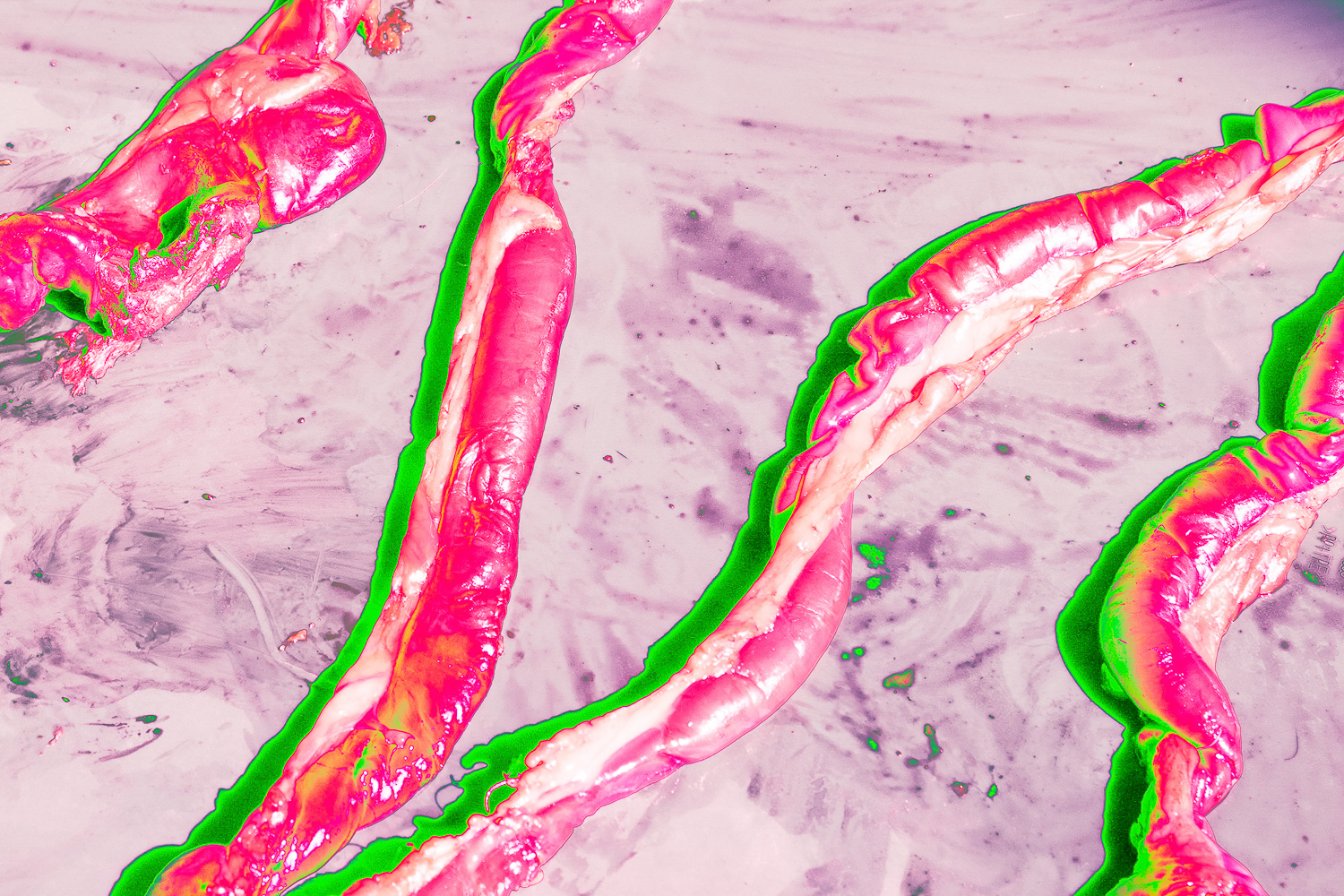
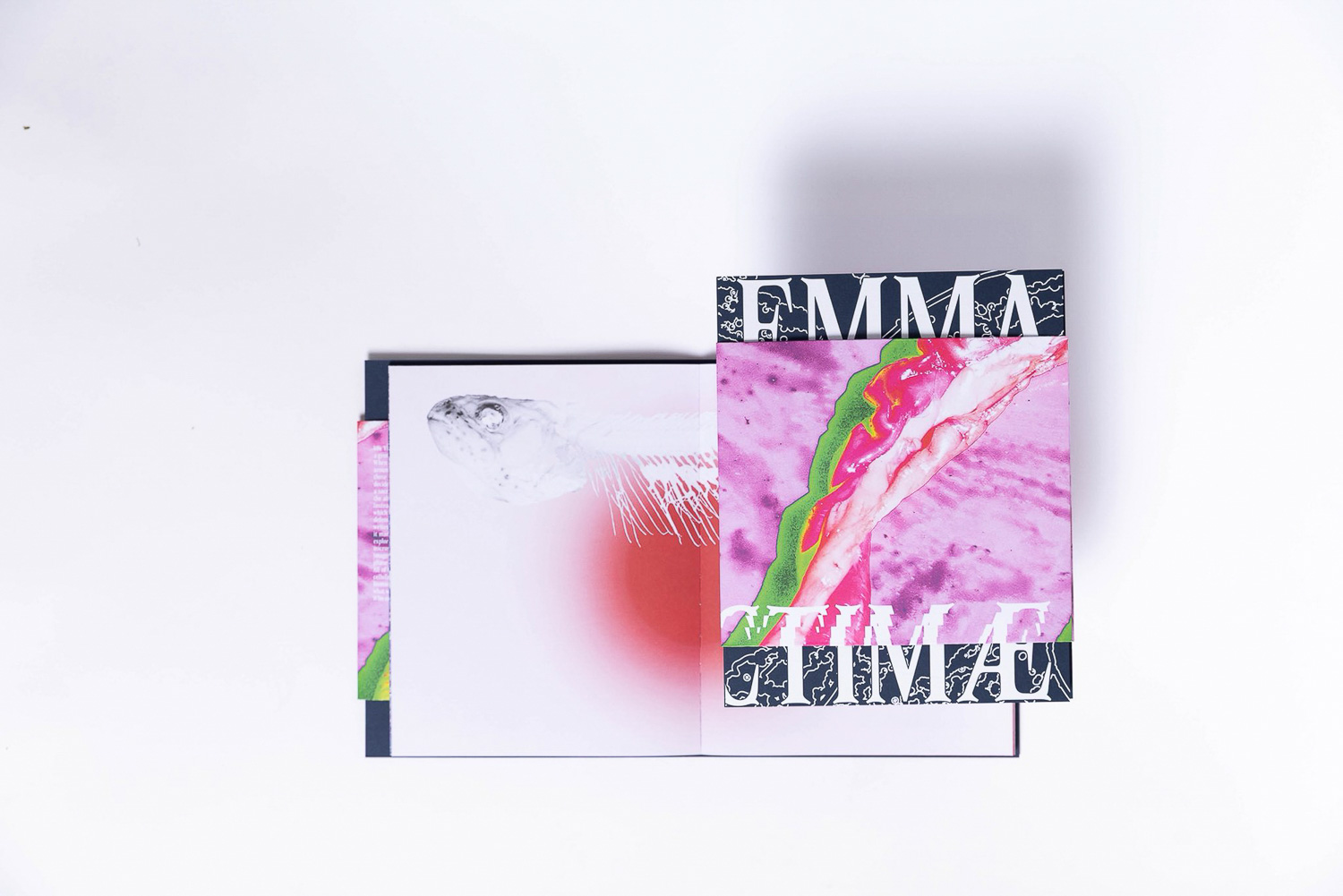
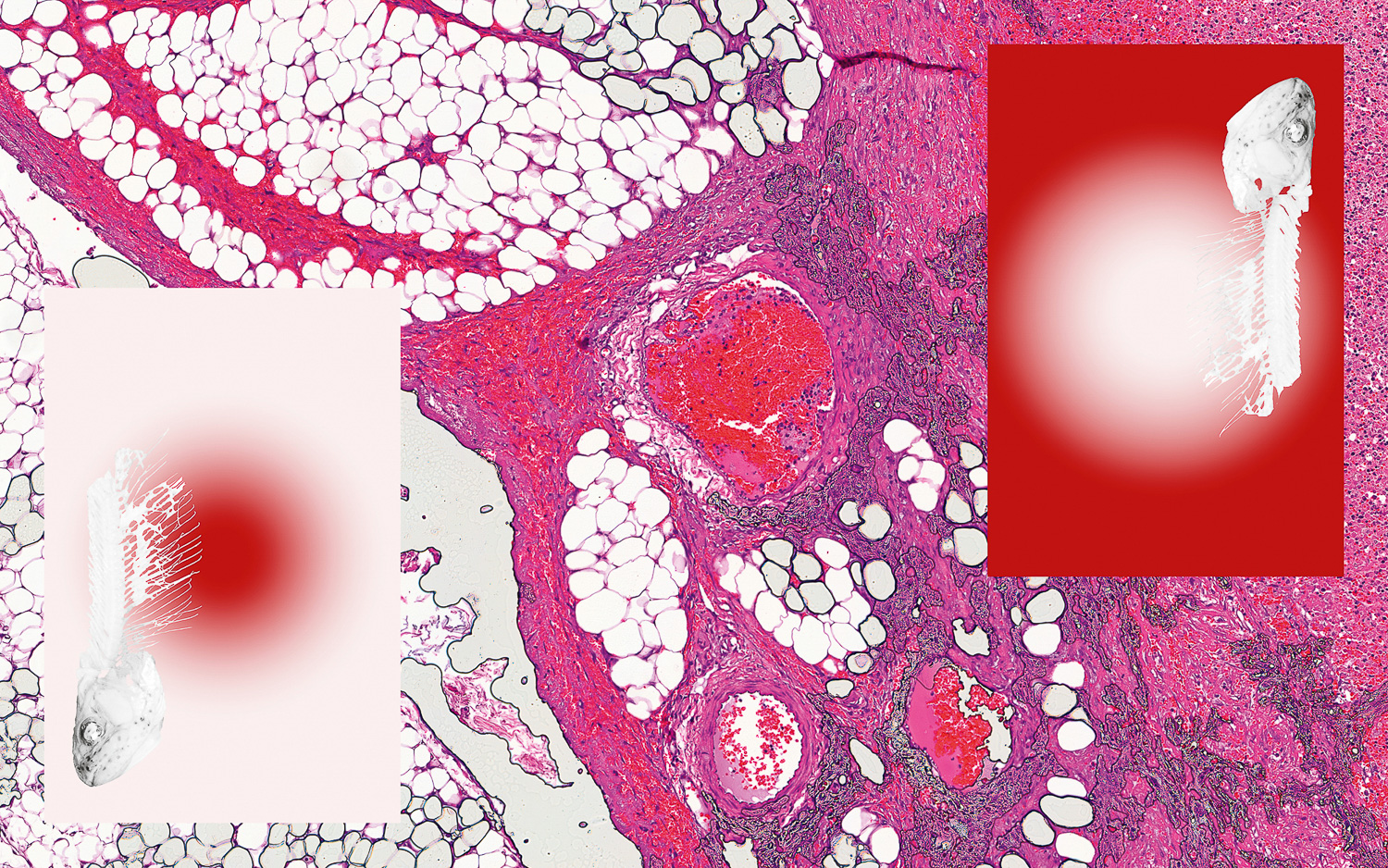
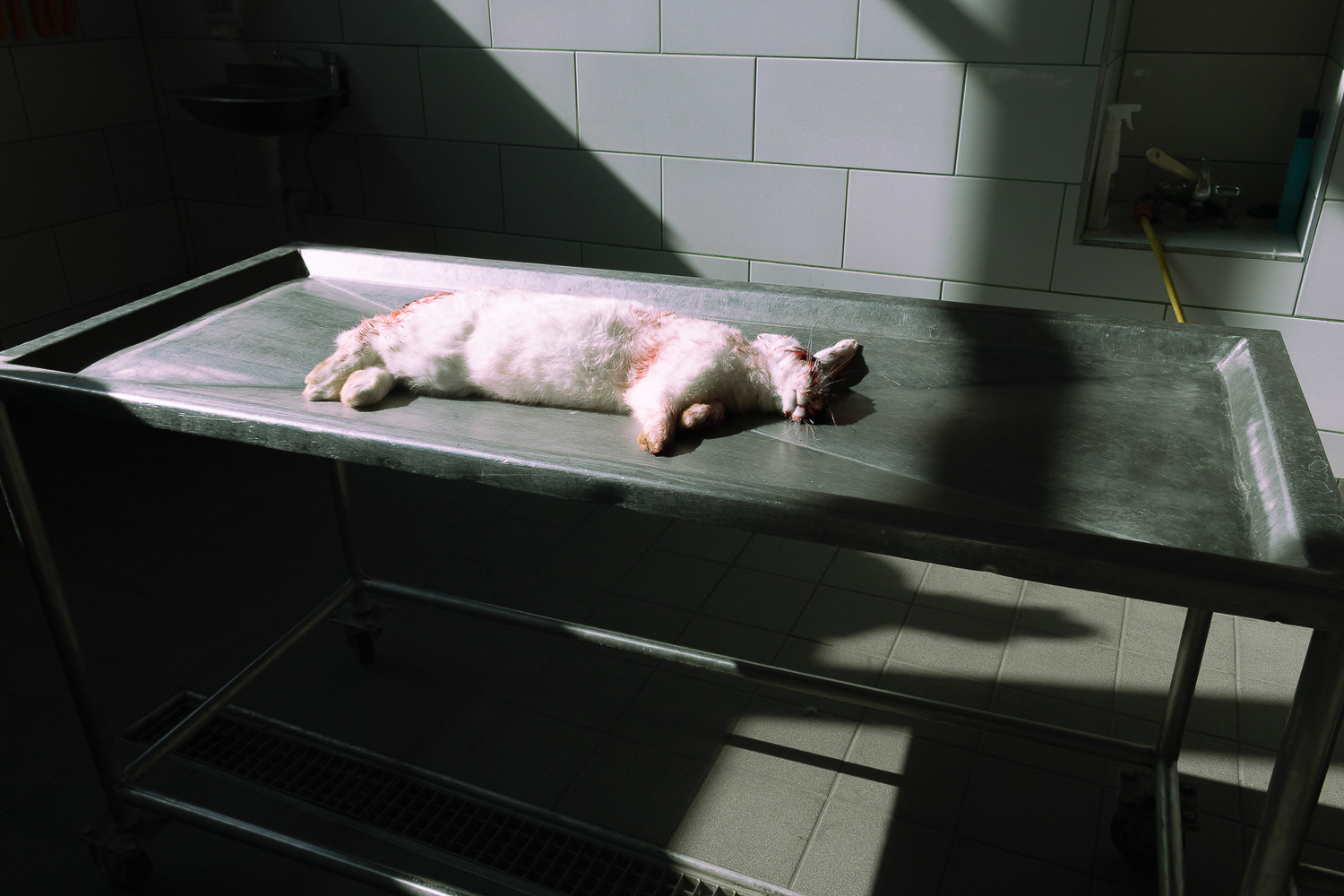
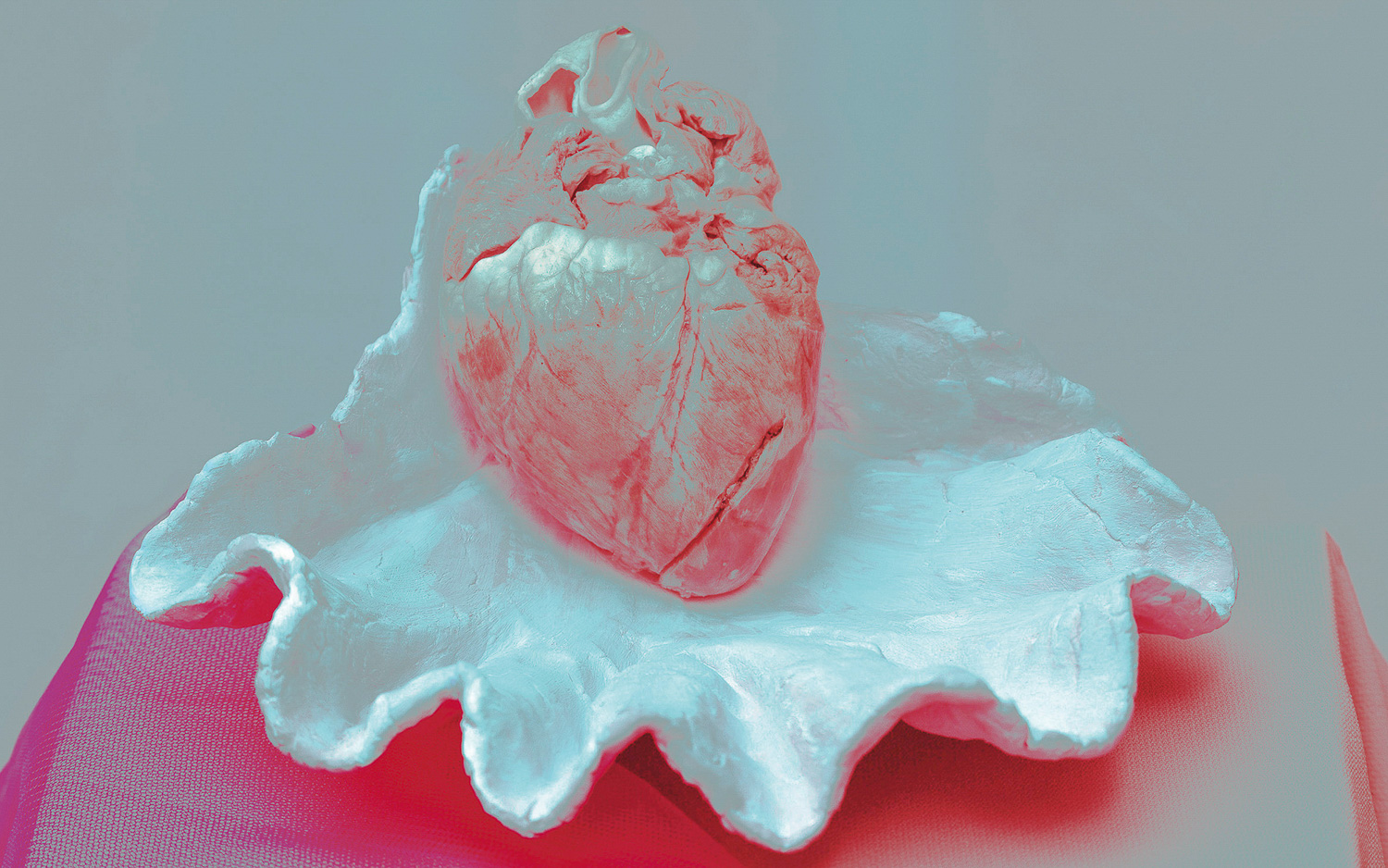
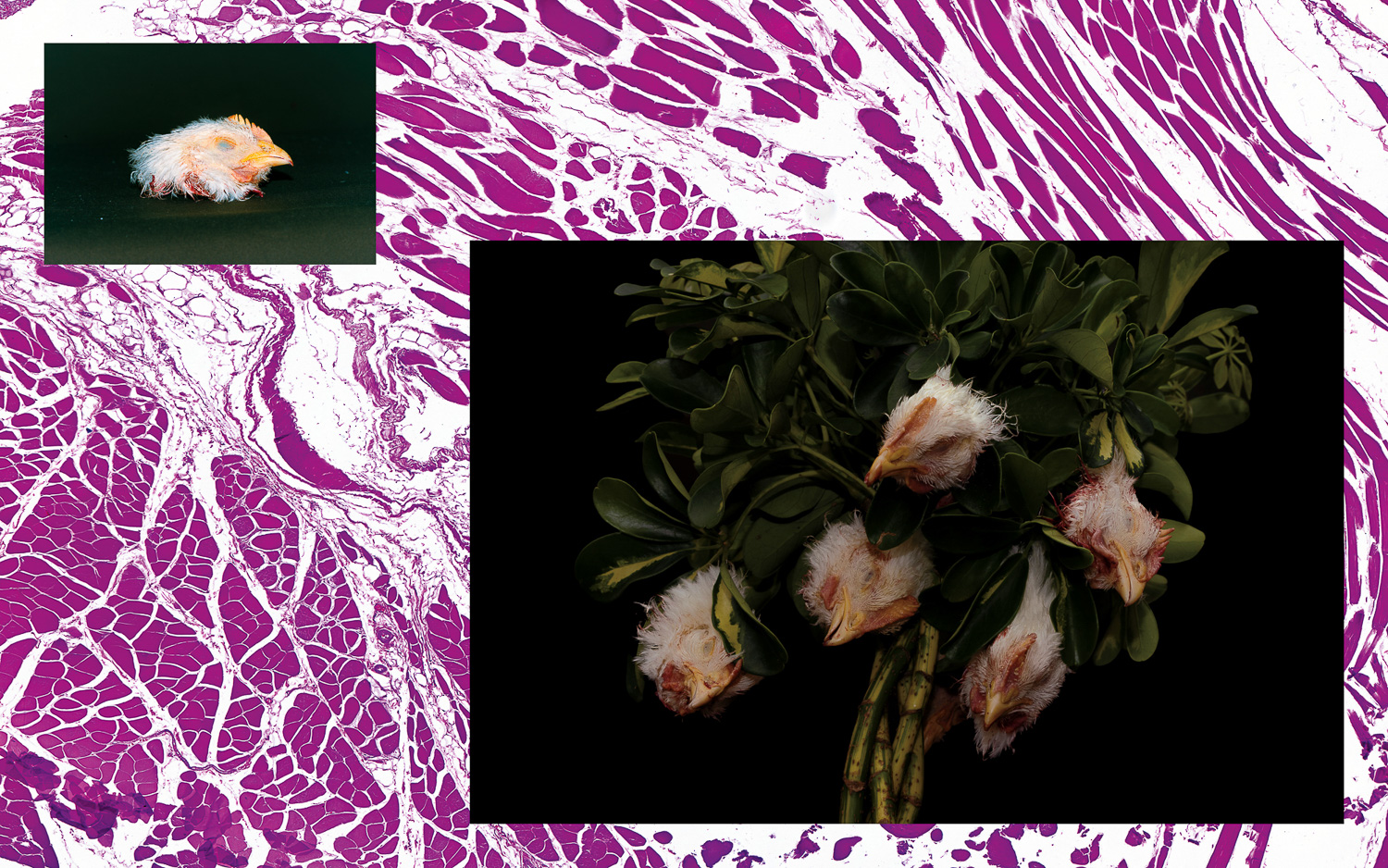
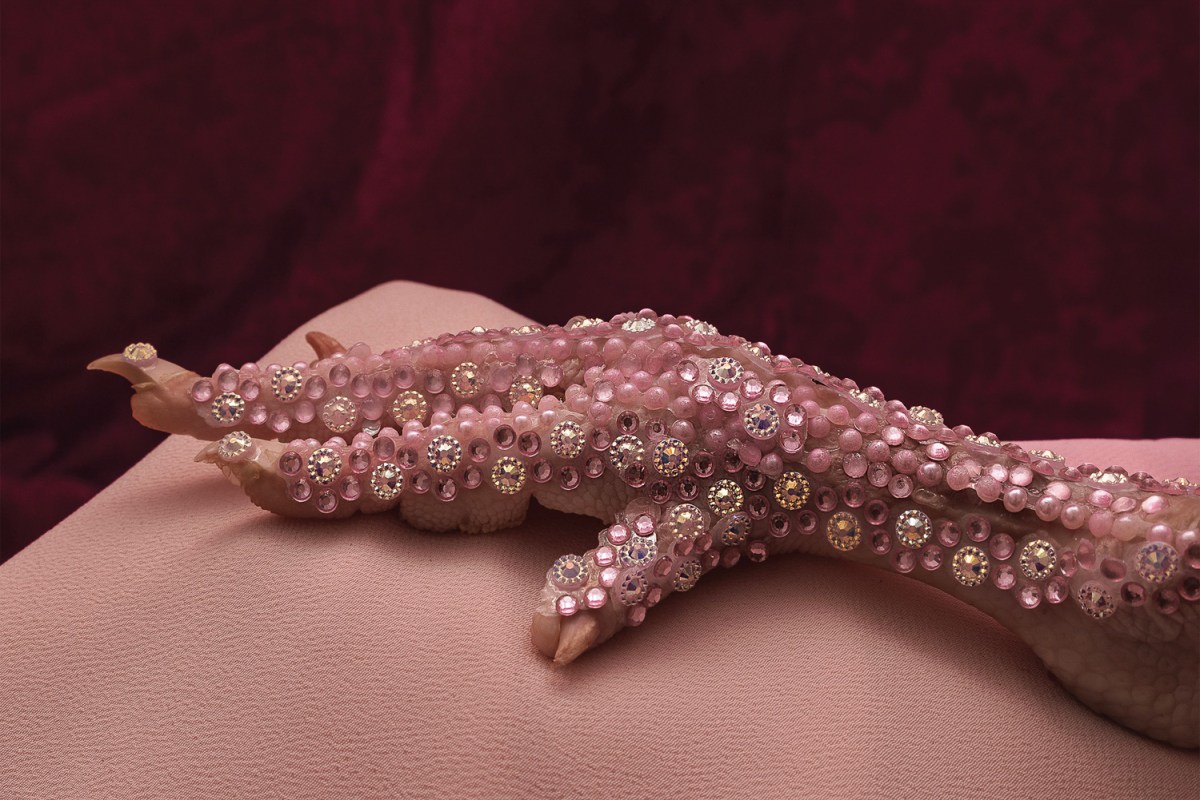
Her latest project, Vox Victimae, recently published as a photobook by Symposion Publishing, examines victimhood, sacrifice, and the structures through which living beings are categorized, controlled, and rendered expendable. The title itself, translating roughly to “the voice of the victim,” already suggests a tension between visibility and silencing. Throughout the work, bodies appear fragmented, exposed, suspended somewhere between scientific observation and symbolic ritual.
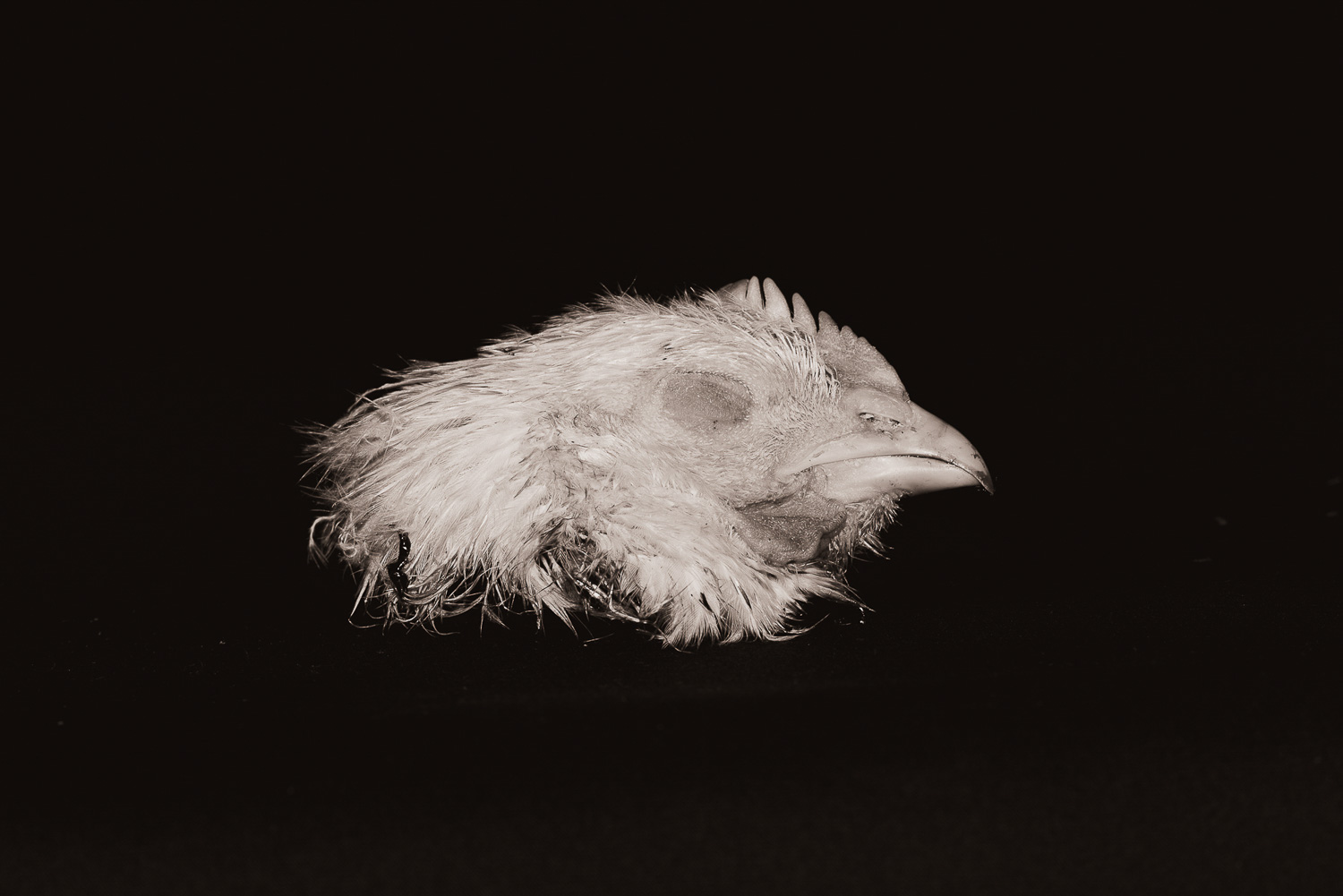
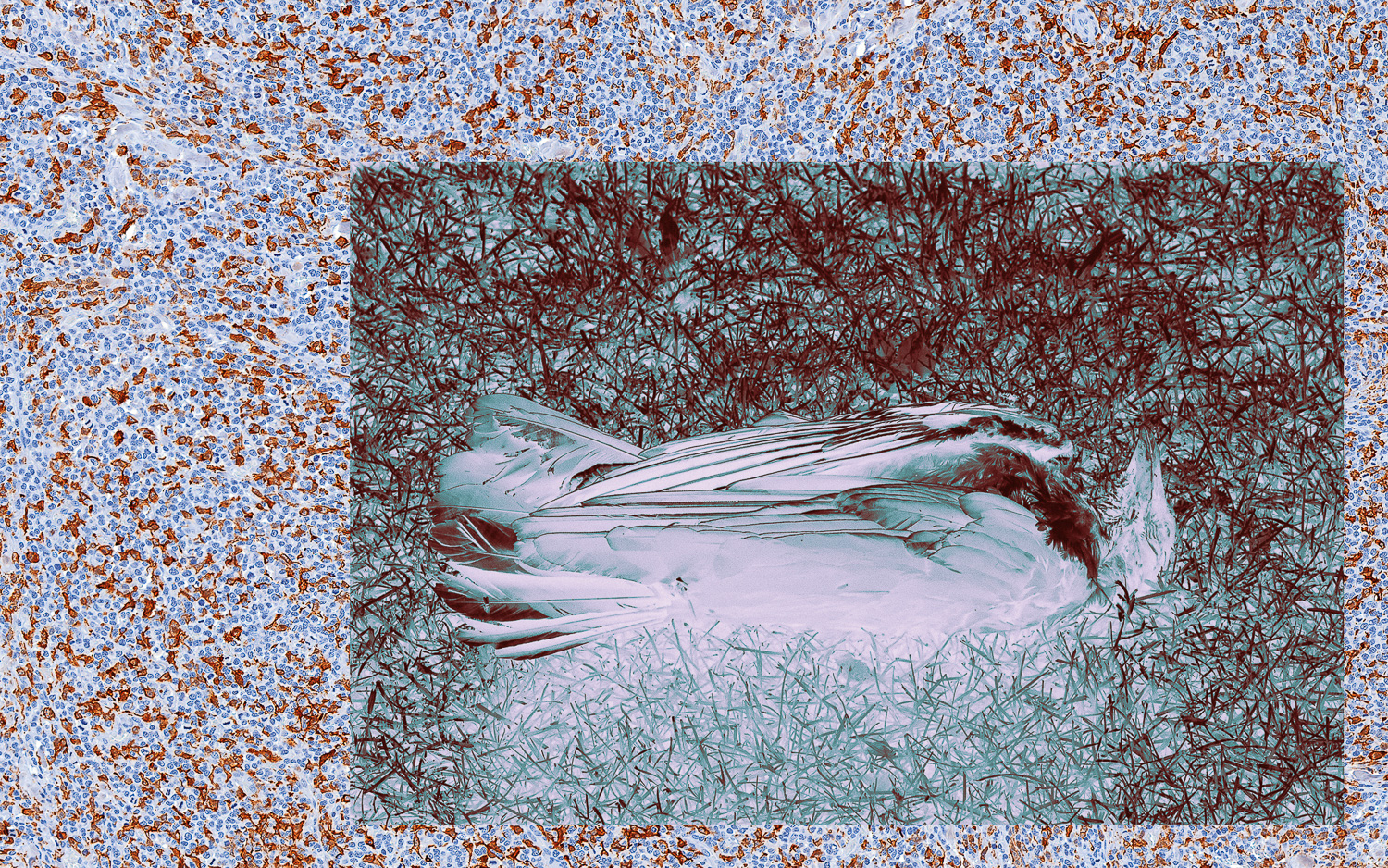
What makes the series especially unsettling is the way it merges scientific aesthetics with photographic staging. Microscopic imagery, anatomical references, tissue structures, and abstract biological surfaces are combined with carefully composed still-life arrangements and animal remains. The result feels clinical and visceral at the same time. Some images resemble forensic evidence, others almost devotional objects. A severed fish skeleton floats against glowing red forms, a bird head lies isolated in darkness, a heart-like organ is elevated out of a kind of shell almost like a pearl.
Varga’s interest lies not only in physical fragility, but in the systems that define which lives are protected and which become disposable. The work repeatedly raises uncomfortable questions: who decides what constitutes value, sacrifice, or usefulness? At what point does violence become institutionalized to such a degree that it no longer appears violent at all?
Vox Victimae does not position itself as moral instruction. Varga avoids offering reassurance or simple answers. Instead, the project operates through tension and ambiguity. The grotesque becomes central here, not as shock for its own sake, but as a strategy to destabilize familiar ways of seeing. Her images provoke precisely because they resist easy categorization. Human beings prefer clean separations between beauty and horror, science and emotion, human and animal. Emma´s work quietly dismantles those boundaries.
At the same time, the project reflects Varga’s broader interest in the relationship between art and science. Rather than treating them as opposites, she approaches both as systems for investigating reality, perception, and power. Scientific imaging technologies become tools not only for analysis, but for questioning the ethics behind observation itself. Who observes whom? Who becomes object, specimen, sacrifice?
The visual language constantly shifts between laboratory, altar, archive, and memorial. Clinical textures collide with soft color gradients, fragile organic matter appears against highly controlled compositions, and moments of near-minimal stillness are interrupted by microscopic chaos. The images feel suspended between decay and preservation, intimacy and distance.
Underlying the entire project is a deep discomfort with systems that normalize cruelty through abstraction and procedure. Nietzsche’s statement that “man is the cruellest animal” echoes throughout the work, though Varga seems less interested in individual cruelty than in humanity’s ability to construct entire structures around it.
Vox Victimae leaves the viewer with questions rather than conclusions. The project refuses to soften itself into something easily consumable. Instead, it insists on uncertainty, discomfort, and reflection. In an image culture obsessed with clarity, perfection, and immediate readability, there is something uncompromising about work that asks us to remain unsettled.
Click on the photos to see the original larger version.
All photos © EMMA VARGA
See more of Emma´s work on her website or on Instagram.
 SPECTACULUM MAGAZINE