DAISY PELUSO
// Born and based in Italy, Daisy Peluso works at the intersection of folklore, anthropology, and visual experimentation. A graduate with honours from the Academy of Fine Arts in Lecce, her practice is rooted in a deep fascination with the past and in the cultural memory of her homeland. Through photography and material intervention, she explores the dialogue between ancient traditions and contemporary experience, allowing forgotten narratives to resurface in new visual forms.s.
Daisy comes from a small community she describes as culturally rich yet undervalued. That sense of belonging to a place layered with meaning — but often overlooked — runs through her work. She is drawn to what survives quietly: oral traditions, domestic rituals, inherited symbols. Rather than treating the past as nostalgia, she treats it as active material.
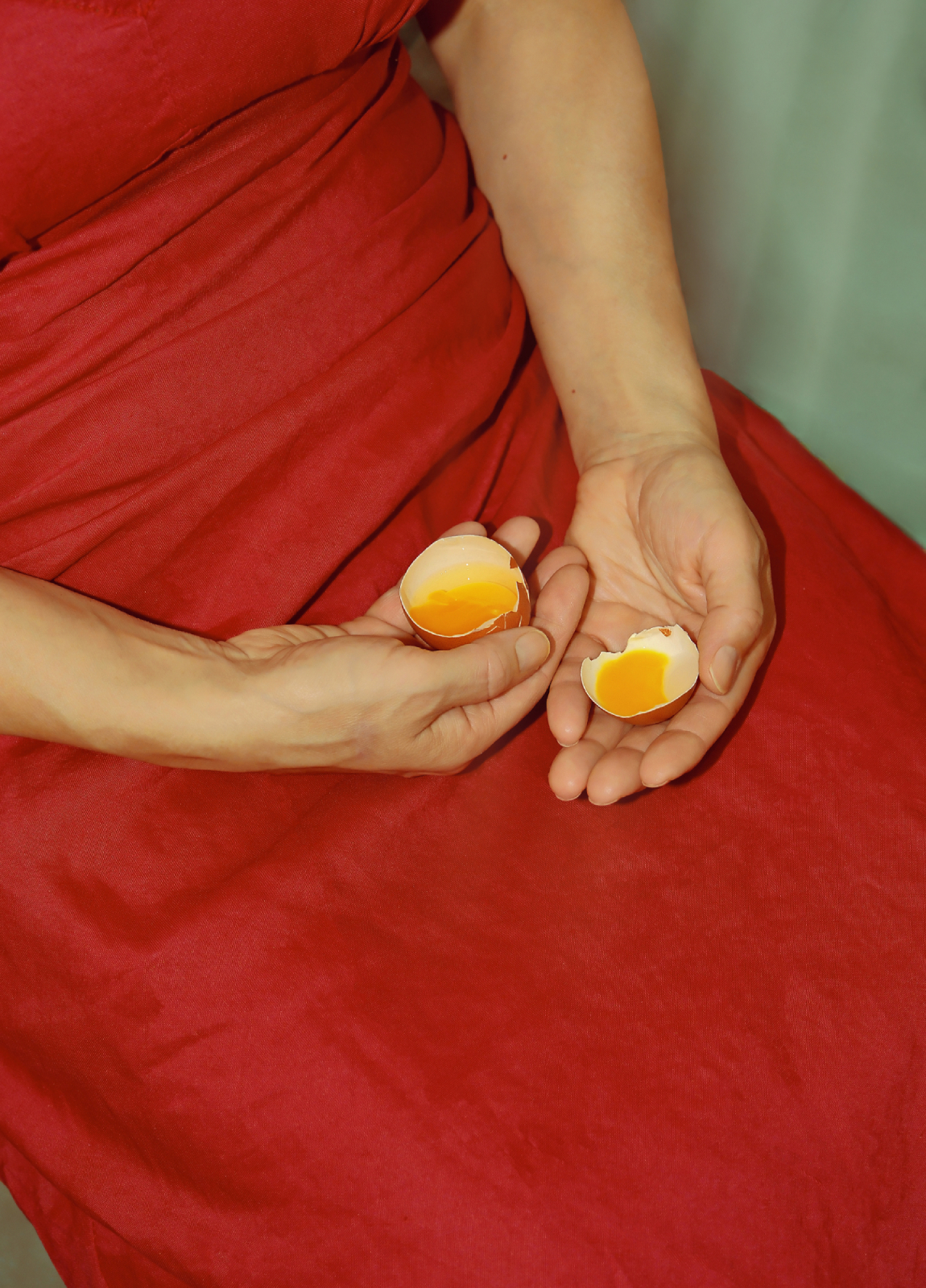
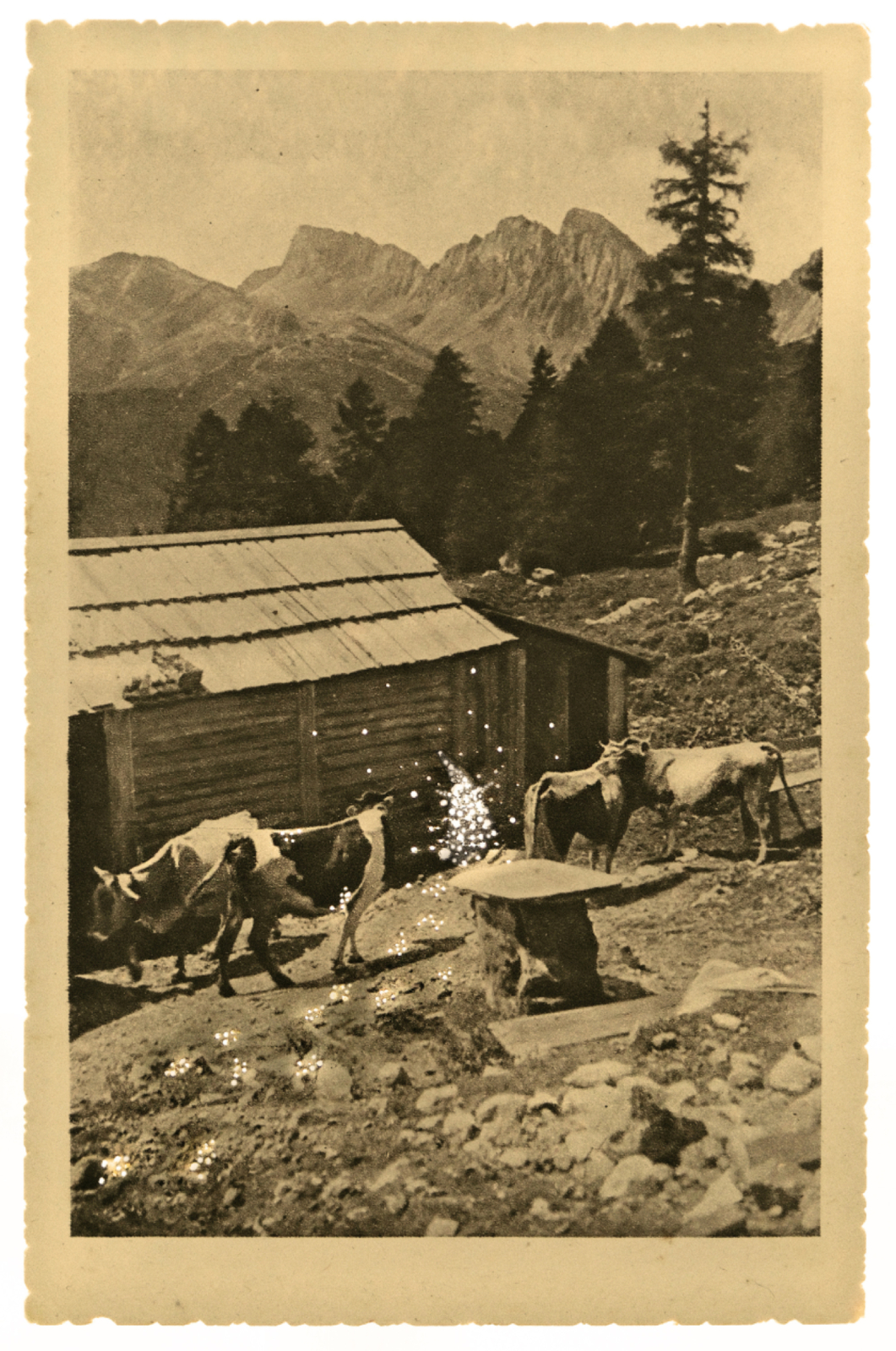
Her artistic research is built around a clear contrast: the meeting — and sometimes the collision — between past and present. She also always experiments with technique. Daisy manipulates photographic prints by hand, aging them manually with oil paints and natural pigment dyes made from coffee, tobacco, fruit infusions, tea leaves, turmeric. She sews, embroiders, drills, stains.
Family and regional craft traditions influence these interventions as much as formal academic study. The photograph is never just an image; it is an object that carries traces of time.
Many of her works also address social issues, often through a critical lens softened by a layer of elegant irony. Rather than direct accusation, she prefers suggestion. Rather than spectacle, she aims for intimacy. The goal is not simply to show something, but to create an empathetic and emotional connection — to make viewers recognize something of themselves within the image.
That approach finds a particularly concentrated form in her project Pavor Nocturnus.
“The purpose of art is to represent not the external appearance of things, but their internal meaning.”
Aristotle
What draws you to the arts?
I think art is a way to unite even when we’re far away, to speak without words and listen without a sound, but to observe with the eyes of the soul. Art is a powerful medium through which we can denounce, embrace, caress, scream, and love at any age. For me, it’s a powerful tool for reflection, and the fact that it can unite people and convey messages is one of its most beautiful roles.
What do you like best about this project?
Certainly the research that precedes and underpins all my work, because it’s part of my tradition and it’s wonderful that it’s shared and known by more people through my art. Then there’s the relationship between present and past, which is part of my artistic research, and the artistic process itself, starting with the camera, the recovery of vintage postcards, and the manipulation of paper.
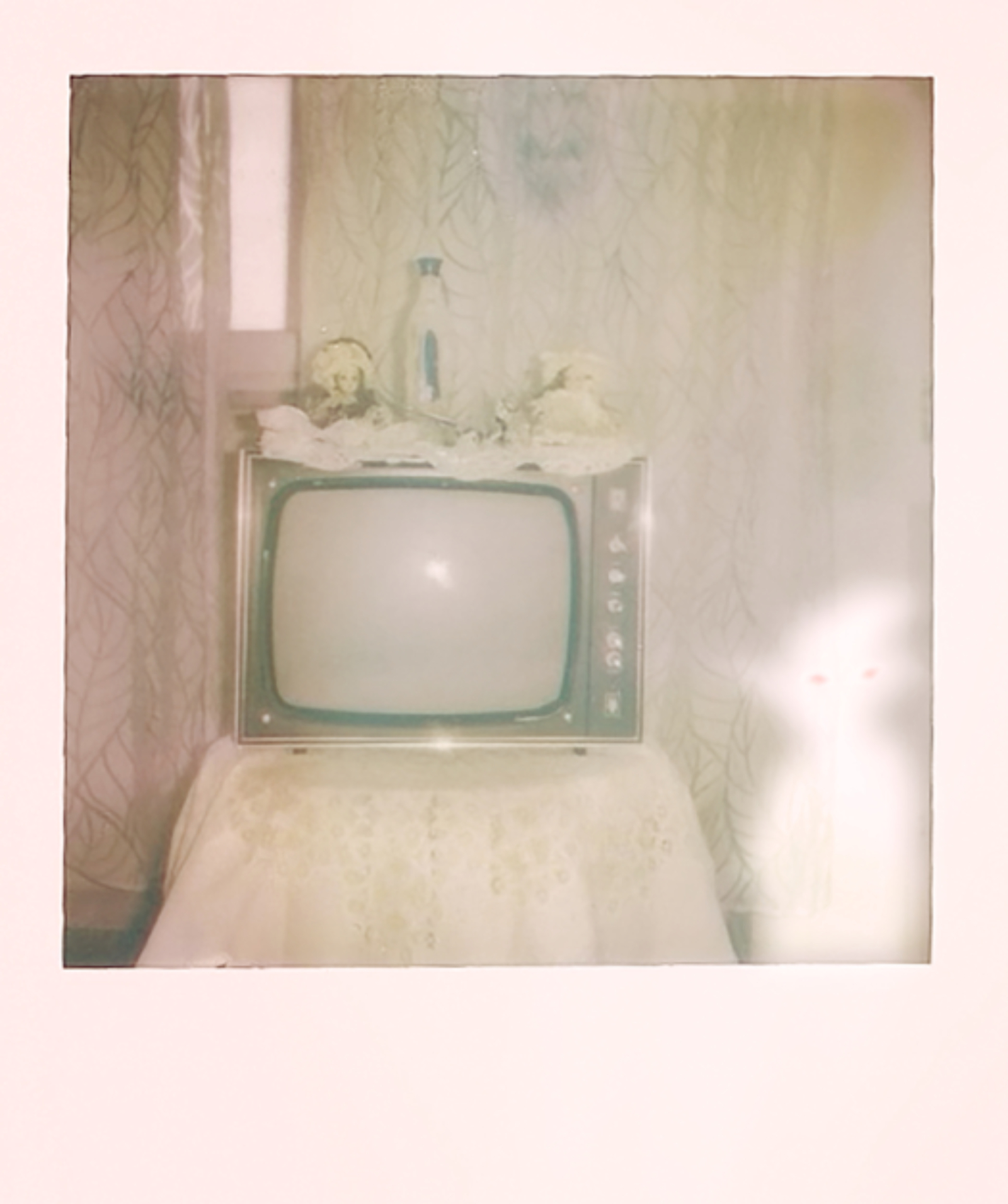
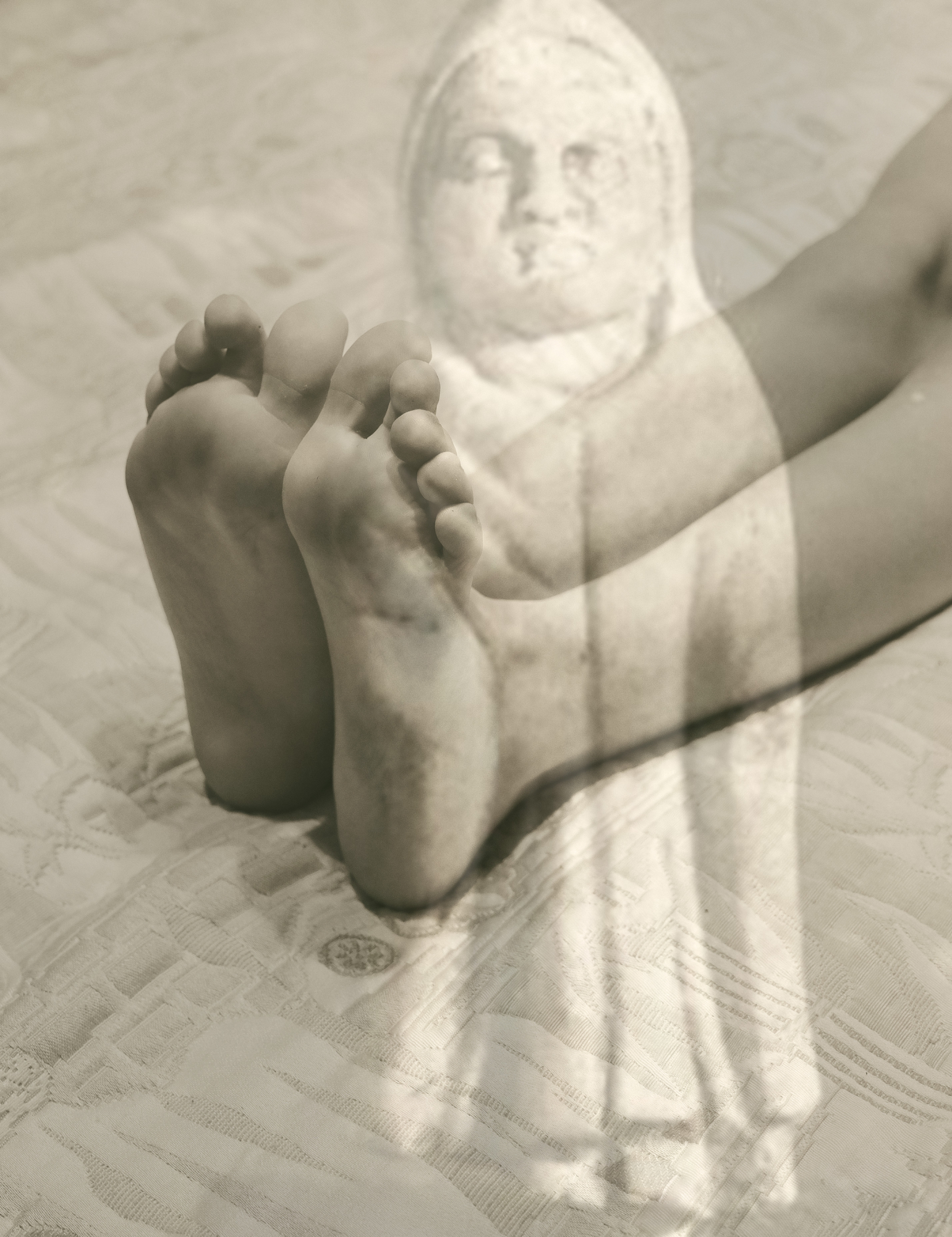
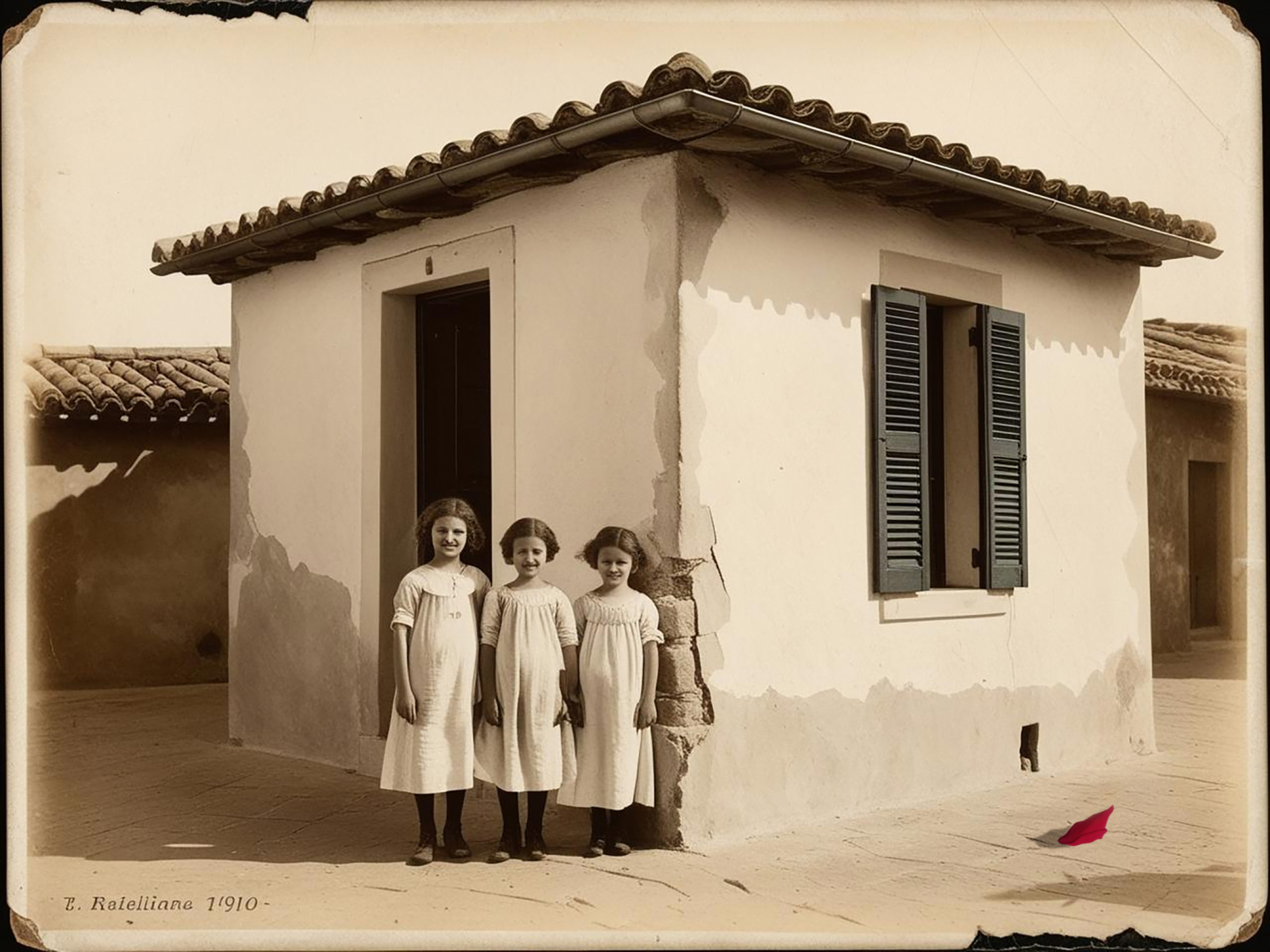
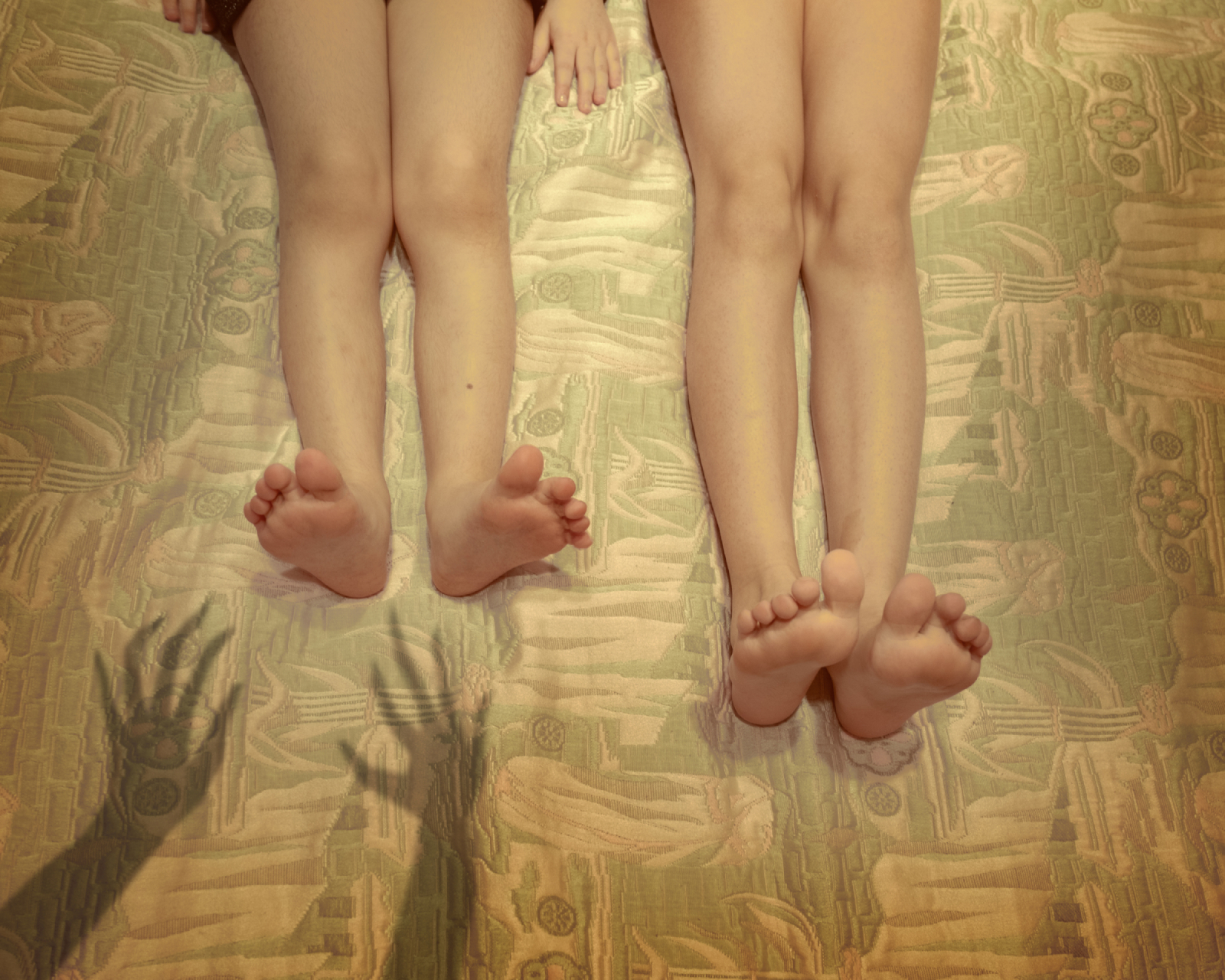
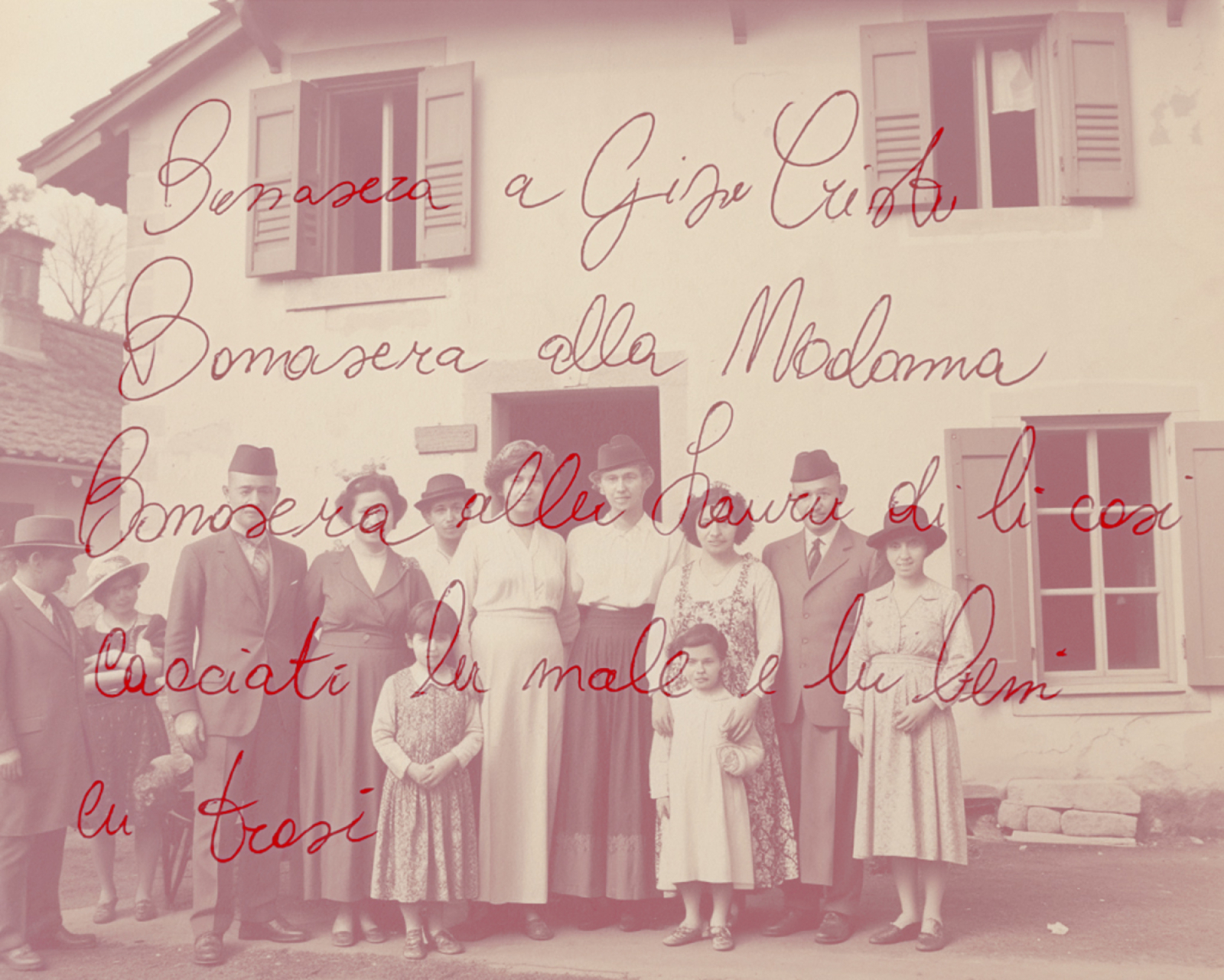
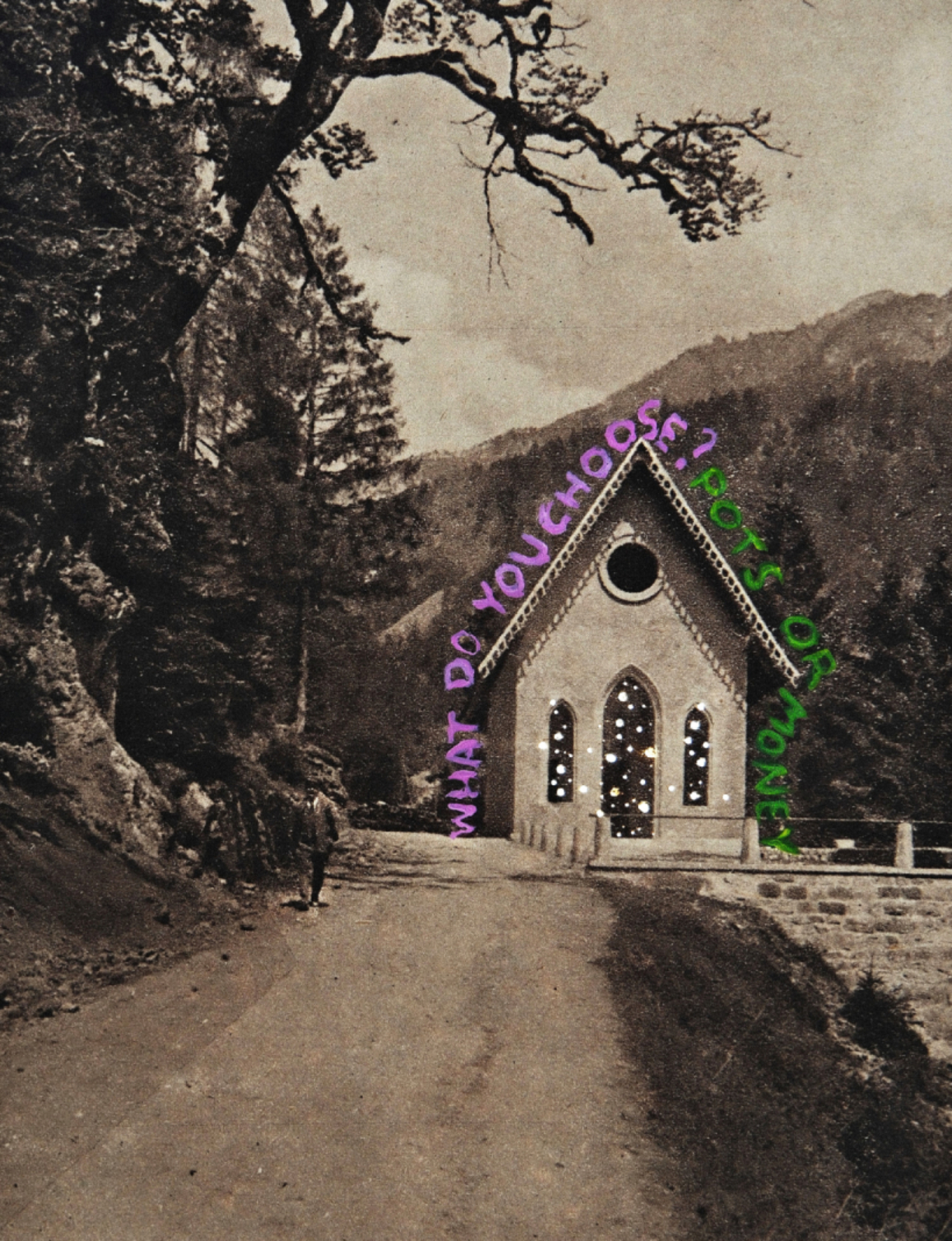
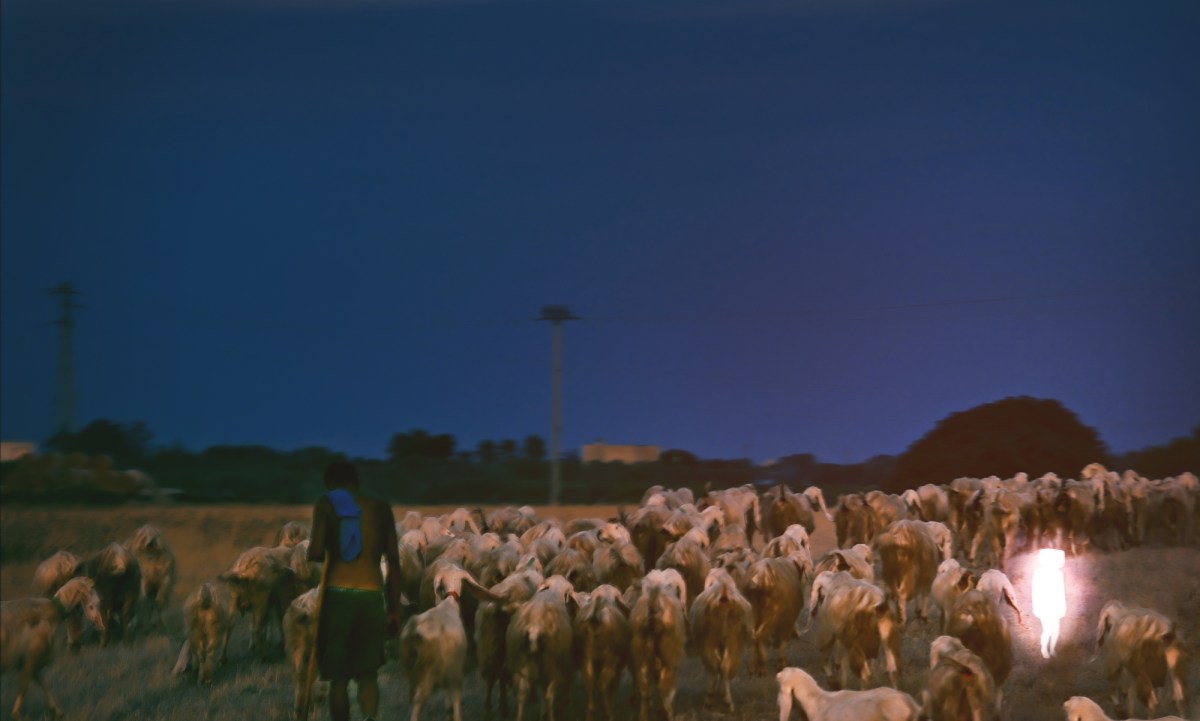
Some stories refuse to disappear. They survive in whispered warnings, in family rituals, in the uneasy silence of a bedroom after dark. This series draws from the oral folklore of southern Italy, where myth and daily life coexist.
At the center of the project is the Laurel, derived from the Roman Lares, household spirits mentioned by Petronius. In local tradition, however, the figure becomes ambiguous — playful and menacing at once. He braids horses’ tails, curdles milk, disrupts domestic order. In darker versions, he presses on the stomachs of sleepers, steals breath, tickles feet in the night. The image recalls the ancient Incubus — a cultural explanation for sleep paralysis and nocturnal fear.
Daisy translates this folklore into psychological imagery rather than literal illustration. In one photograph, we see feet lying on a bed while the shadow of a creature looms behind. The monster is not fully present — it exists as projection, as internalized fear. The scene echoes classical painting, nightmare, but remains grounded in local narrative.
In another image, two pairs of bare feet rest side by side while claw-like shadows creep toward them. The atmosphere is calm, almost tender. Fear is subtle, inherited, shared. It is not screaming; it is waiting.
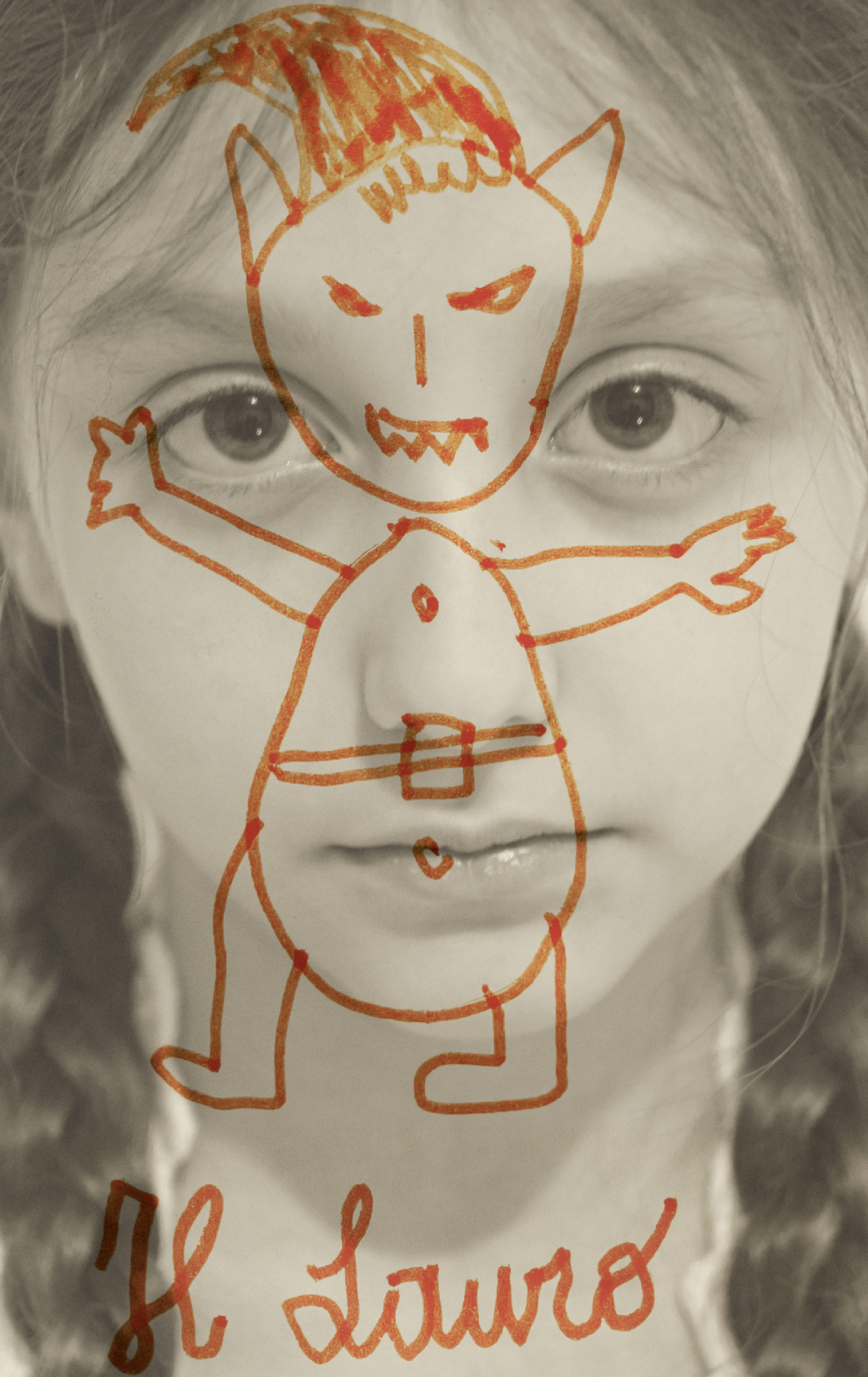
A third picture overlays a child’s face with a red, naive drawing of a devilish figure. Here the monster becomes authored. Fear shifts from passive experience to active creation. The child draws the demon — and in doing so, makes it harmless.
Technically, the series combines digital photography with manual interventions that physically alter the prints. Surfaces are aged, stained, layered. Time is embedded into the material itself, reinforcing the idea that folklore is something carried forward, altered with each generation.
What makes Pavor Nocturnus compelling is not simply its darkness, but its rootedness in local culture. Daisy approaches folklore as anthropology, psychology, and lived memory at once. The Laurel is not just a creature of superstition; he is a cultural mechanism — a way for communities to give form to anxiety, illness, economic uncertainty, the strange terror of waking, unable to breathe.
In Daisy´s work, the monster under the bed is less important than the human need to imagine it — and the quiet power of art to make that imagination visible.
Click on the photos to see the original larger version.
All photos © DAISY PELUSO
See more of her work on her website or on Instagram.
 SPECTACULUM MAGAZINE