

A Portrait of Bhadohi’s Weaving Heritage
SANJEEV KUMAR
// Sanjeev Kumar is not merely an observer of craft—he is shaped by it. Born into a family of carpet artisans in Bhadohi, India’s “Carpet City”, his earliest memories are laced with colour pigments, wool fibres, and the rhythmic clatter of looms. Now based in Delhi and trained in fine arts and visual design, Sanjeev blends street photography, documentary insight and experimental technique in his work. His images gravitate toward stillness, transitions, and the emotional weight of the everyday. The photo series he shared with Spectaculum Magazine is drawn from a larger body of work and represents a deeply personal return to his roots.
Sanjeev´s father, a carpet designer, and his mother, who worked with dyeing, imbued him with an intimate understanding of the woven world—not only as a physical space, but as a lived rhythm. This inheritance, both visual and emotional, forms the backbone of his photographic voice.
His goal as a photographer is not simply to record but to reflect, creating long-form visual archives that honour South Asian heritage while leaving space for ambiguity and transformation. He describes art as a grounding force—“a way to sit with things that don’t have easy answers.”
“Art enables us to find ourselves and lose ourselves at the same time.”
Thomas Merton
What draws you to the arts?
Art keeps me grounded. It lets me sit with things that don’t have easy answers. Whether it’s photography, poetry or performance, I find comfort in the way art holds space for ambiguity, memory and transformation. Experiencing art especially in public spaces or shared environments makes me feel more connected to others, even in silence.
What did you like best about this photography project?
The stillness. It taught me to sit with silence, to observe without forcing meaning. I like that the project didn’t try to prove anything it just existed, like the people in it.


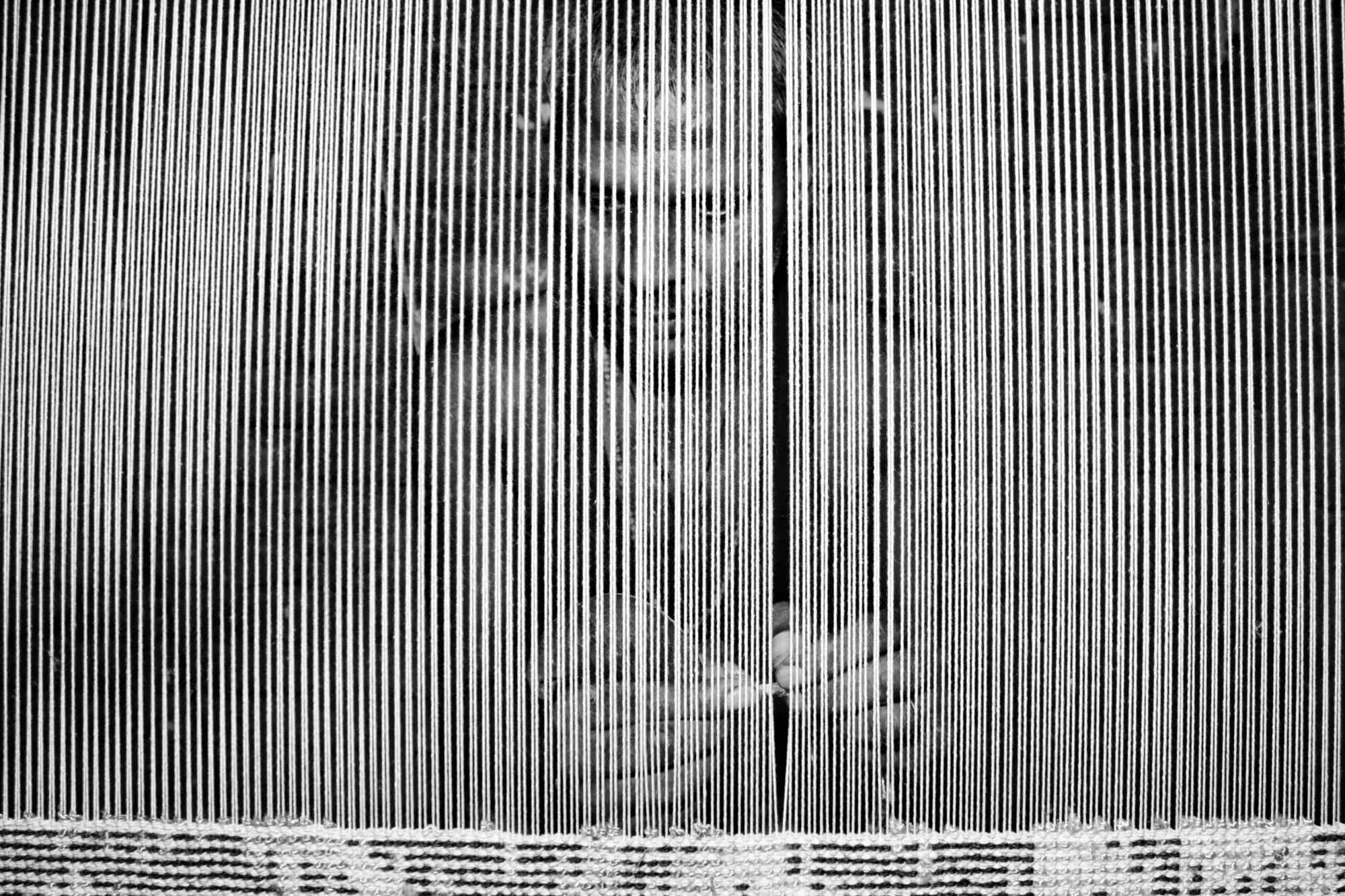
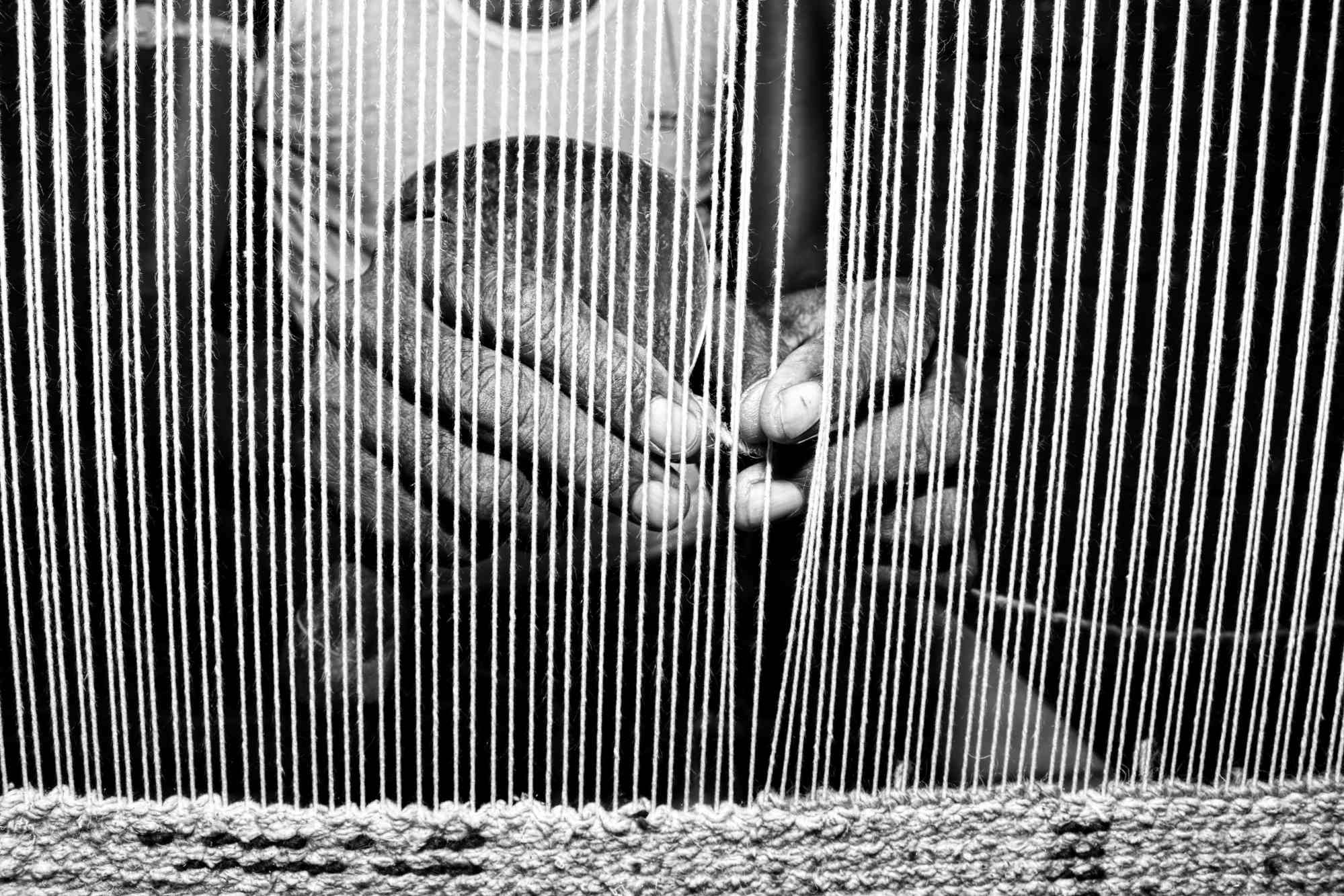
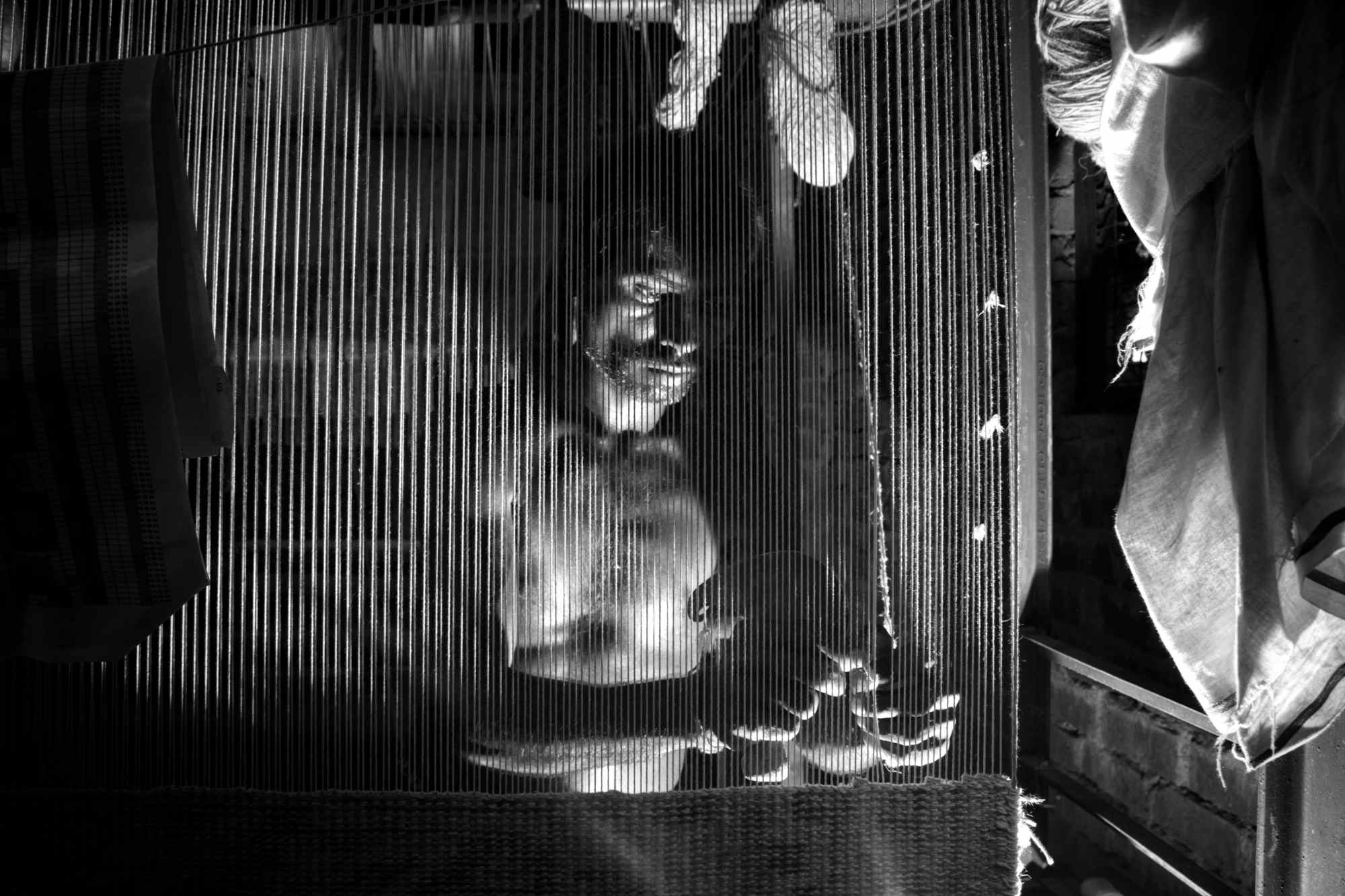

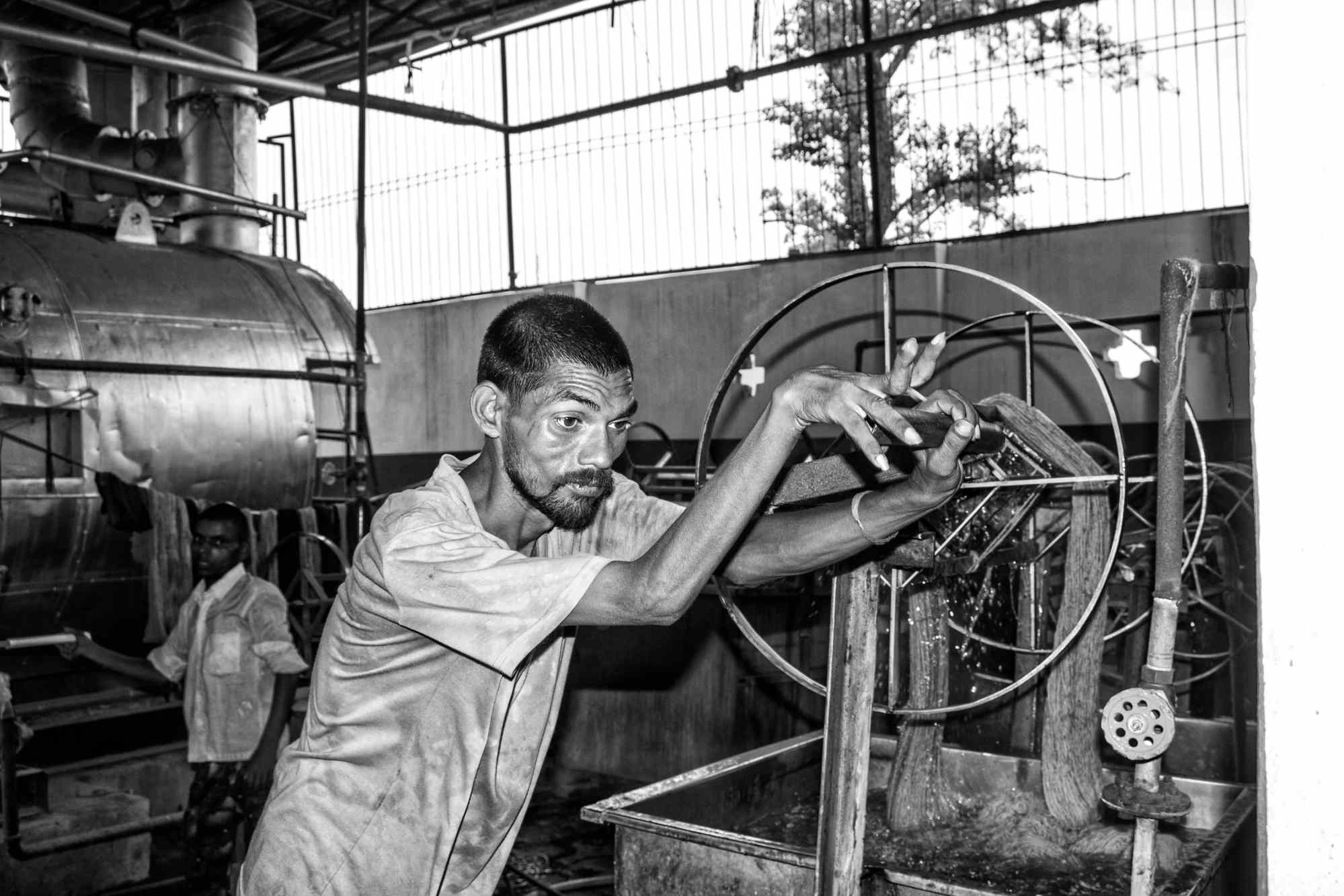

Known as the “Carpet City of India,” Bhadohi’s weaving tradition stretches back centuries and is renowned for its intricate hand-knotted wool and silk carpets. The craft, passed down through generations, is rooted in Mughal-era artistry and reflects a fusion of Persian design and Indian craftsmanship. Each carpet is the result of painstaking labour—thousands of knots woven by hand, with natural dyes and traditional looms still in use today. Bhadohi’s weavers are not just artisans but stewards of a cultural legacy that continues to thrive in the face of industrialisation. This living heritage is recognised globally, with Bhadohi carpets holding a Geographical Indication (GI) tag, affirming their origin and excellence.
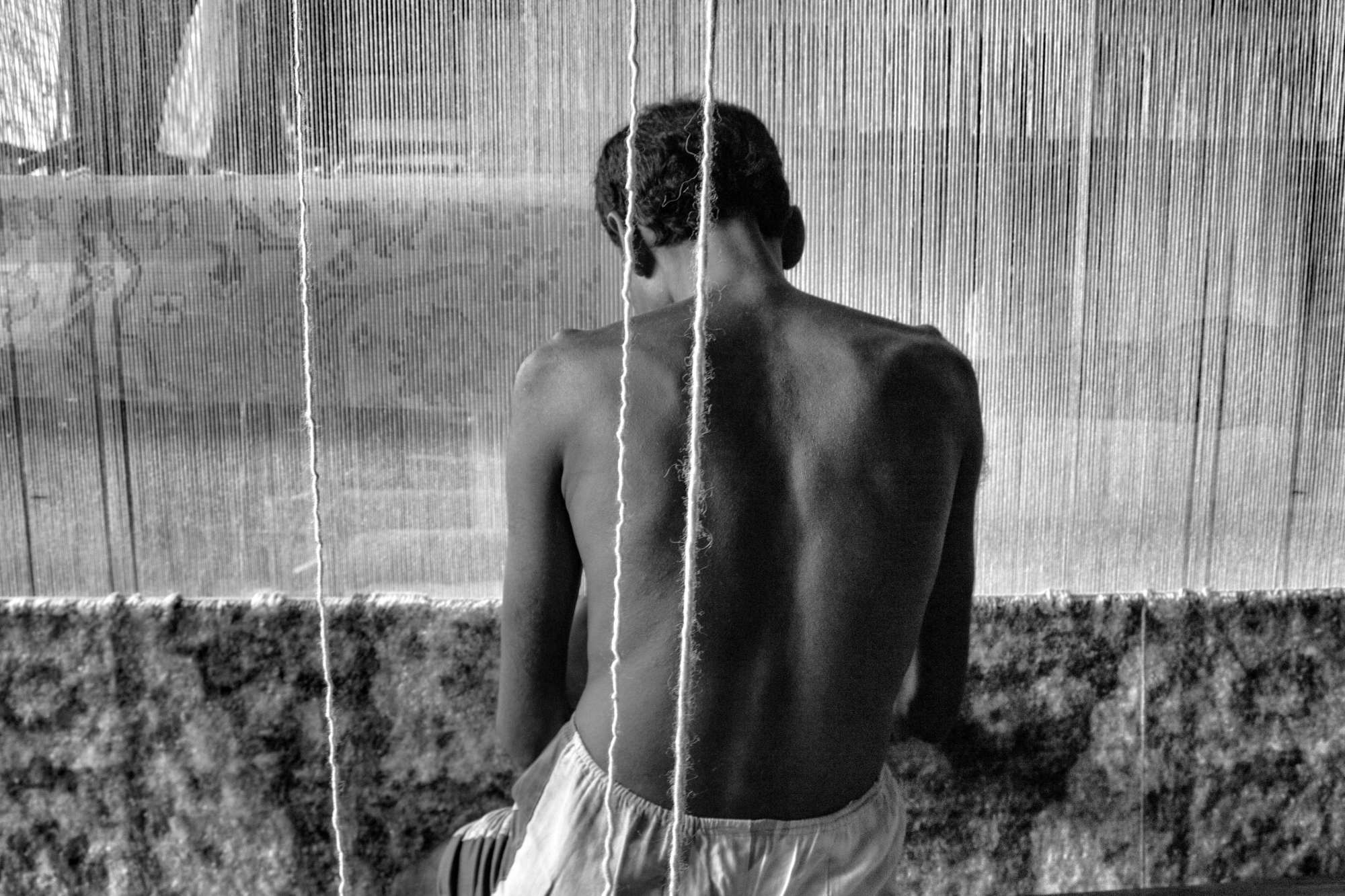
Focusing on the manual processes of the carpet industry—weaving, spinning, and dyeing—Sanjeev´s black-and-white images transcend straightforward documentary photography. Shot in natural light, and with a soft, muted tonality, they feel meditative, respectful of the painstaking, slow work process involved in carpet weaving.
It is striking that Sanjeev has chosen to photograph a craft so deeply rooted in colour without using it. In a tradition defined by vivid dyes and intricate palettes, his monochrome approach quiets the visual field and brings a different kind of focus—one that emphasises form, gesture, and atmosphere over hue. The result is a mood of inward reflection, where light and shadow become the weaver’s palette.
We see the weavers caught in quiet acts of labour, often viewed through the veil of thread. The string lines don’t obscure so much as reveal—fragmenting their figures into rhythmic patterns that echo the weave itself. Sometimes the hands are the subject—delicate, aged, deeply knowing—suggesting an ancestral knowledge passed from loom to loom.
There’s no urgency in these photographs; the pace is deliberate, the mood contemplative. The bare back of a young weaver becomes a poignant canvas—its vulnerability mirroring the thin lines of the loom. In the dyeing process human hands wrangle heavy yarns, soaked and spun. These manufacturing scenes still retain a kind of grace, framed with the same care as the quiet interiors.
Throughout the series, Sanjeev resists spectacle. “I like that the project didn’t try to prove anything—it just existed, like the people in it,” he says. These are not performative portraits. They carry the weight of intimacy and respect, built from familiarity rather than distance.
The work is part of Sanjeev’s ongoing exploration of memory, labour, and ritual. By approaching the craft not only as a documentary photographer, but as someone who has lived its textures, he offers an insider’s vision with an artist’s restraint. There’s poetry here—not only in what is shown, but in how it’s framed: deliberately, tenderly, with a reverence for silence.
Sanjeev anchors his approach in the words of Thomas Merton: “Art enables us to find ourselves and lose ourselves at the same time.” In this photo series, we are invited to do just that—to lose ourselves in the details of thread and shadow, and perhaps find, through Sanjeev’s lens, a way back to an enduring cultural heritage.
All photos © SANJEEV KUMAR
To see more of his photography visit Sanjeev´s Behance site and his Instagram page.
 SPECTACULUM MAGAZINE
One reply on “THE THREAD REMEMBERS”
Thank you team 🙂