
IRINA SEDLECKAYA
// Irina Sedleckaya does not chase spectacle. She works in black and white, in patience, in restraint. Based in Kazakhstan, she approaches photography through a documentary-influenced yet fine art sensibility, focusing on quiet human stories and emotional presence.
Irina is drawn to the fragile space between people and their surroundings. Childhood, memory, vulnerability, and silence are recurring undercurrents in her work. Rather than directing her subjects, she observes. Rather than constructing scenes, she allows them to unfold. This approach shapes a body of work that feels intimate without being intrusive, poetic without being sentimental.
Her goal is not simply to produce individual images, but to build long-term, human-centered projects that can live in publications and exhibitions where nuance is valued over noise. She is interested in visual narratives that breathe slowly, that trust the viewer, and that resist easy conclusions.
“One does not photograph what is visible, but what is invisible.”
Robert Bresson
What draws you to the arts?
Art draws me in because it creates a space where time slows down and attention becomes deeper.
Engaging with art — whether through making it, or encountering it in a museum, a performance, or a quiet exhibition — allows me to step outside of everyday urgency. It offers a different rhythm, one that invites reflection rather than reaction.
Art helps me feel connected to experiences that are often difficult to articulate: memory, vulnerability, silence, and emotional presence. It does not demand answers, but opens a space for listening and feeling. This sense of quiet dialogue is what continues to draw me to the arts and keeps me engaged in them over time.
What do you like best about this project?
What I value most about this project is its honesty and quietness.
There was no intention to direct or control the children or the environment. The project allowed space for uncertainty, movement, and moments that could not be planned. I like that the images exist between observation and emotion — they do not explain, but invite the viewer to pause.
The process itself was important to me: working slowly, staying present, and allowing the photographs to emerge naturally. The project reflects a way of seeing that I want to continue developing — attentive, human, and sensitive to subtle states rather than overt narratives.
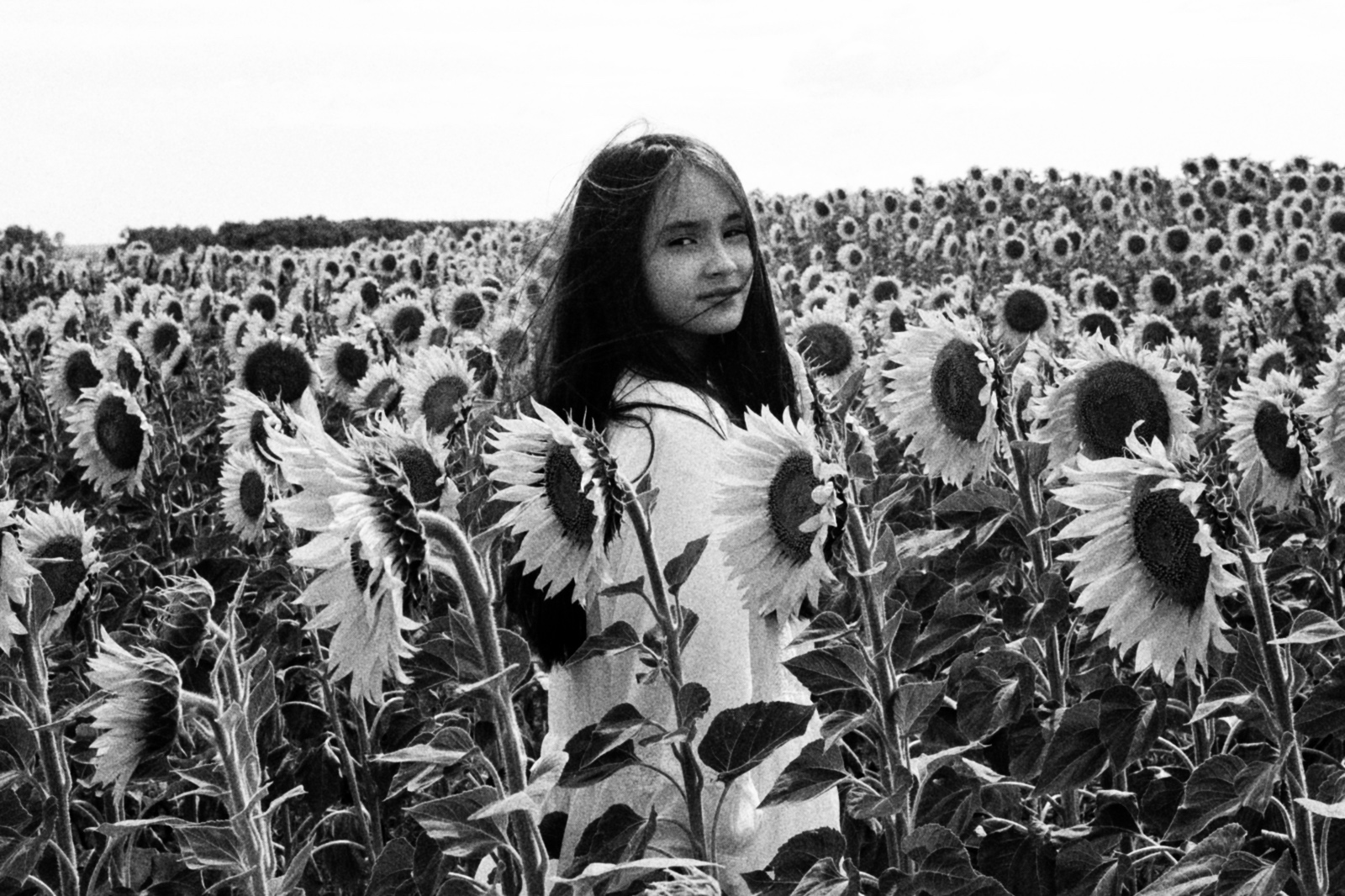
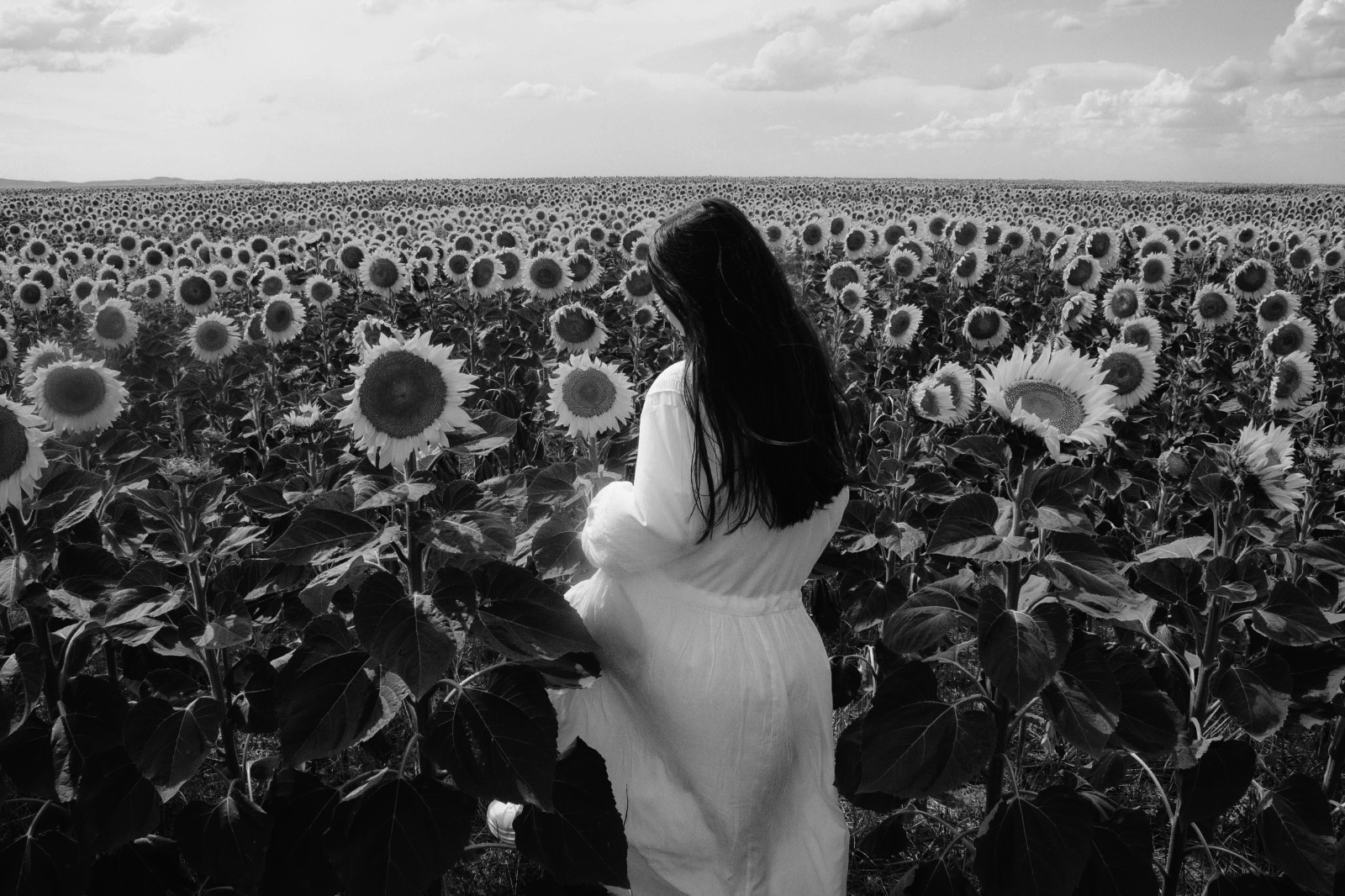
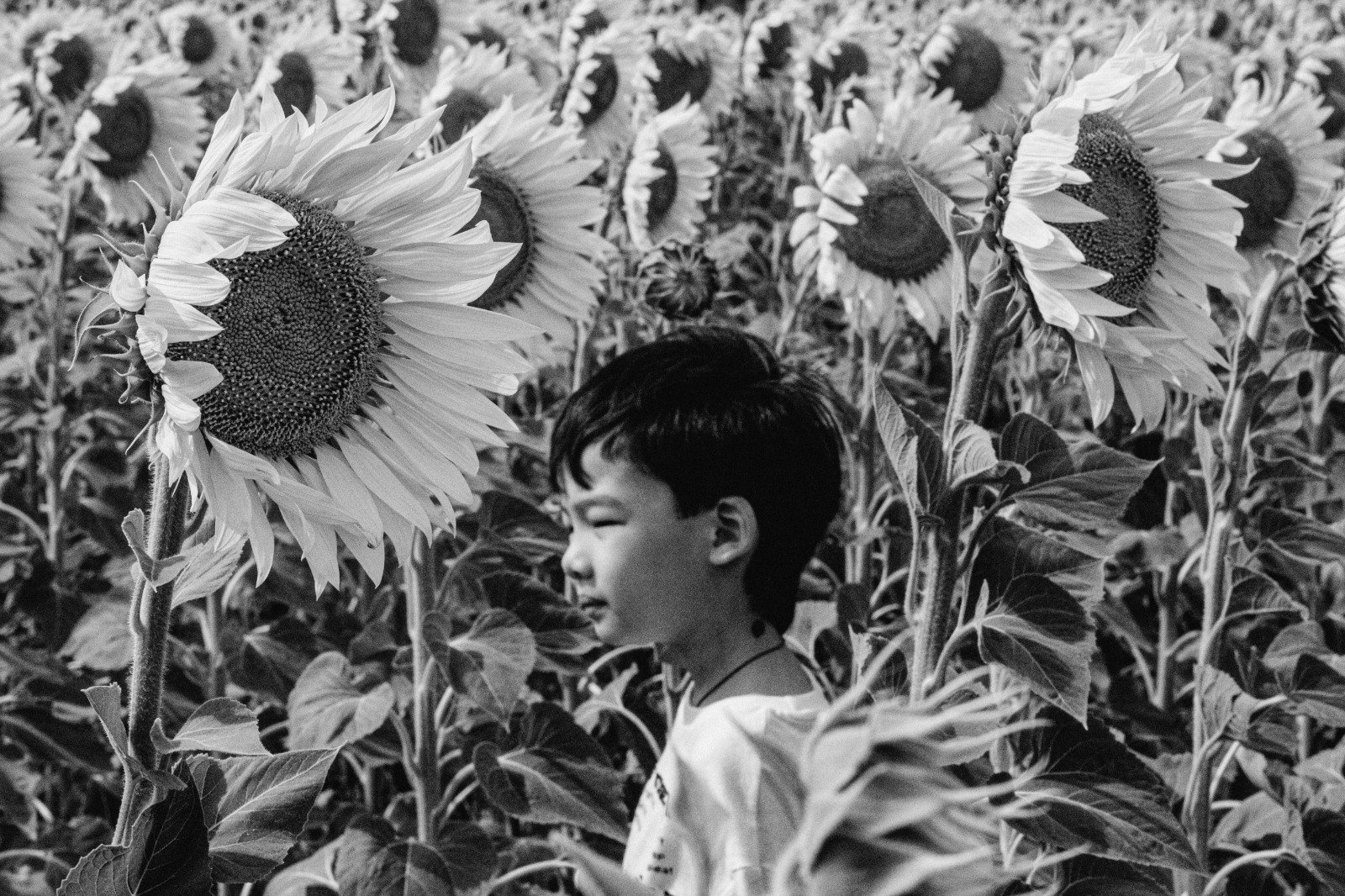
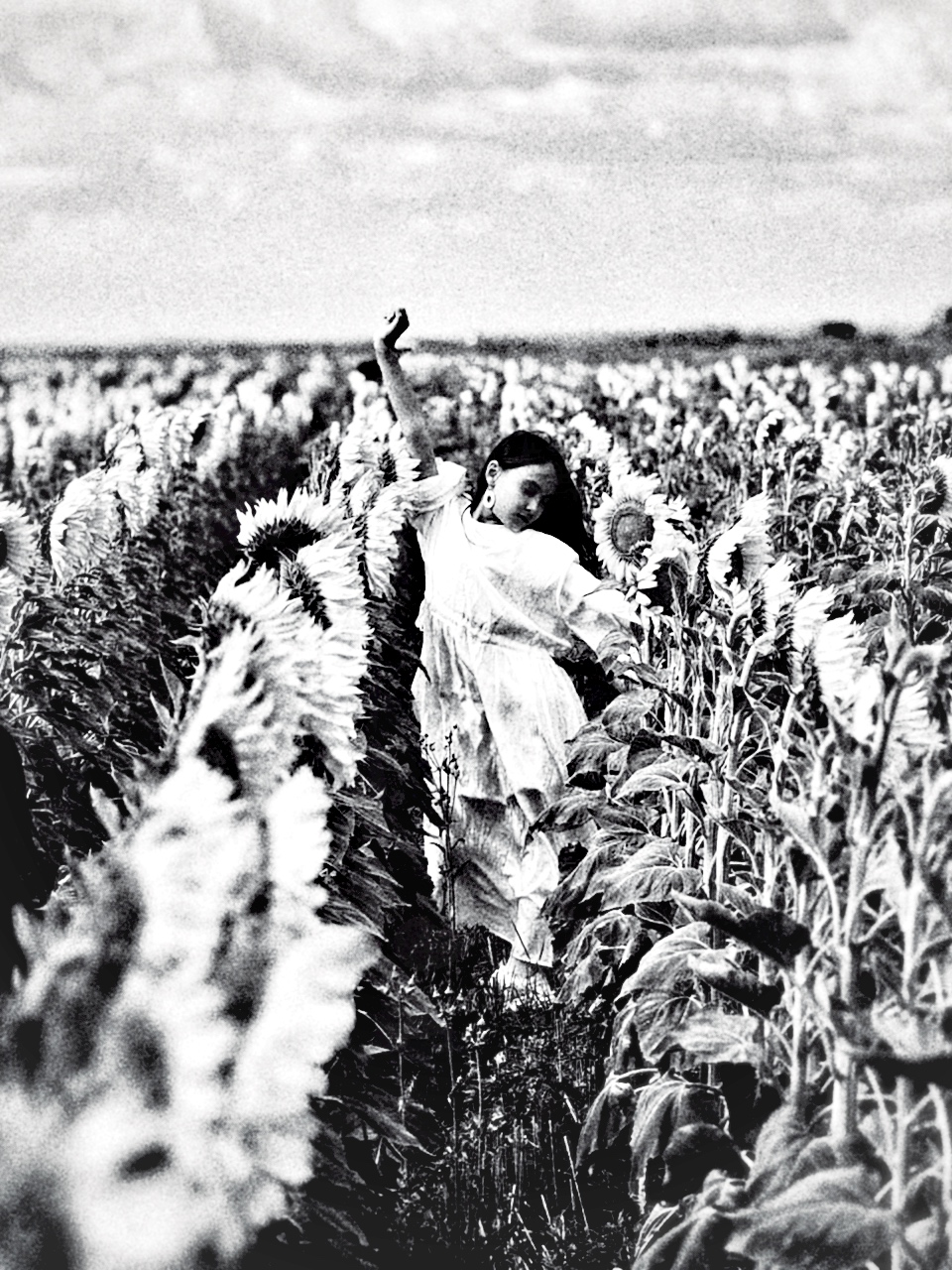
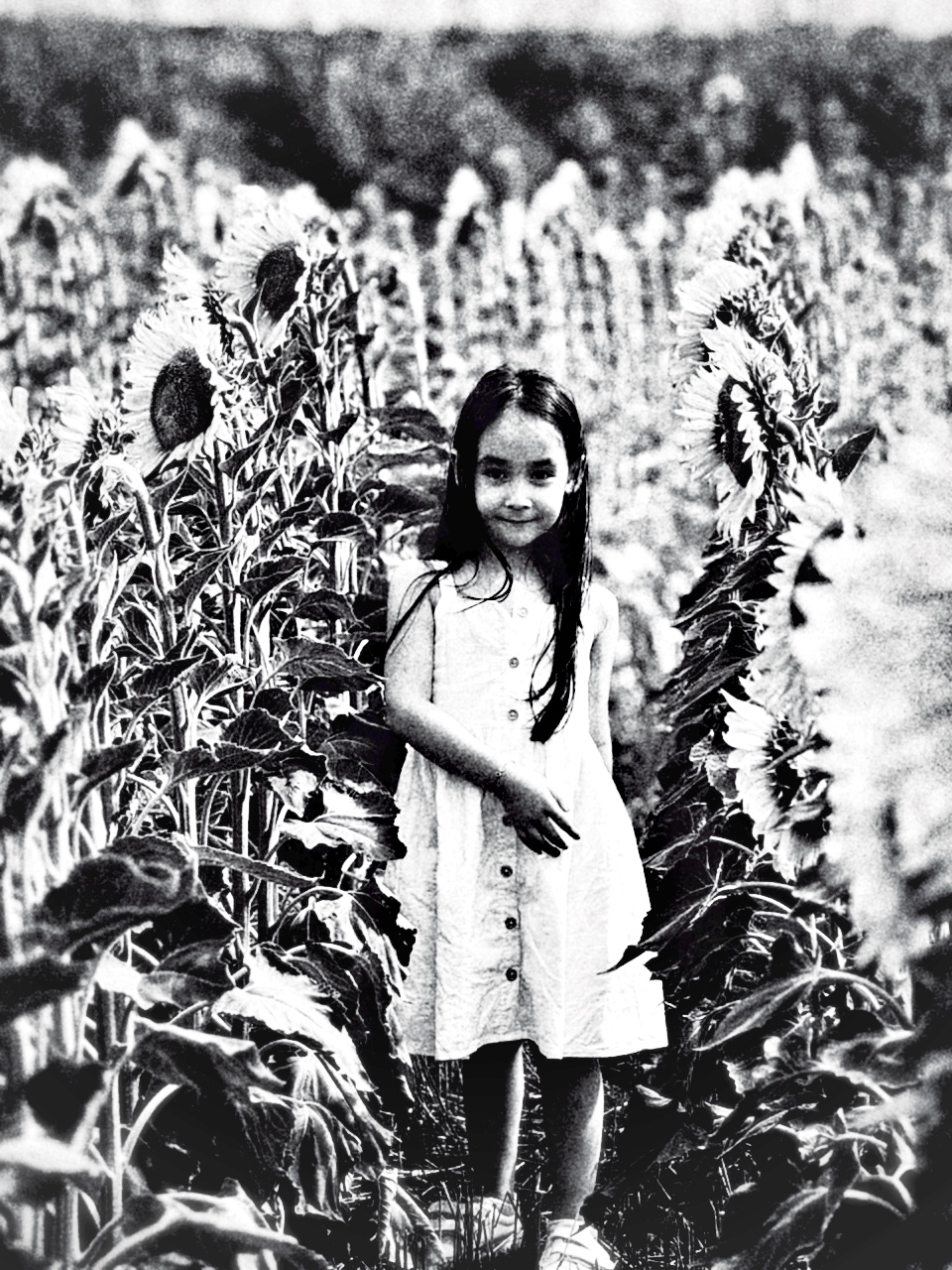
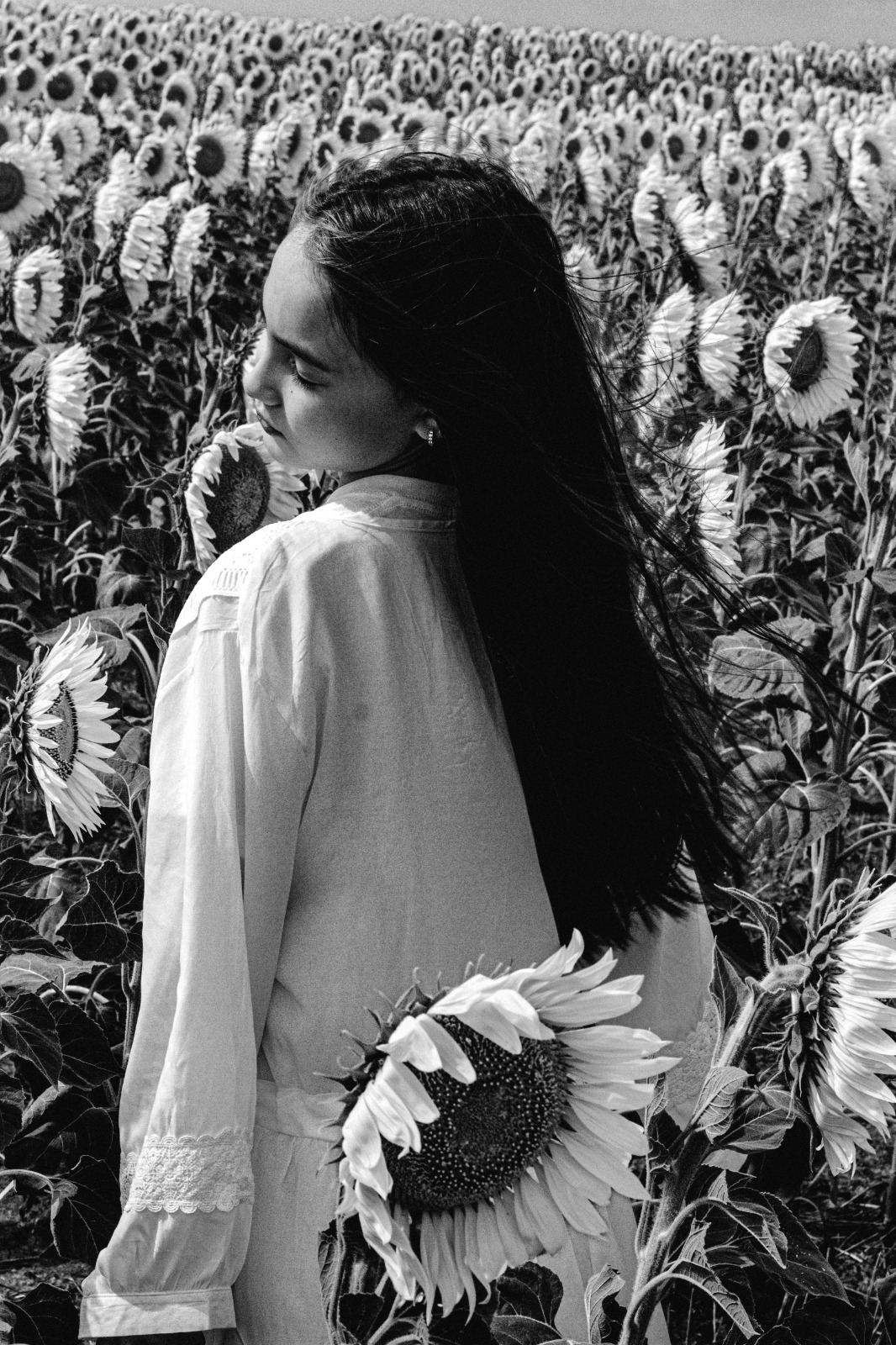
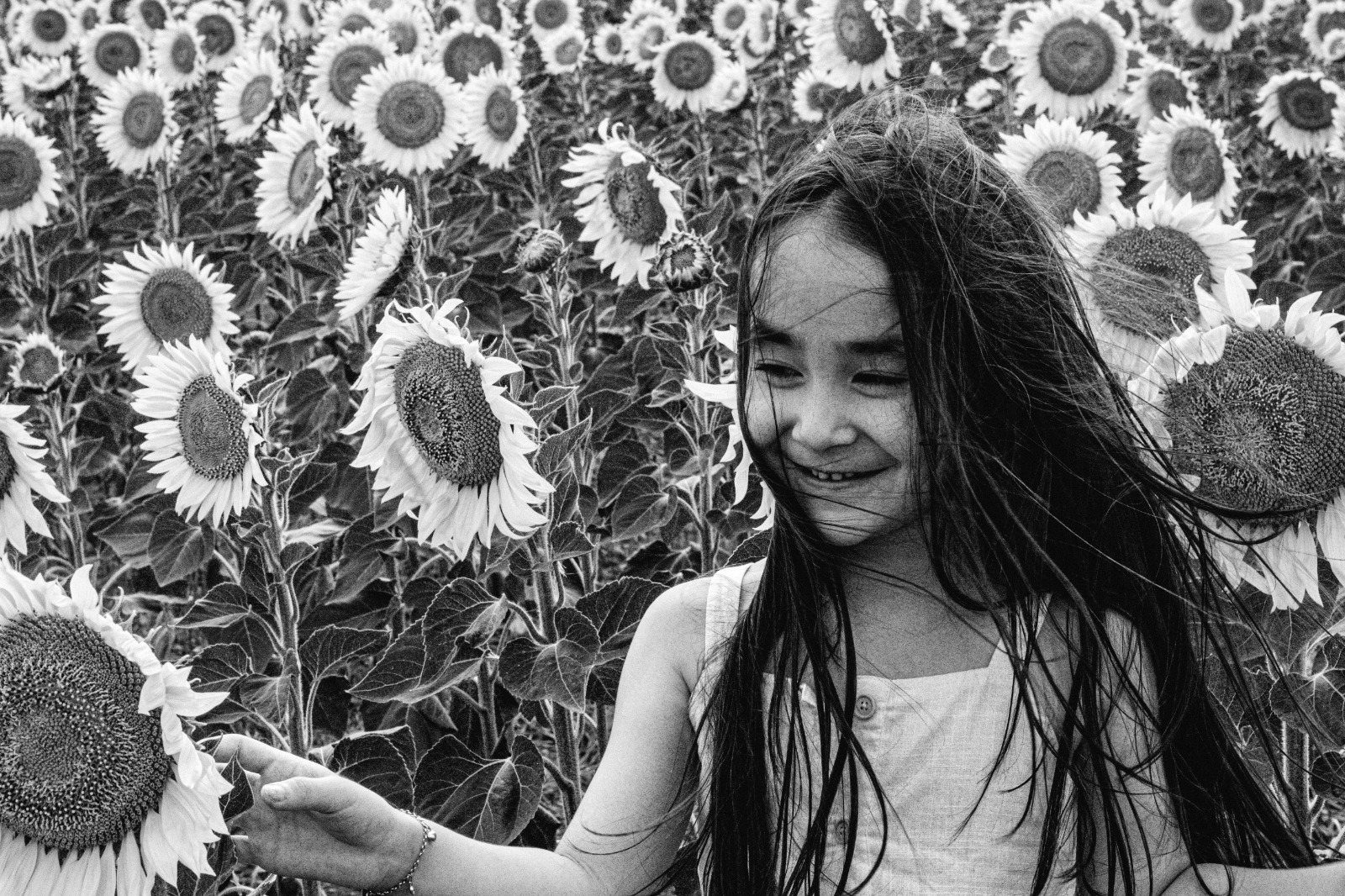
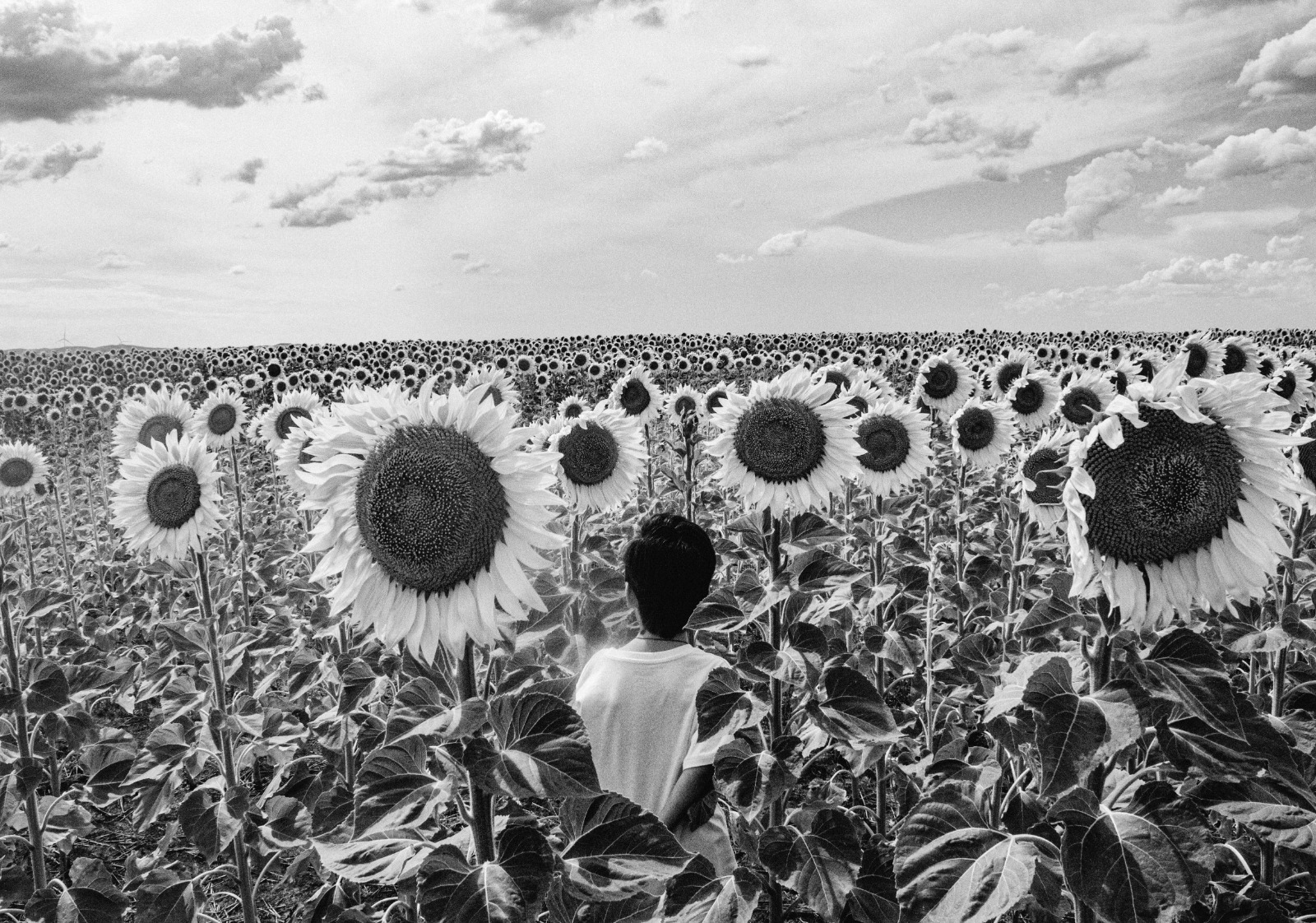
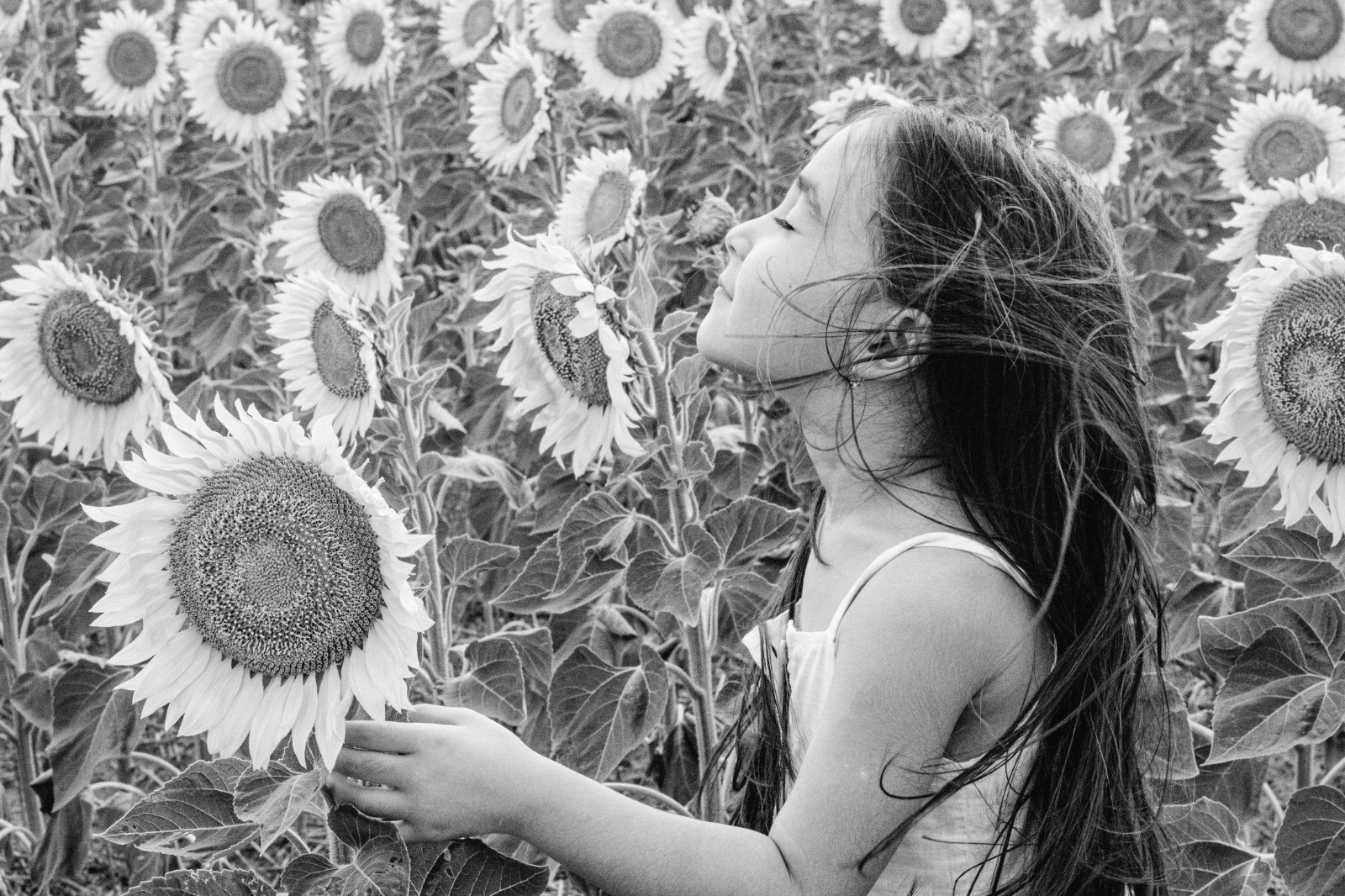
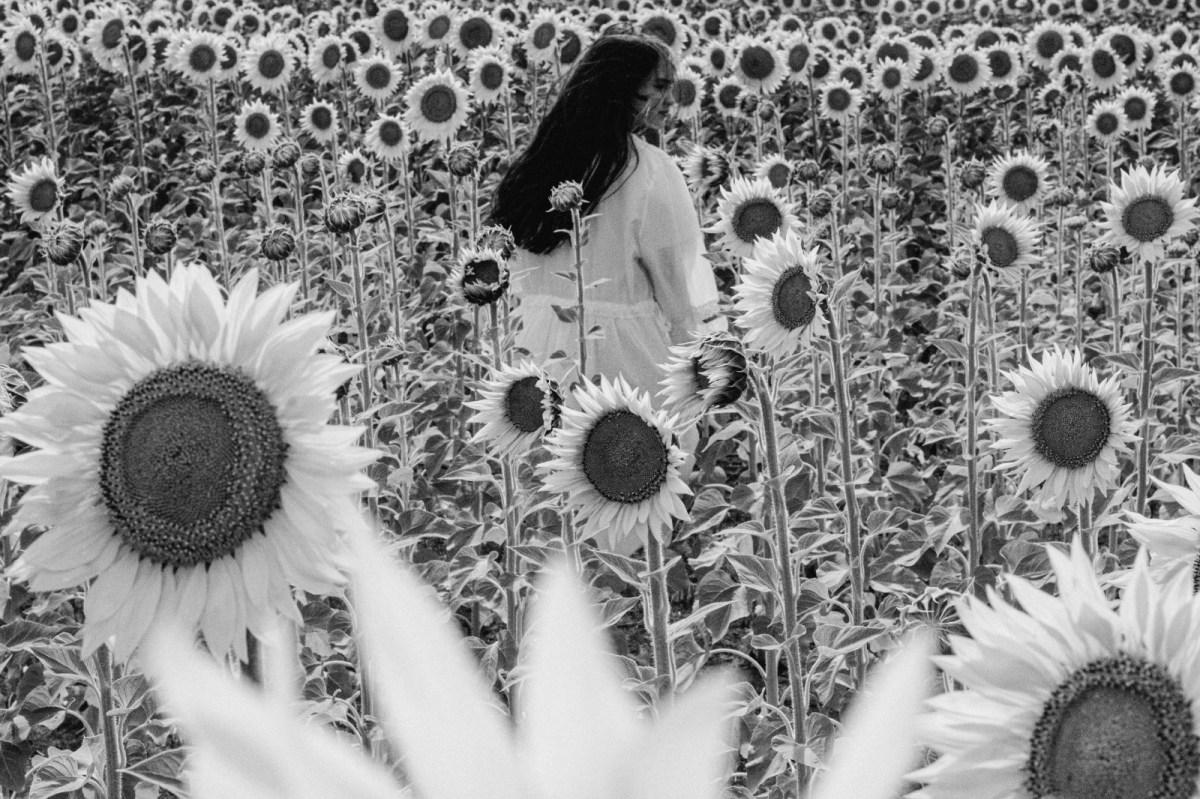
In this black and white series set in a vast sunflower field, Irina explores childhood as a transitional territory — a quiet, in-between state where freedom and solitude coexist. The field functions not just as landscape but as emotional space. It is open, expansive, and slightly overwhelming. The children move through it naturally, sometimes playful, sometimes withdrawn, never performing.
In one of the images, the mood feels suspended between motion and stillness, as if the breeze itself has become part of the emotional register. In another, the atmosphere shifts toward something more introspective — a pause inside the vastness. The series does not rely on dramatic gestures. Instead, it builds its tone through subtle shifts of body language, light, and space.
Technically, Irina approaches the project with deliberate restraint. She shot the photographs digitally, using only natural light, and later converted them to black and white with minimal intervention. She carefully shaped the grain, tonal depth, and contrast to preserve a tactile, almost memory-like quality. By removing colour, she eliminates temporal specificity and leaves texture, atmosphere, and emotional weight in its place.
The black and white process is not an aesthetic afterthought. It is central. It compresses time and amplifies silence. It allows the viewer to feel the wind, the density of the field, the softness and unease that coexist in childhood.
Irina values the honesty of this project most. She did not attempt to control the environment or choreograph the children. Uncertainty, movement, and imperfection were allowed to stay. The images live somewhere between observation and emotion. They do not explain themselves. They ask the viewer to slow down.
Her practice reflects her sense of art as a quiet dialogue. The series is less about documenting children in a field and more about holding a fragile state of being. The work thus aligns with her chosen quote by Robert Bresson: “One does not photograph what is visible, but what is invisible.”
In Irina’s hands, invisibility is not absence. It is atmosphere. It is memory. It is the quiet tension between movement and stillness. And in a world addicted to brightness and speed, that kind of restraint feels like relief.
Click on the photos to see the original larger version.
All photos © IRINA SEDLECKAYA
See more of her work on Instagram.
 SPECTACULUM MAGAZINE