

PAOLA FERRAROTTI
// Paola Ferrarotti is an Argentinian photographer currently based in Frankfurt, Germany. Her practice is shaped by an academic background in Political Science, International Relations, Linguistics, and Literature — disciplines that have left a clear imprint on the way she approaches photography: as a language, a narrative structure, and a tool for introspection.
Paola’s work consistently explores the relationship between people, place, and memory. Moving fluidly between documentary and fine art photography, she is less concerned with describing reality than with translating experience. Landscape, in her images, is never neutral. It is a carrier of emotion, history, and presence — a space where observation becomes reflection.
Light, atmosphere, and silence are treated with the same attention as form, allowing her photographs to function as visual stories rather than isolated moments.
This sensitivity finds a particularly resonant expression in White Silence.
“There is a conversation in the desert: between wind and stone, light and shadow, human presence and the vastness of time. Listening is how you become part of it.”
Paola Ferrarotti
What draws you to the arts?
Art allows me to connect deeply with life and human experience. Every form—painting, music, photography—offers a unique window into emotions, stories, and perspectives. Engaging with art, whether as a creator or viewer, invites reflection, feeling, and a sense of connection beyond words.
What did you like best about this photography project?
What I like most about this project is how it allowed me to fully immerse myself in a landscape and its atmosphere. Walking through the White Desert, observing its formations, light, and profound silence, gave me a deep sense of connection between nature, time, and human presence. Capturing that feeling of awe and quiet majesty in my work is what excites me the most.
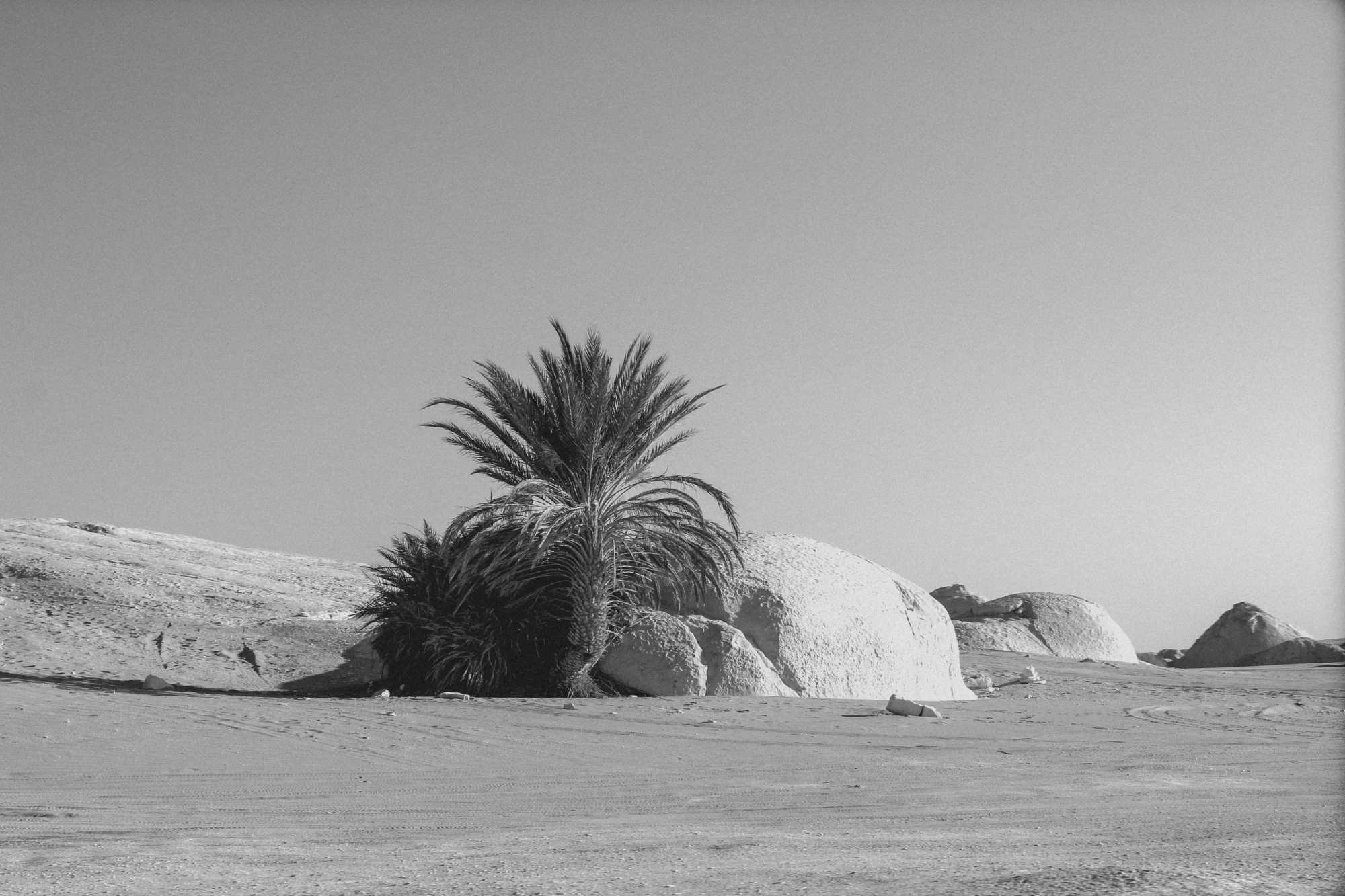
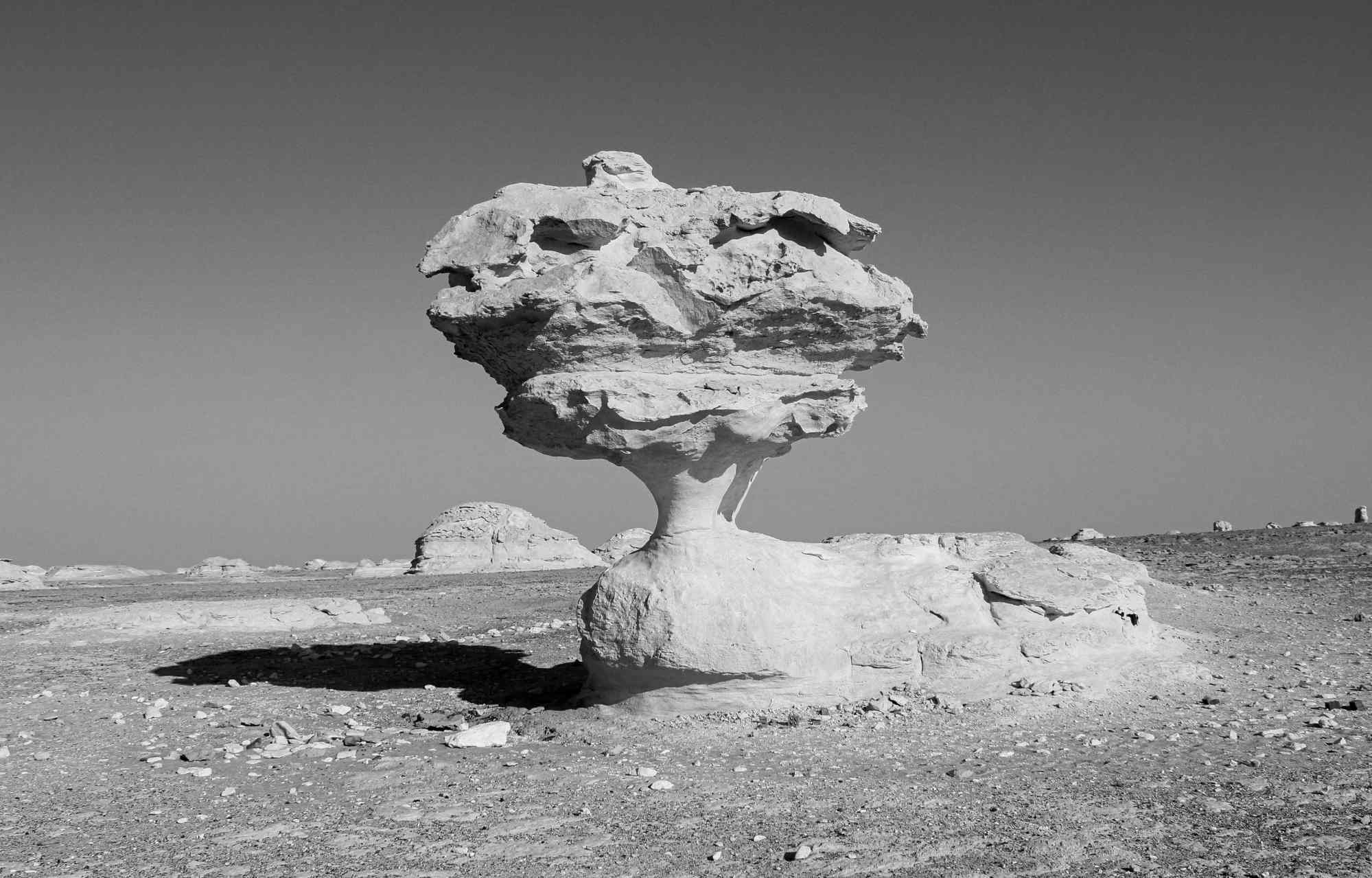
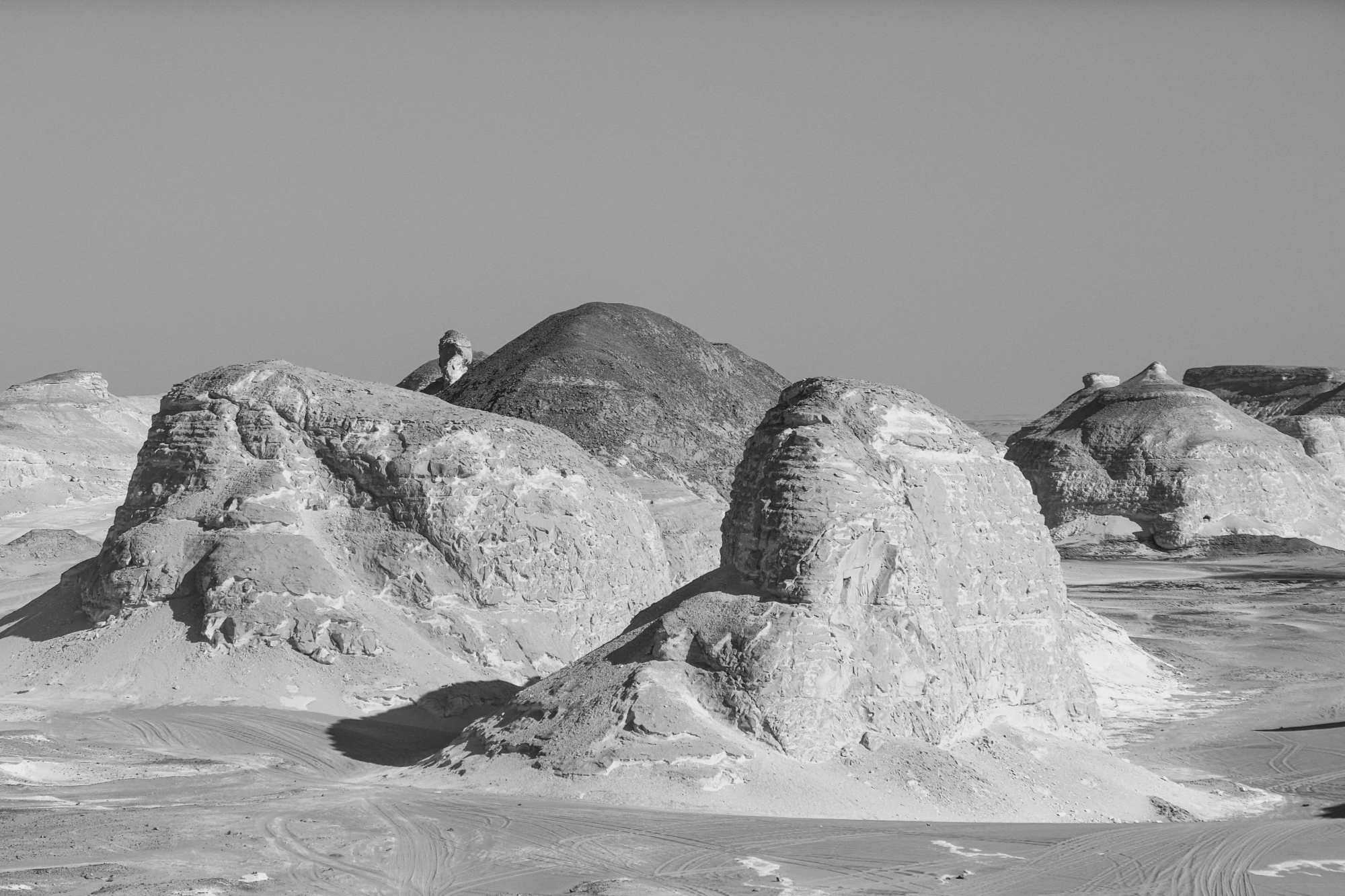

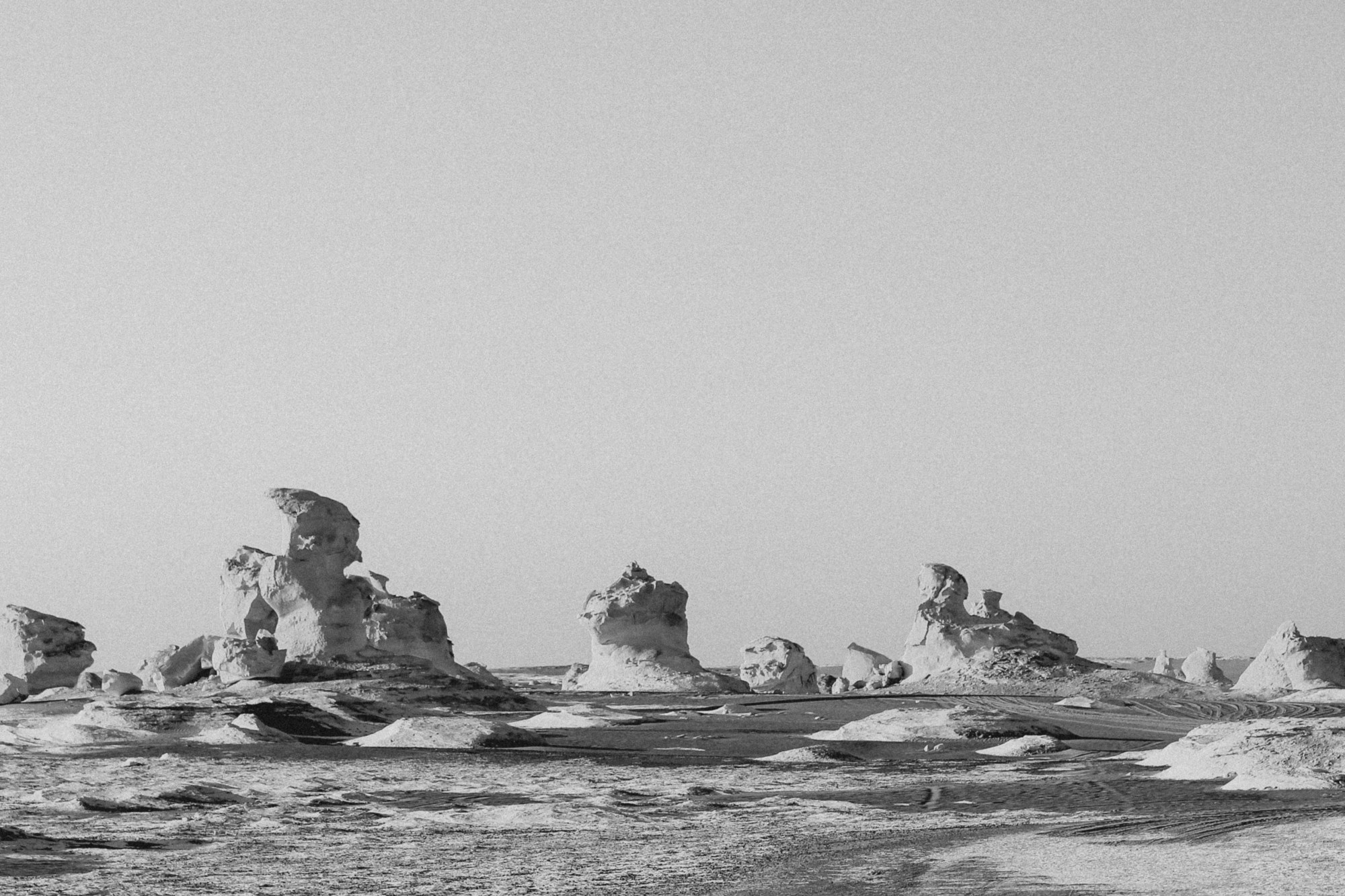

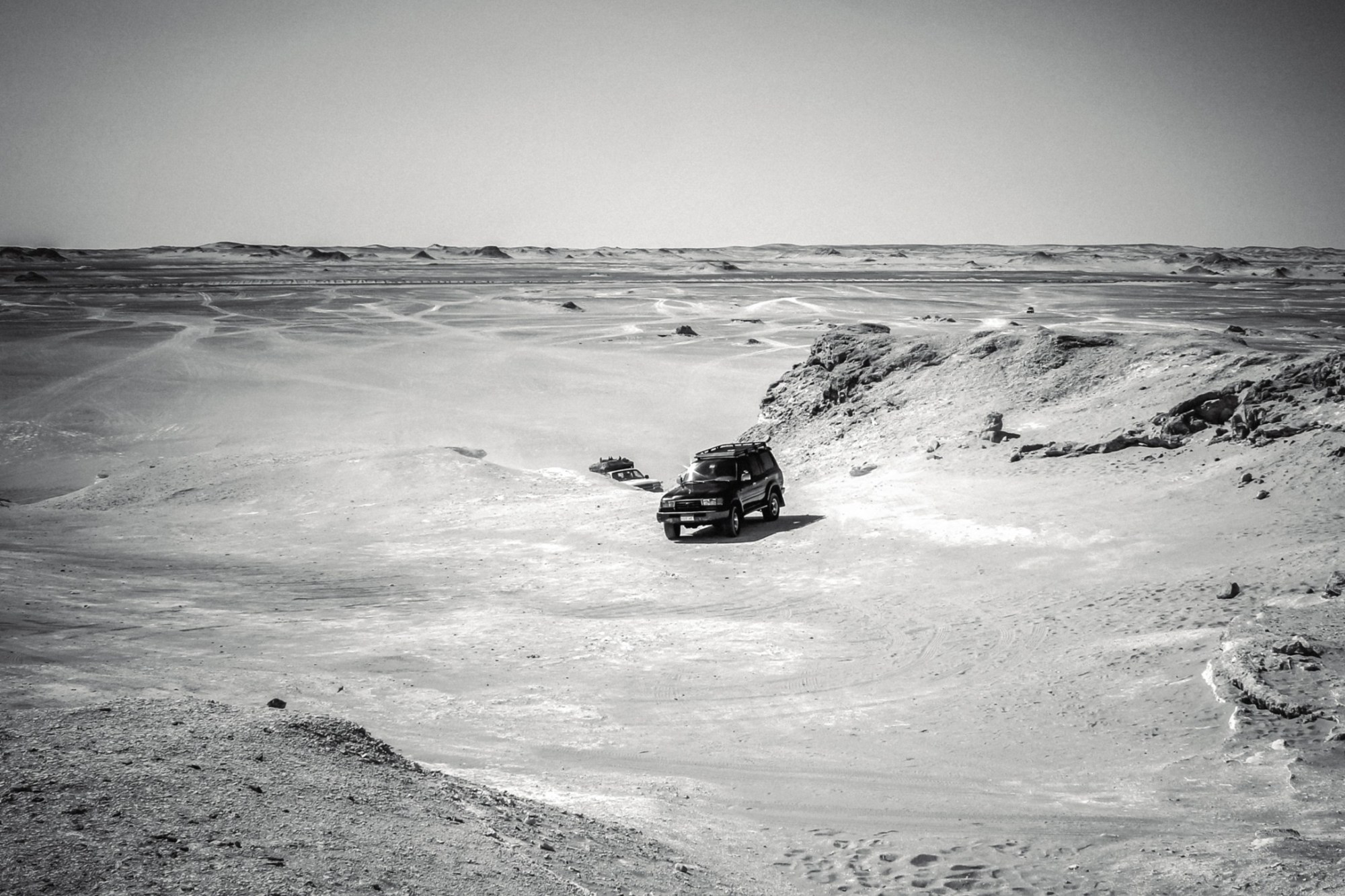
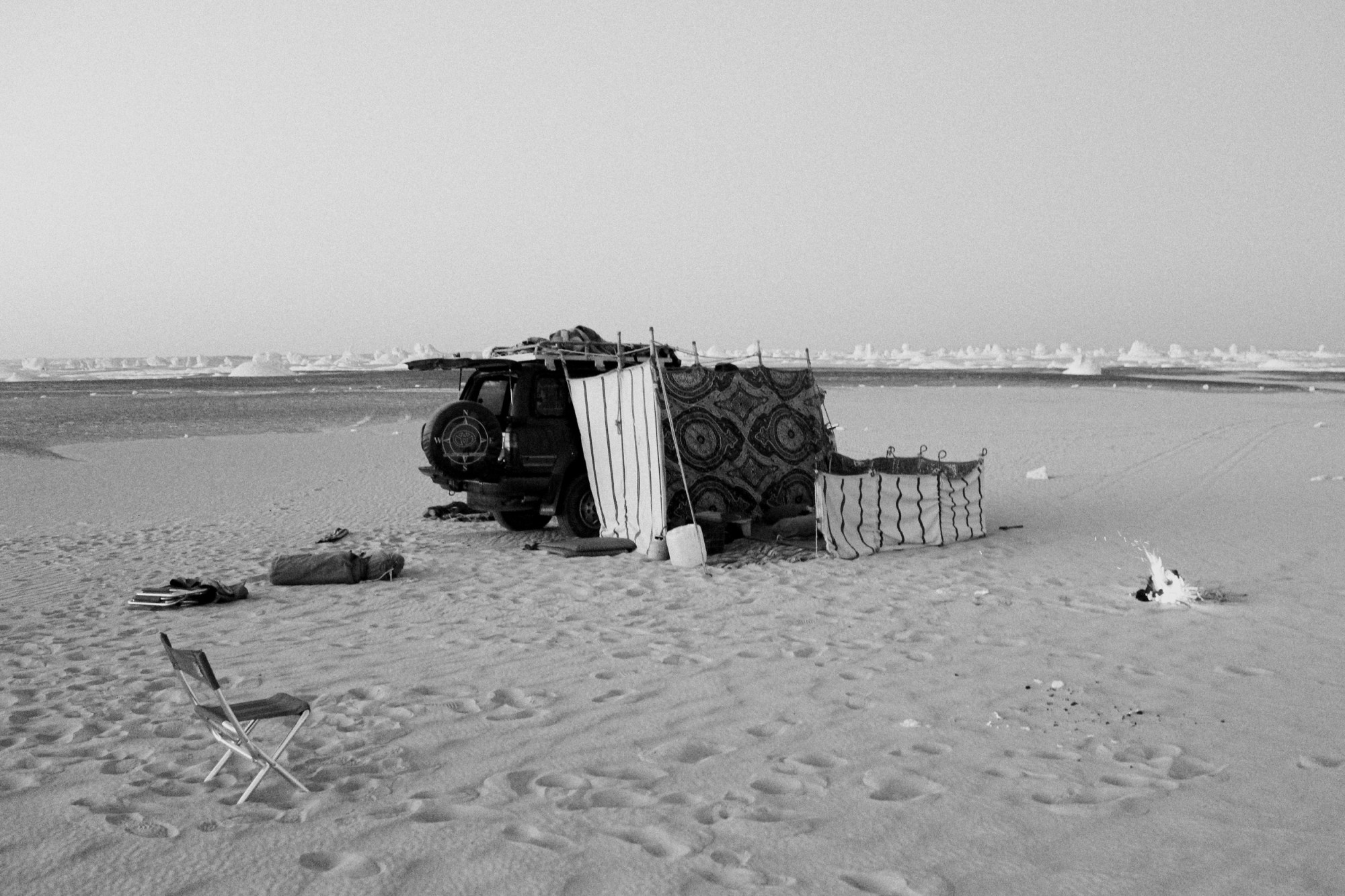
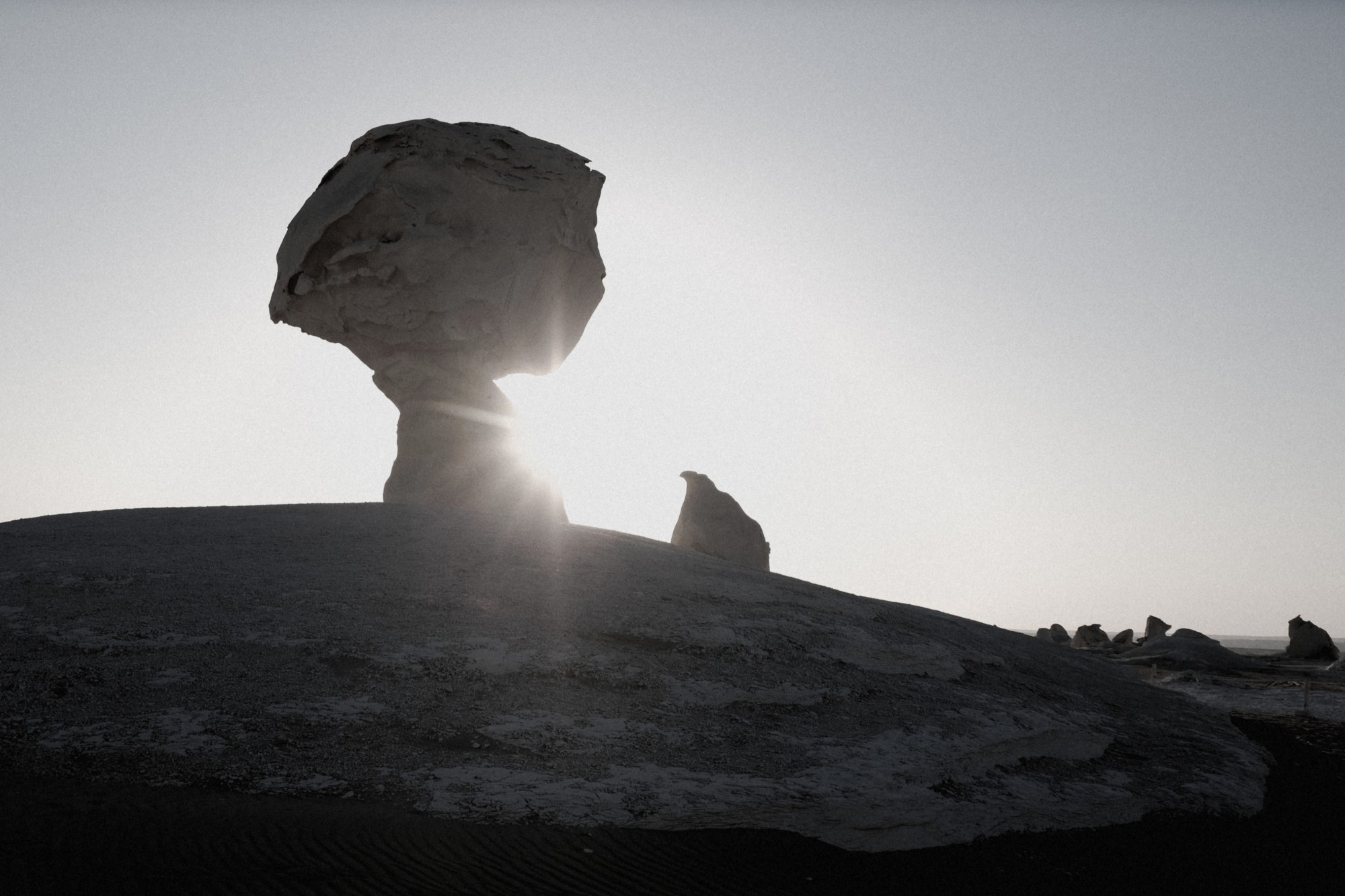
The series was created in the White Desert, also known as Sahara el Beyda, located within the Farafra Depression in Egypt’s Western Desert, approximately 500 kilometers southwest of Cairo. This landscape, declared a protected area in 2002, extends over more than 3,000 square kilometers and is composed primarily of chalk and white limestone — remnants of ancient marine sediments deposited during the Cretaceous period, when the region lay beneath a shallow sea.
Over millions of years, wind and sand have sculpted this mineral plateau into an otherworldly terrain. Mushroom-shaped rocks, eroded columns, fossil traces, and improbable curves rise from the desert floor like a vast open-air sculpture park. The ground is dry and brittle underfoot; the horizon shimmers in the heat. Time here is not measured in hours or days, but in erosion, accumulation, and geological memory.
Paola spent two days and one night crossing this landscape on foot. She slept beneath the open sky in a roofless tent, deliberately choosing exposure over shelter in order to remain fully present to the environment. At night, the temperature drops sharply and the Milky Way unfolds overhead with startling clarity. Under moonlight, the chalk formations glow faintly, and silence becomes almost tangible.
Light dictates the rhythm of the series. At midday it is harsh, blinding, almost merciless. Toward dusk, it softens, revealing delicate tonal shifts across the stone. At dawn, the desert undergoes a quiet transformation: pale pinks emerge, fade into ivory, and finally settle into an expansive, luminous white. Each formation becomes a sculptural body — a surface on which time has inscribed itself.
Human presence in the images is minimal, often entirely absent. Yet the body is everywhere implied: in the pace of movement, in the framing, in the pauses between photographs. Paola’s approach turns the act of walking into a form of dialogue — between breath and distance, between fleeting presence and geological permanence. The desert does not assert itself; it reflects. It listens.
Technically, the work is marked by restraint. There is no dramatization, no forced spectacle. Composition, light, and atmosphere are allowed to unfold slowly, mirroring the experience of moving through the landscape itself. The images invite contemplation rather than consumption, asking the viewer to slow down and attune themselves to subtle shifts of tone, texture, and space.
Leaving the White Desert, Paola describes the sensation as waking from a dream — not an imagined one, but a dream shaped by wind, stone, and time.
In White Silence, photography becomes a quiet act of presence. A way of entering a landscape without claiming it. A reminder that some places are not meant to be spoken over, but listened to — patiently, attentively, and with humility.
White Silence is not about conquest or exploration. It is about listening.
All photos © PAOLA FERRAROTTI
To see more of his photography visit Paola´s Instagram page.
 SPECTACULUM MAGAZINE