
BOHDAN NAHORNYI
// Bohdan Nahornyi is a Ukrainian artist raised in Bilopyllia. He channels the raw immediacy of analogue photography to tell stories that are both personal and historically grounded. Using instant film and a range of analogue techniques, he creates images with a distinctly vintage aesthetic—intimate, fragile, and unfiltered reflections of life in Ukraine during wartime. Through each frame, he captures the emotional texture of resilience and memory, affirming that analogue endures—because memory does..
Bohdan channels the raw immediacy of analogue media to tell deeply personal and historically grounded stories. Working with a variety of techniques to evoke a vintage aesthetic, his images aim to preserve the emotional texture of life in Ukraine during wartime—fragile, urgent, and unfiltered. He uses instant-film to reach a vintage look on pictures that tell the stories.
Rooted in a belief that film photography is not a relic but a living, breathing form of expression, his practice stands in quiet resistance to the digitised pace of global living. Through each frame, he asserts: analogue endures, because memory does. His main goal is to capture the essence of living in Ukraine during the war. For Bohdan, film photography is not a relic of the past but a living, breathing art form that resists the accelerating pace of the digital age.
“The best camera is the one that’s with you.”
Chase Jarvis
What draws you to the arts?
I prefer to go to museums and different art exhibitions to watch in what forms art could be expressed, in each of work I like to read the background, hidden details and references that could mean a world to the artist. Regarding my personal background in arts – during 2017-2019 I attended a local school of arts in my hometown Bilopillya that now is being constantly shelled. In my leisure time I also enjoy embroidery and reading about world-known figures, their contribution in the world of fashion/arts/photography
What did you like best about this photography project?
This project was made during hard times of my life, and it helped me escape a planet of heavy thoughts and project the conditions of my being. It actually became my anti stress and art therapy.
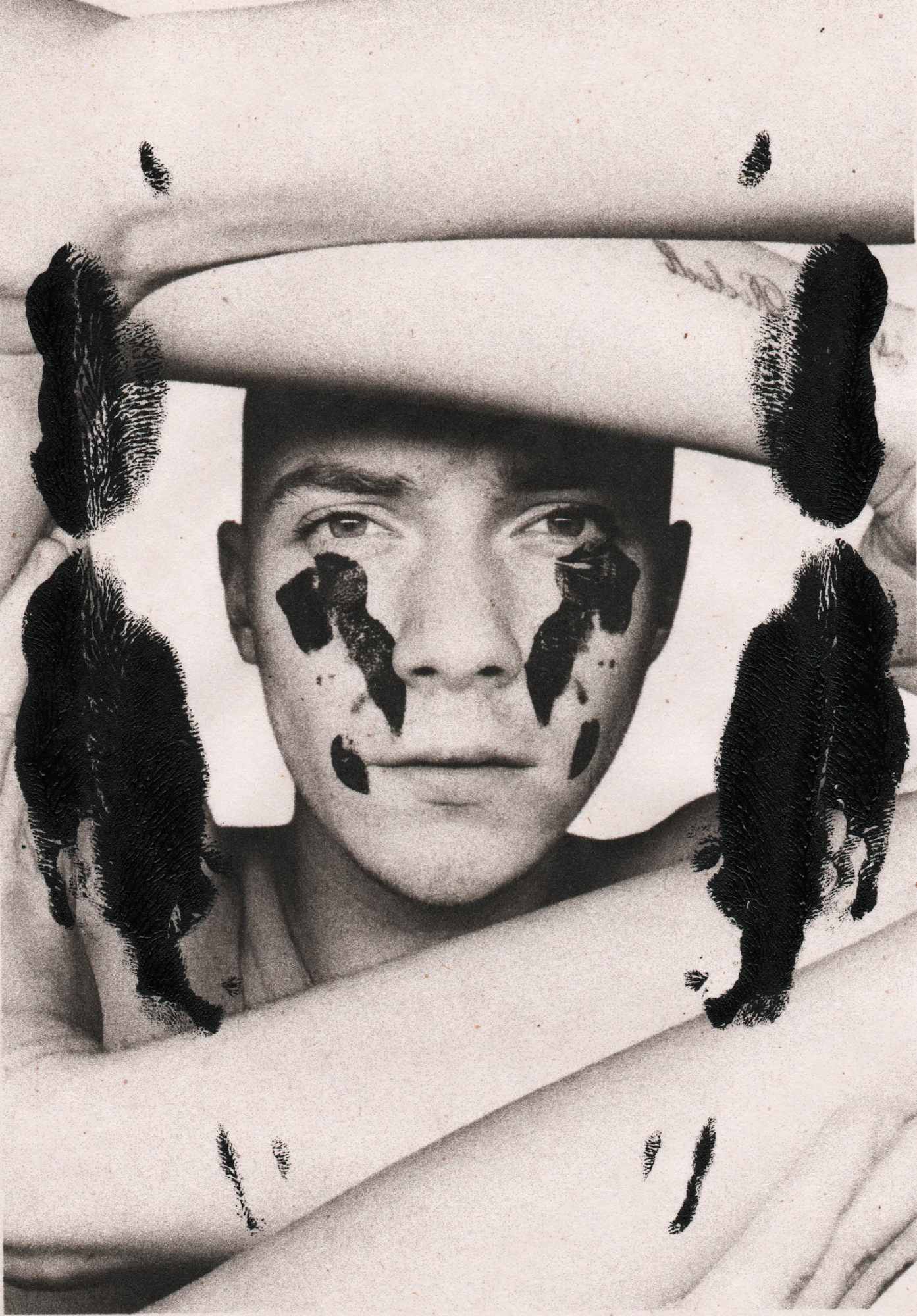

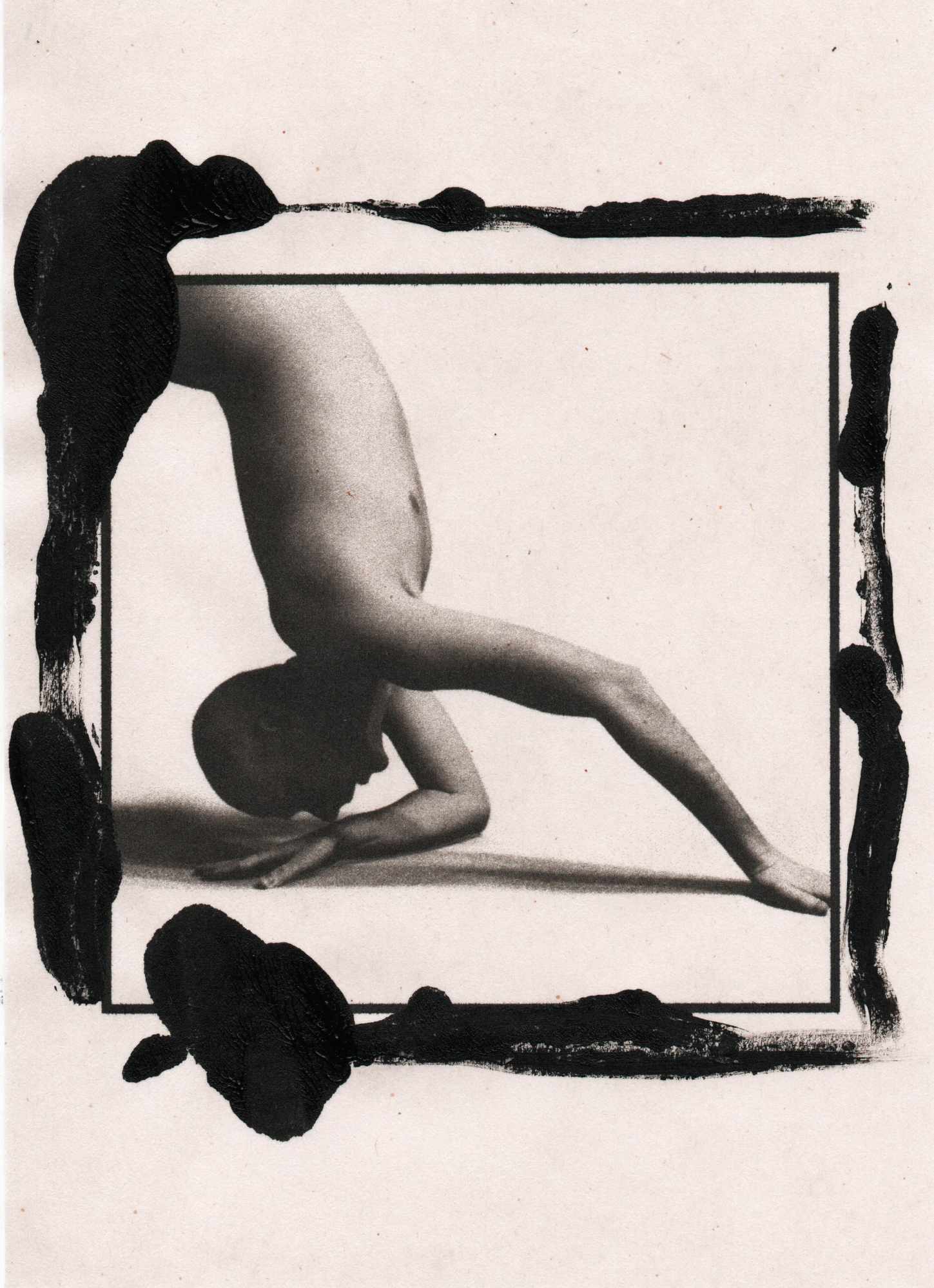

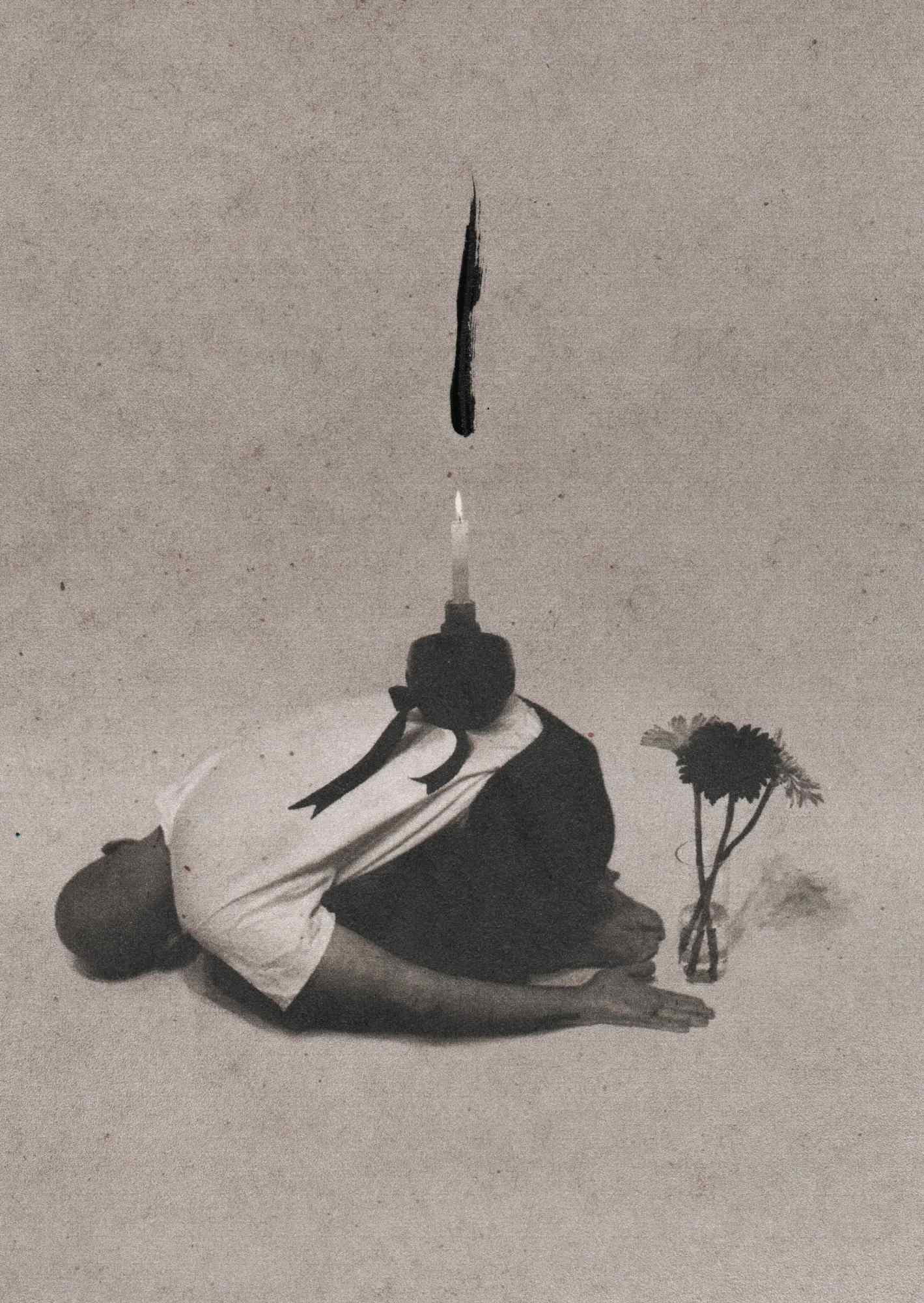
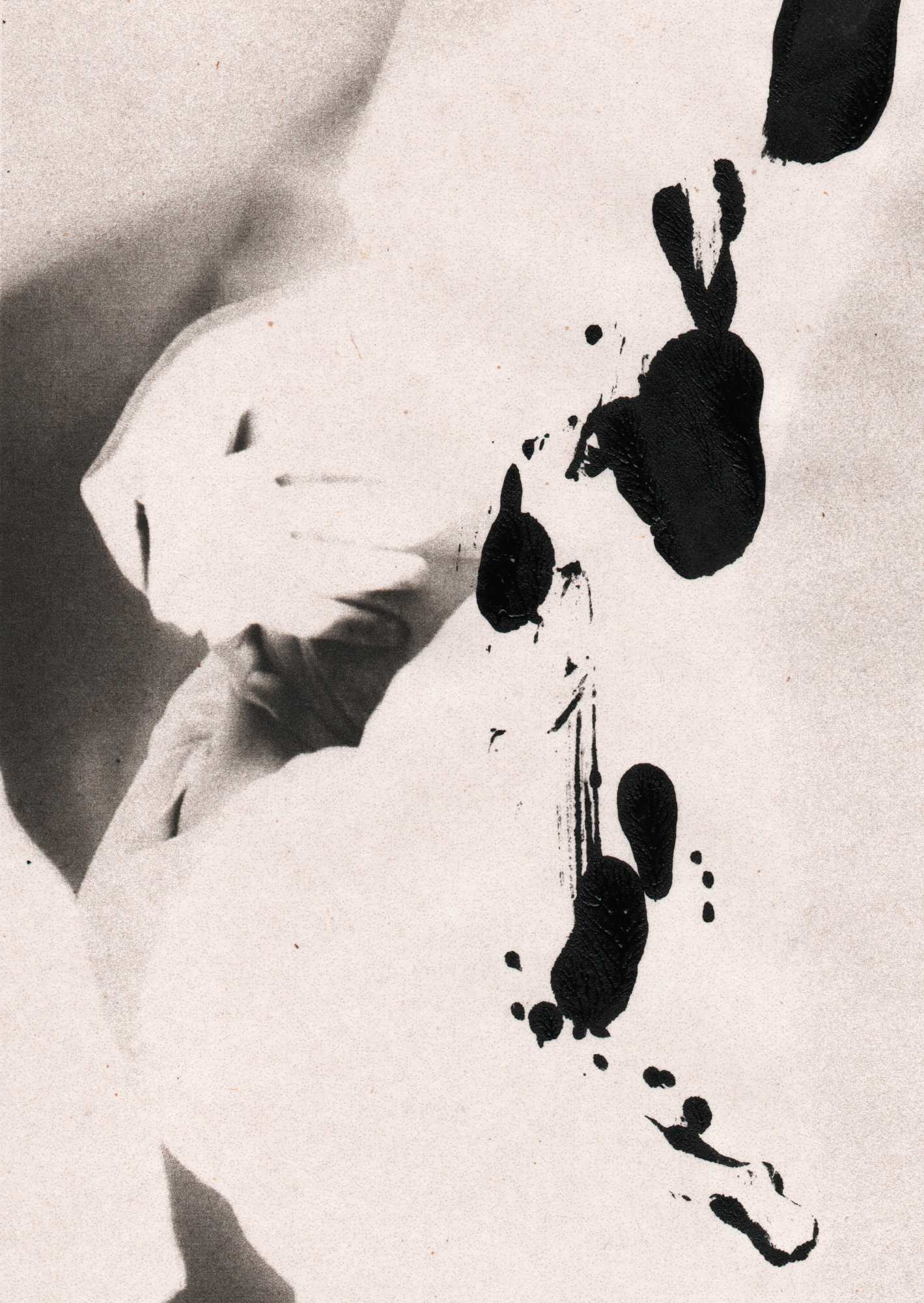
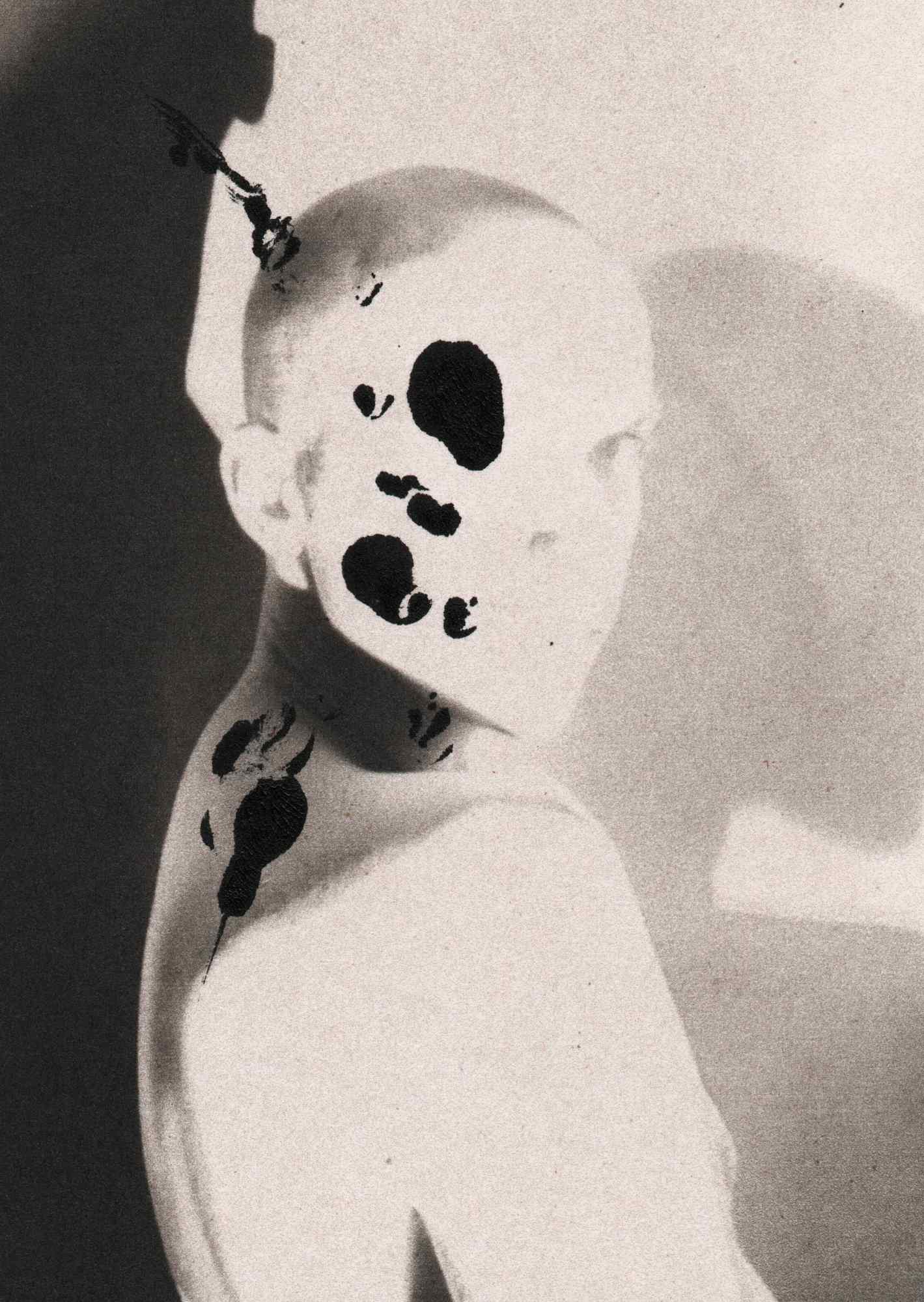

His photo project Plateau is not a series in the traditional sense. It is, as Bohdan describes it, “a visual meditation on the verge of personal fatigue, social pressure, and the silence that comes after an inner scream.” Born out of a period of emotional burnout, the work captures the body caught in that liminal state—neither action nor rest, but something more charged: stillness as resistance.
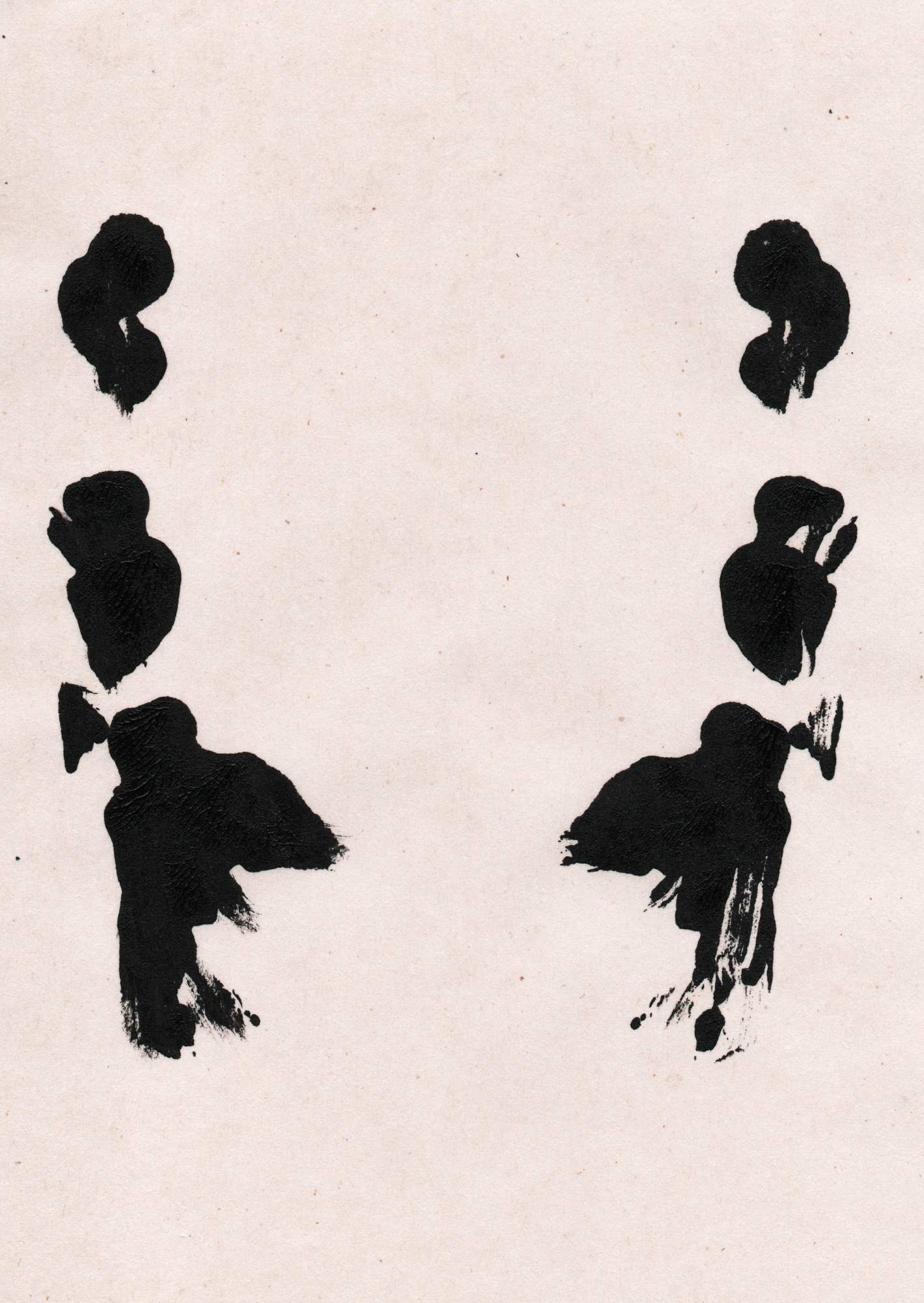
Technically, Plateau merges analog photography with expressive ink-based mark-making. Bohdan prints scans of his analogue photographs on vintage newspaper paper—a medium already freighted with memory, fragility, and the echo of public noise. Onto these prints, he applies what he calls “psychological-dynamical paintings”—gestural strokes that look like bruises, spills, or nervous systems gone rogue. These interventions underscore corporeality not as form, but as feeling.
Each image becomes a quiet eruption. In Plateau_03, a contorted figure—partly exposed, partly confined—curls into the frame like a parenthesis of vulnerability. The surrounding ink gestures mirror the body’s curves, as if amplifying its inner turmoil. In Plateau_06, a figure dissolves into dense, viscous blotches—an image of vanishing, or perhaps drowning. Other works, such as Plateau_08 or Plateau_10, present more symmetrical forms: ink blot silhouettes facing each other or multiplying in mirrored confrontation, suggesting both dialogue and fracture.
But this “plateau” is no calm landscape. As Bohdan writes, it is “not peace, but a forced stillness; a place where you take shape when you want to spread across the walls.” The tension is palpable. These are bodies frozen mid-scream, clenched in uncertainty, suspended in time when “the decisions about our movements are not ours.”
At once deeply personal and unmistakably political, Plateau resonates in its recognition of exhaustion—not as failure, but as a human right. “We have the right to stop,” Bohdan insists. “We have the right to feel. And finally, to move on.”
What makes this series powerful is precisely that refusal to resolve or reassure. Instead, it asks us to sit with discomfort, with ache, with the strange poise of survival. In Plateau, Bohdan Nahornyi gives form to a collective psychological climate by grounding it in the flesh—raw, marked, and honest. The result is an enduring visual act of recognition.
All photos © BOHDAN NAHORNYI
To see more of his photography visit his Instagram page.
 SPECTACULUM MAGAZINE