AMY NEWTON McCONNEL
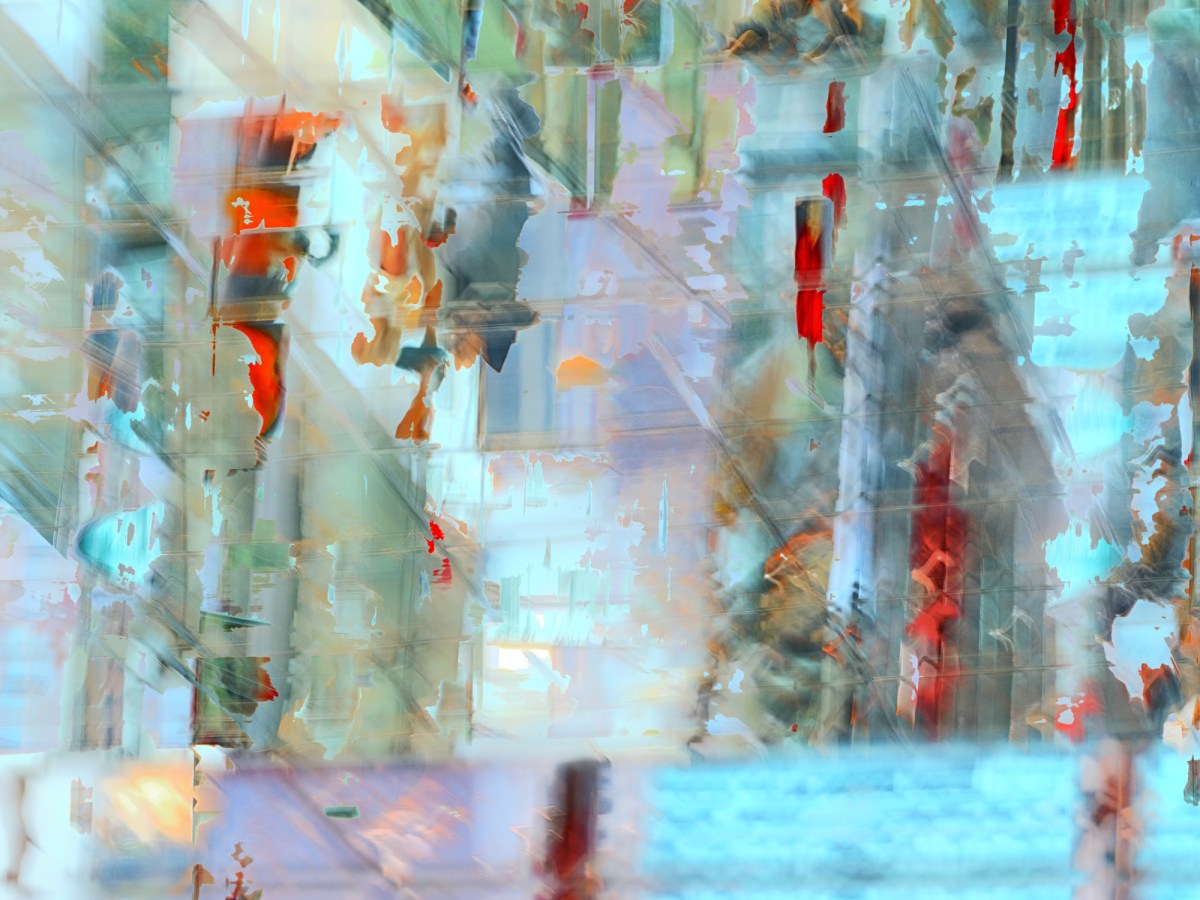
// For Phoenix-based photographer Amy Newton-McConnel, the camera is not simply a means of recording the visible world, but a tool for questioning how we perceive it. Working primarily in abstract photography, she explores the possibilities of movement, reflection and multiple exposure to transform familiar subjects into unexpected visual compositions. Architecture, people, nature and light provide the raw material for images in which colour, form and emotion often take precedence over straightforward representation.
Her photographic approach is rooted in curiosity about the ordinary and the easily overlooked. Rather than searching exclusively for extraordinary subjects, Amy is interested in discovering new visual possibilities within everyday surroundings. Intentional camera movement and multiple exposure have become central to her practice, allowing her to fragment and rearrange reality while retaining traces of the original scene. The resulting photographs frequently occupy an intriguing territory between recognition and abstraction.
This openness to interpretation also reflects her broader appreciation of the arts. Whether encountering painting, music or performance, Amy is fascinated by the different ways artists communicate ideas and emotions, and by the fact that a single work can evoke entirely different responses from different viewers. For her, artistic expression is an invitation to reconsider the familiar and recognise that there is rarely only one way of seeing the world.
“The camera is an instrument that teaches people how to see without a camera.”
Dorothea Lange
What draws you to the arts?
Art gives me a way to experience the world differently. Whether I am creating, visiting a museum, listening to music, or watching a performance, I am fascinated by how artists express ideas and emotions in ways that words often cannot.
I love seeing the world through another artist’s perspective and discovering how the same work can evoke something entirely different in each of us. Art makes me more curious and observant. It reminds me to slow down, look beyond the obvious, and recognize that there is never just one way to see or experience the world.
What do you like best about this project?
What I love most about this project is the interplay between reflection, architecture, and human presence. SUMMIT’s mirrored surfaces and layers of glass create multiple planes within a single view, allowing people, structures, reflections, and the city beyond to occupy the same visual space.
I am especially drawn to the contrast between the geometry of the architecture and the organic forms of the people moving through it. Straight lines bend, figures dissolve into reflections, and boundaries between interior and exterior become difficult to distinguish. At times, the human form seems to meld completely with the architecture. I also love the element of discovery. With ICM, multiple exposure, and the complexity of the reflective environment, I can never completely predict what the camera will capture. There is always something unexpected within the layers—an overlap, gesture, reflection, or relationship I may not have fully seen when making the photograph. That process of discovering something new within the familiar is one of the things I find most exciting about photography.
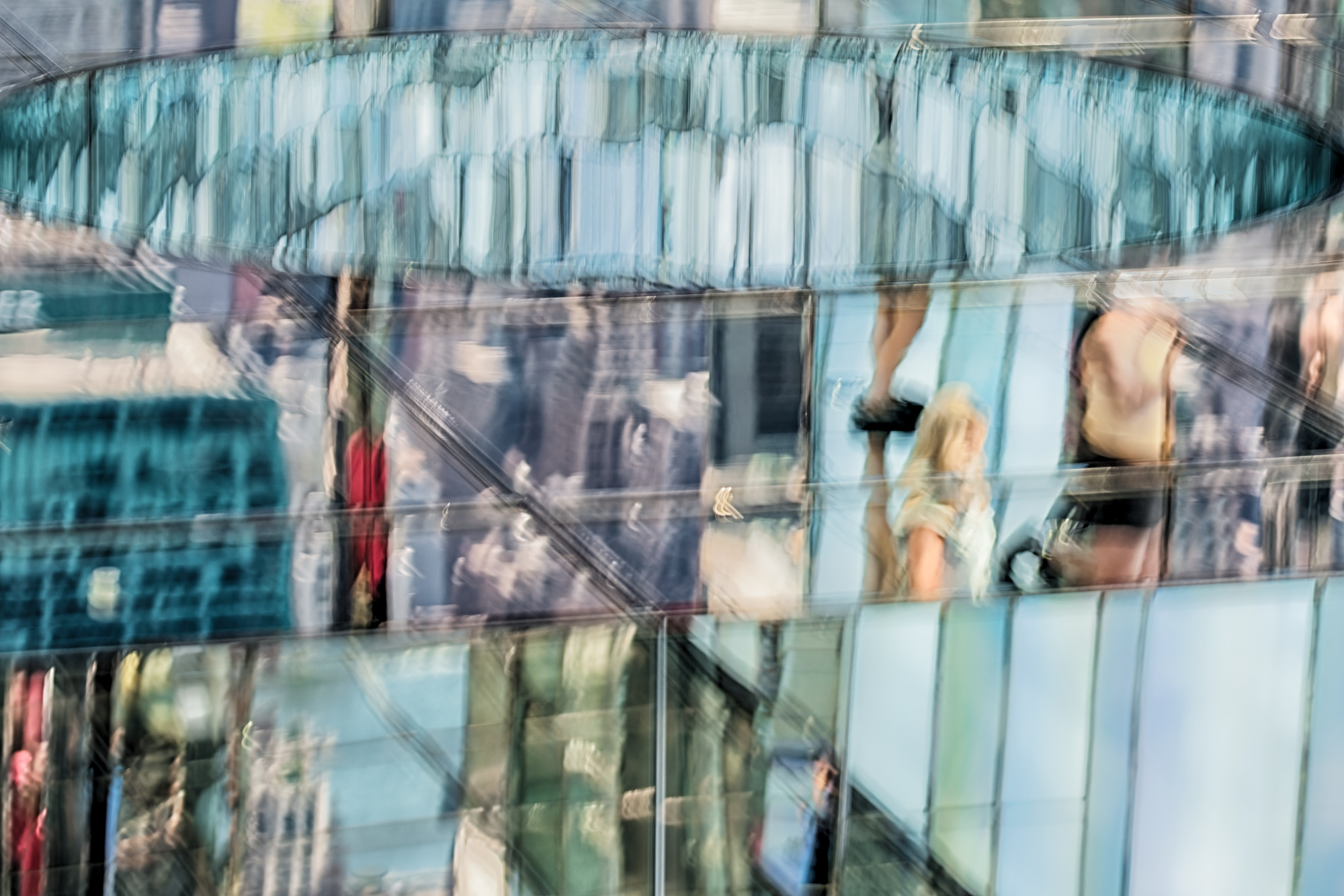
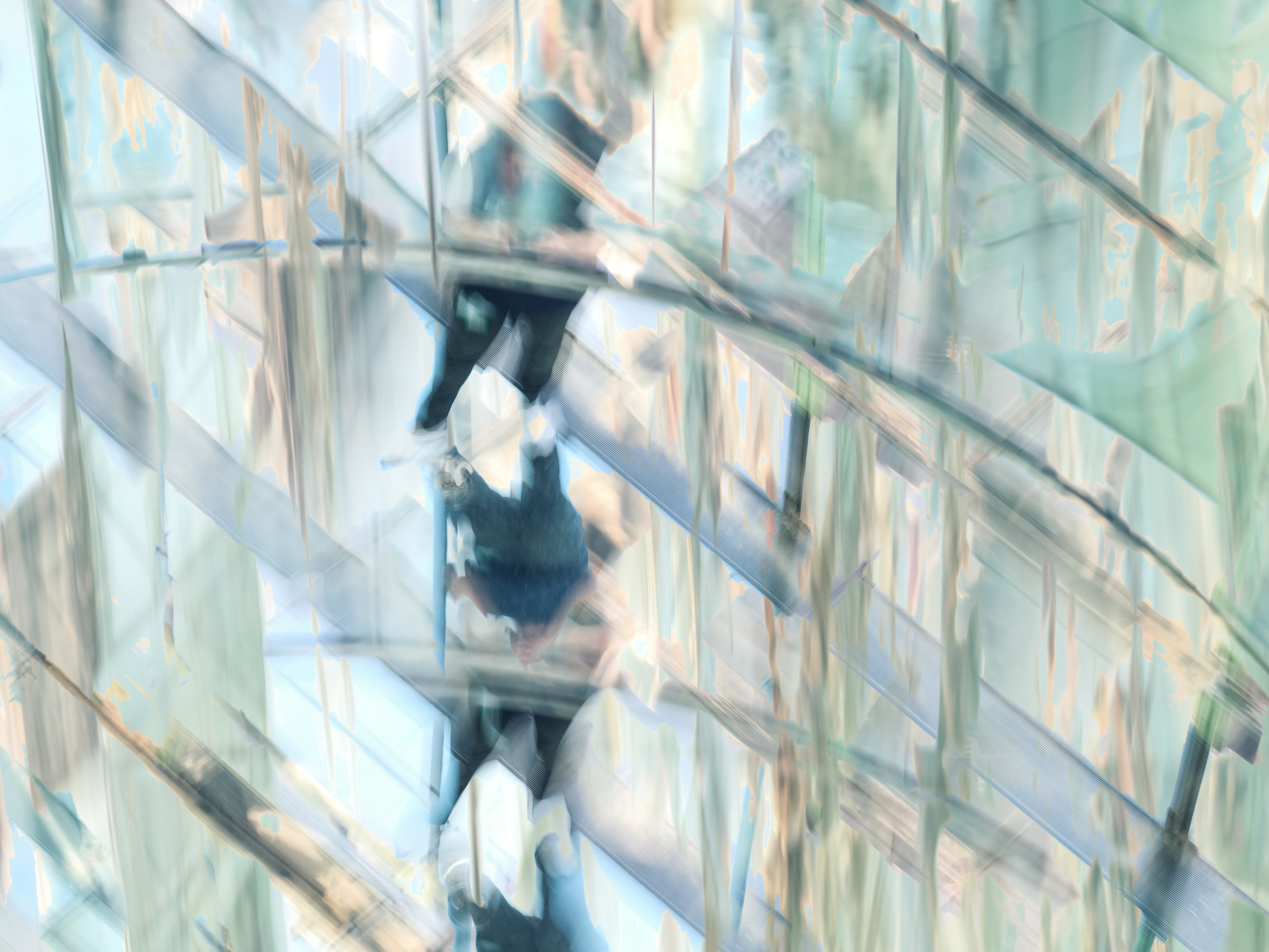
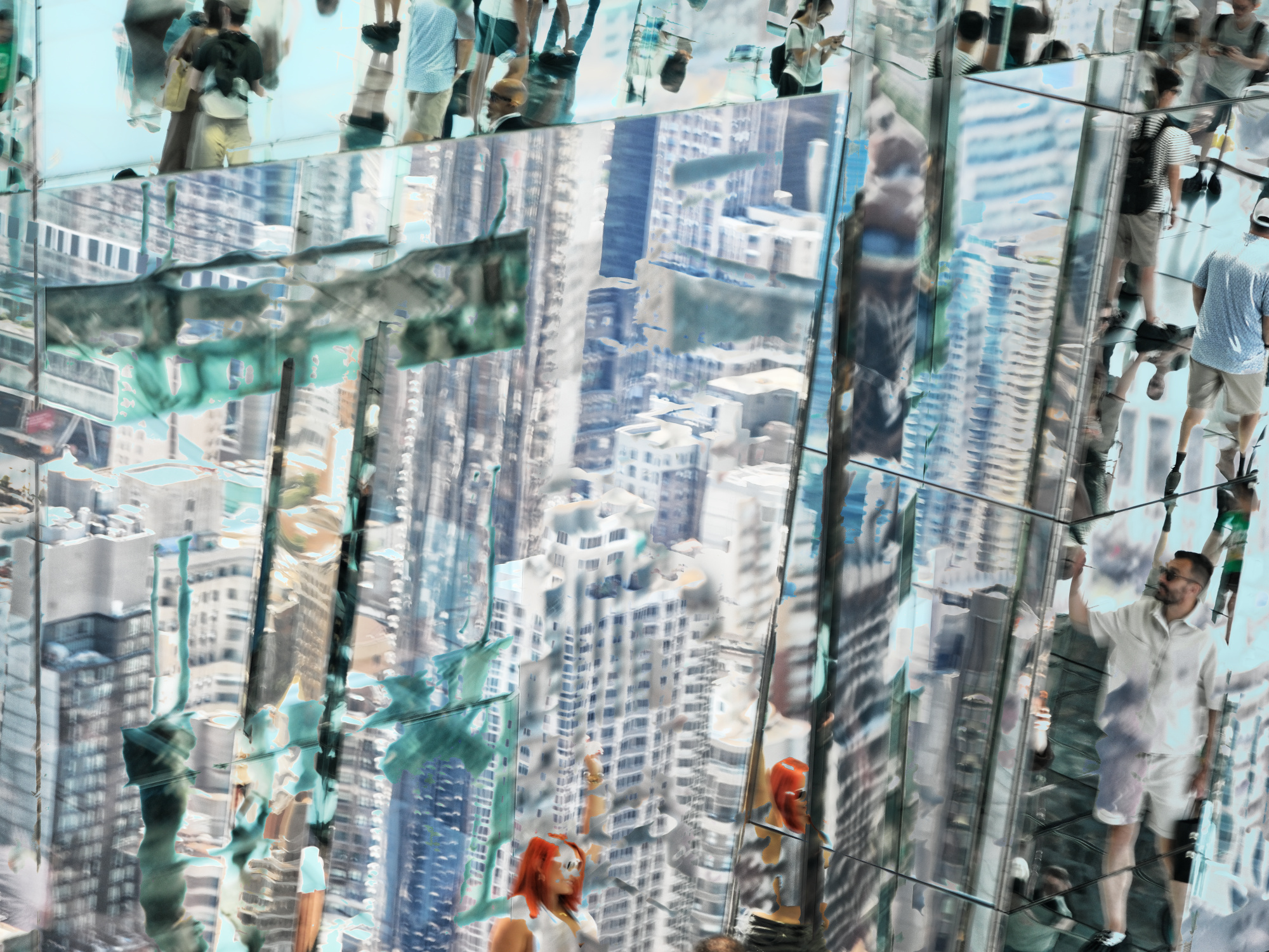
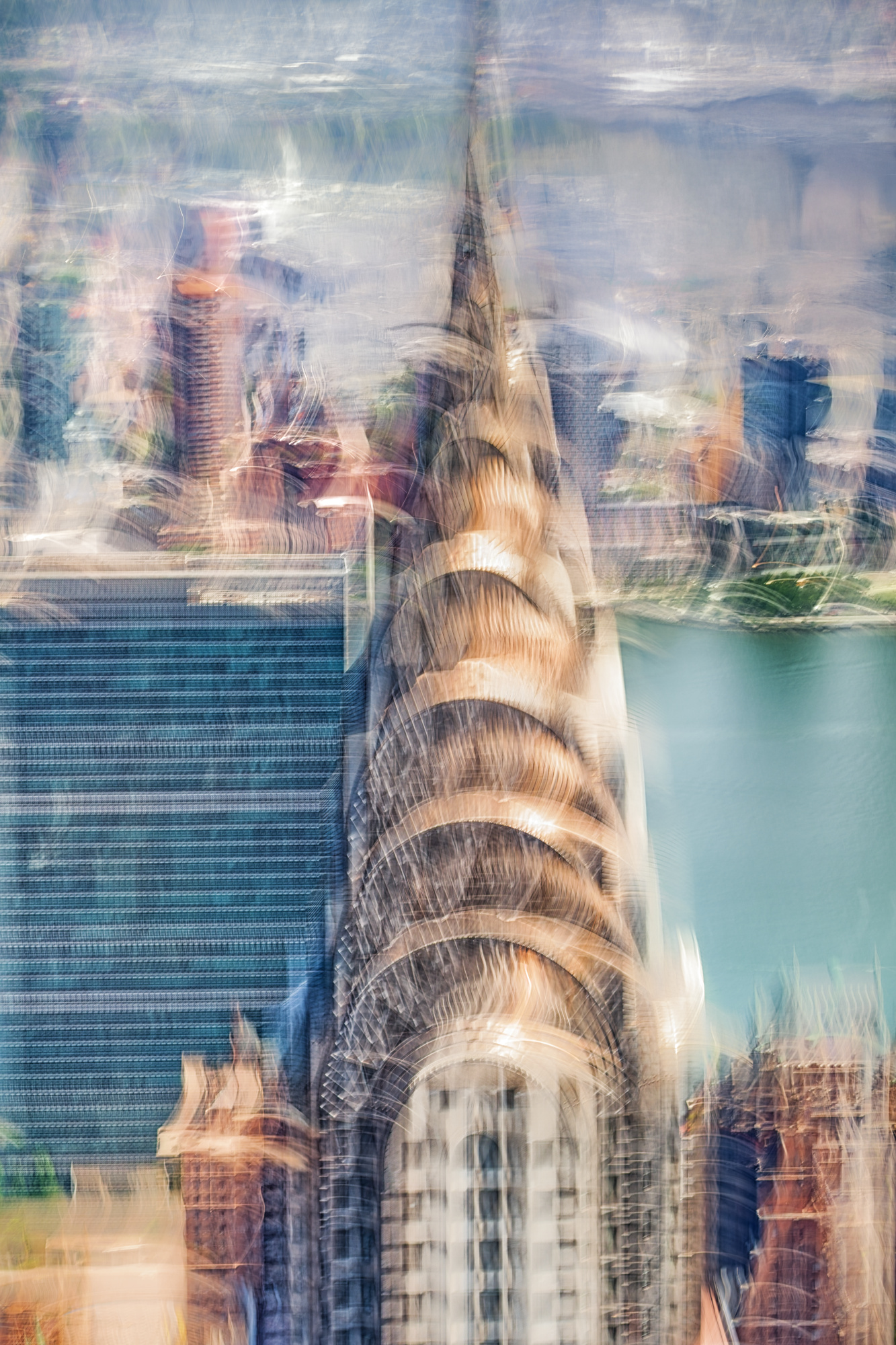
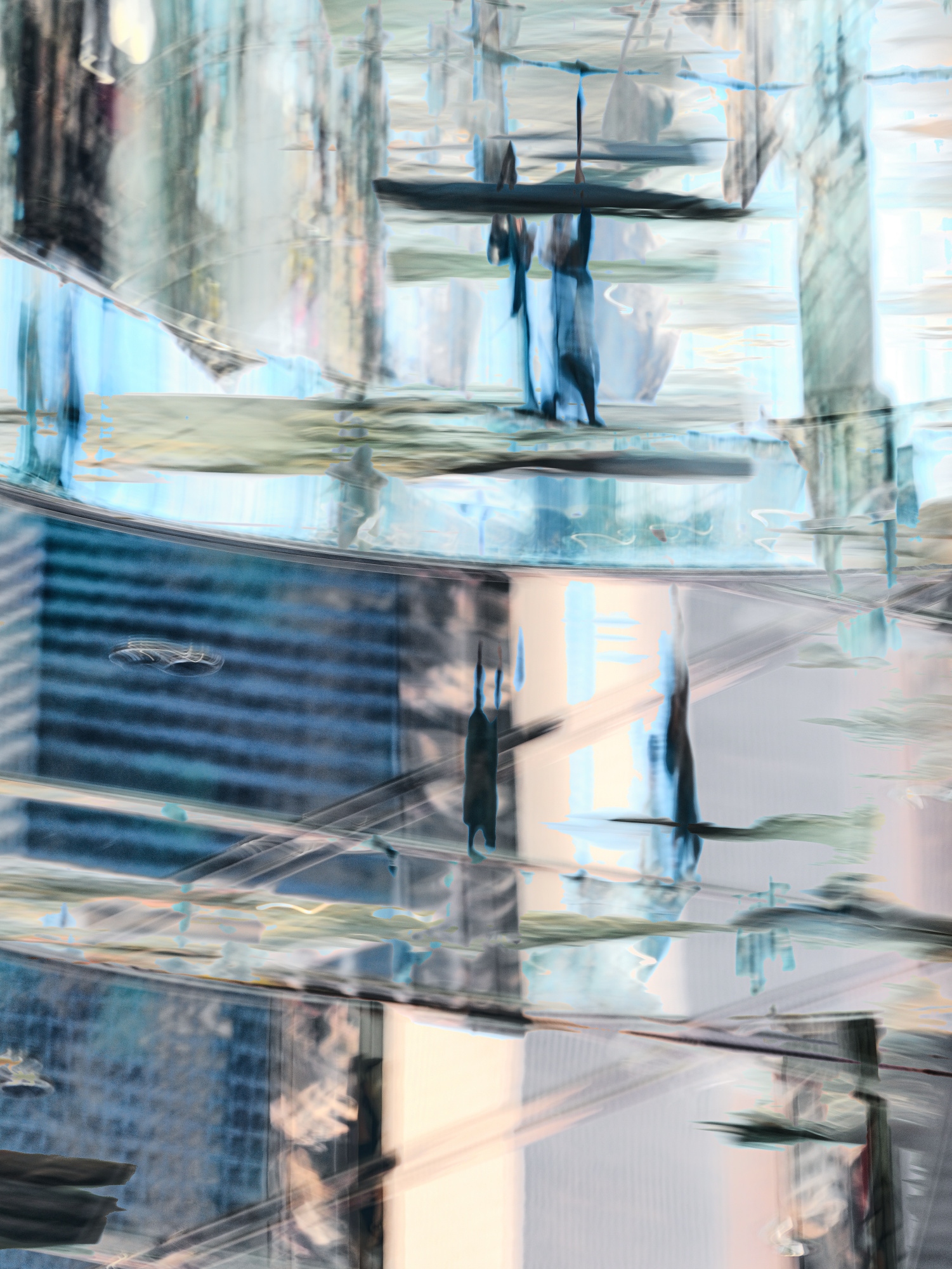
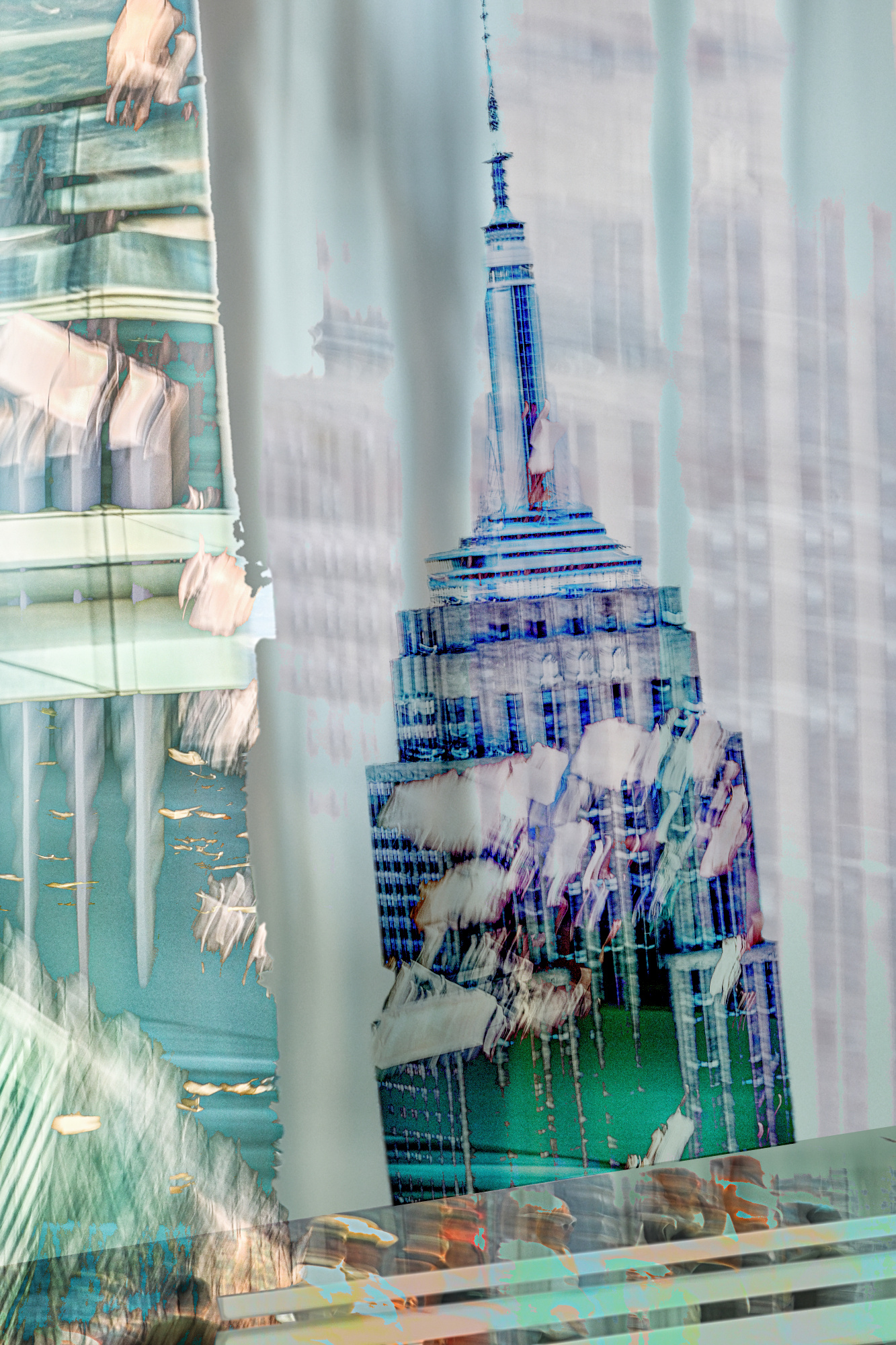
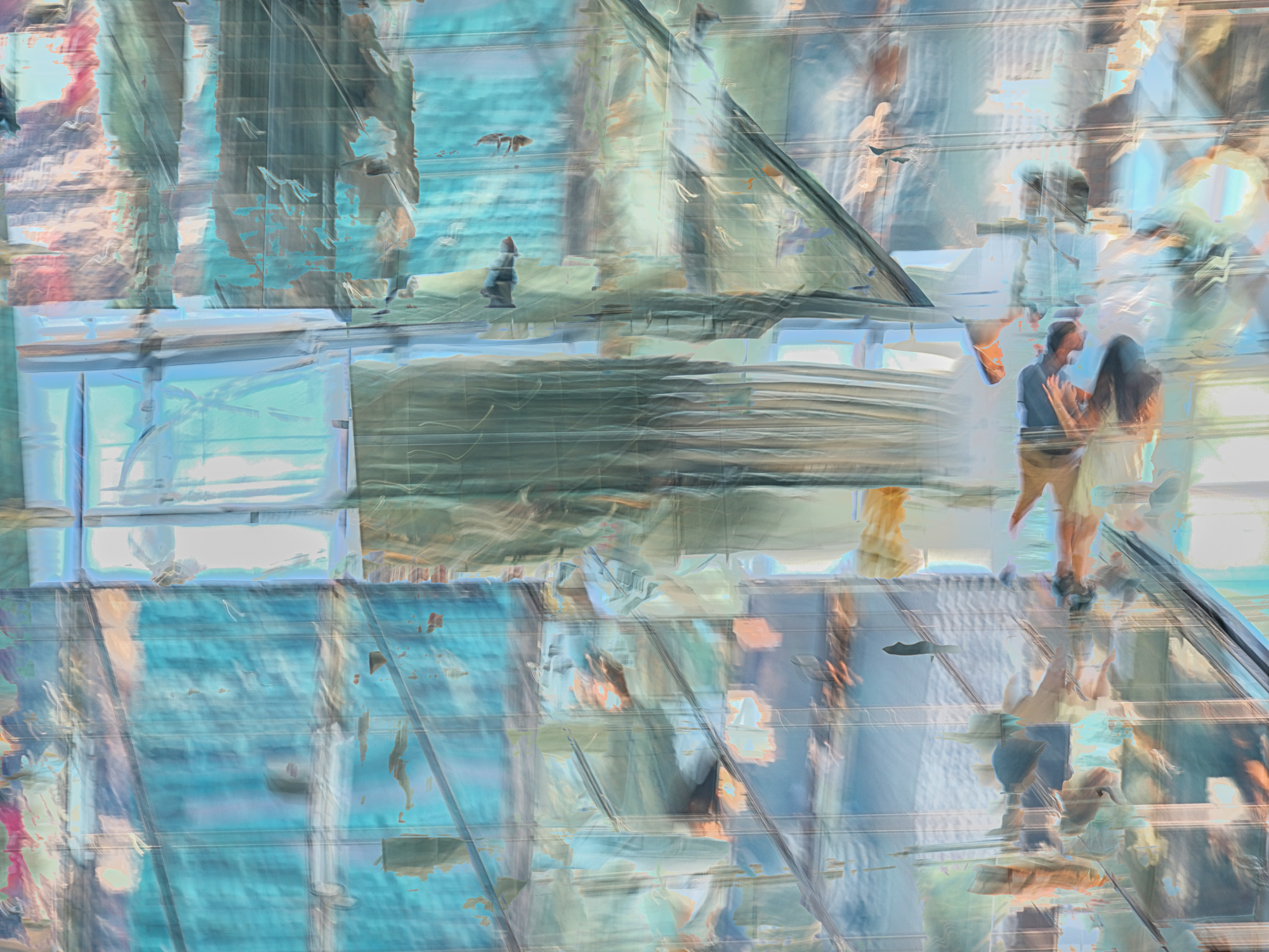
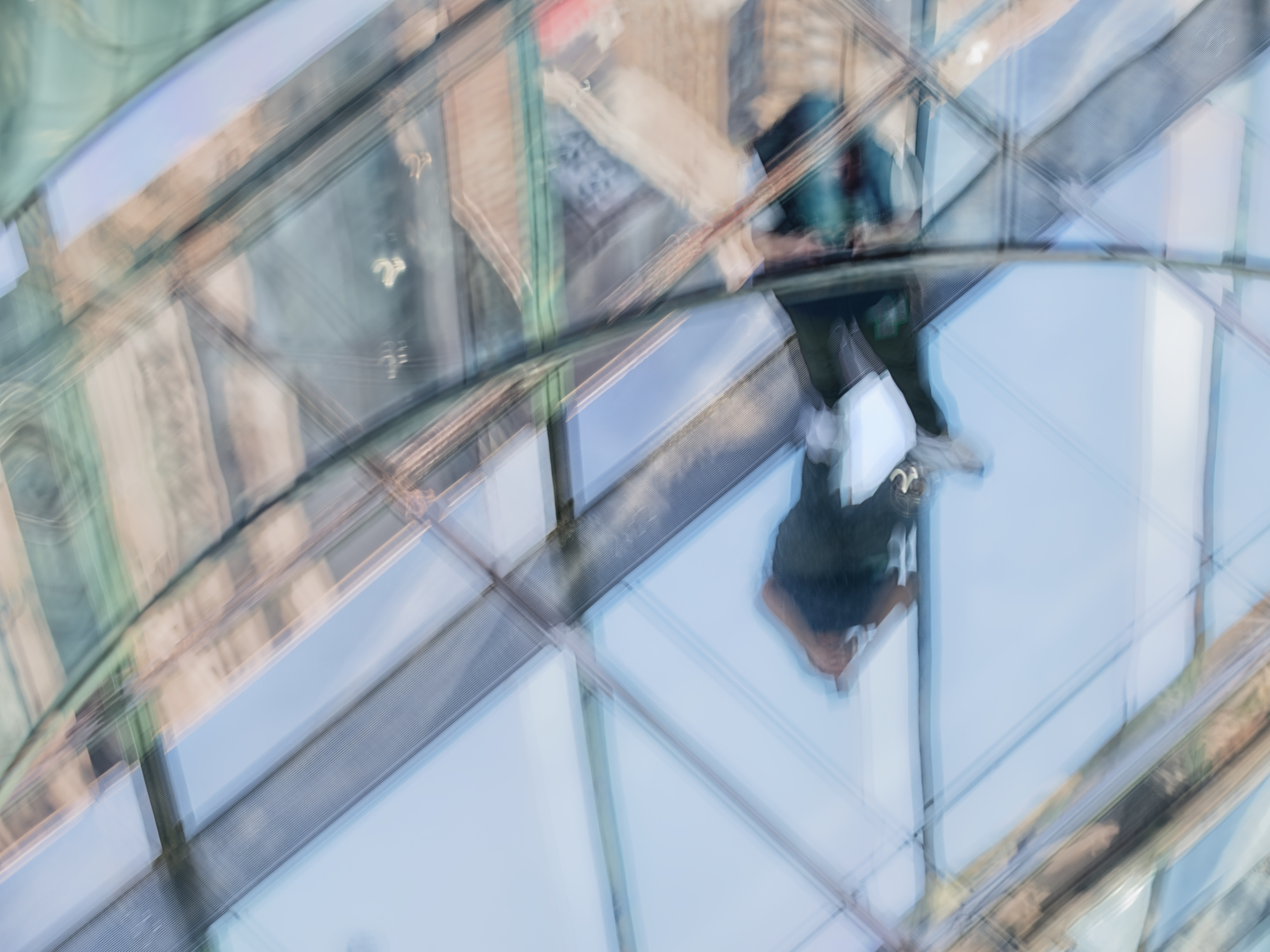
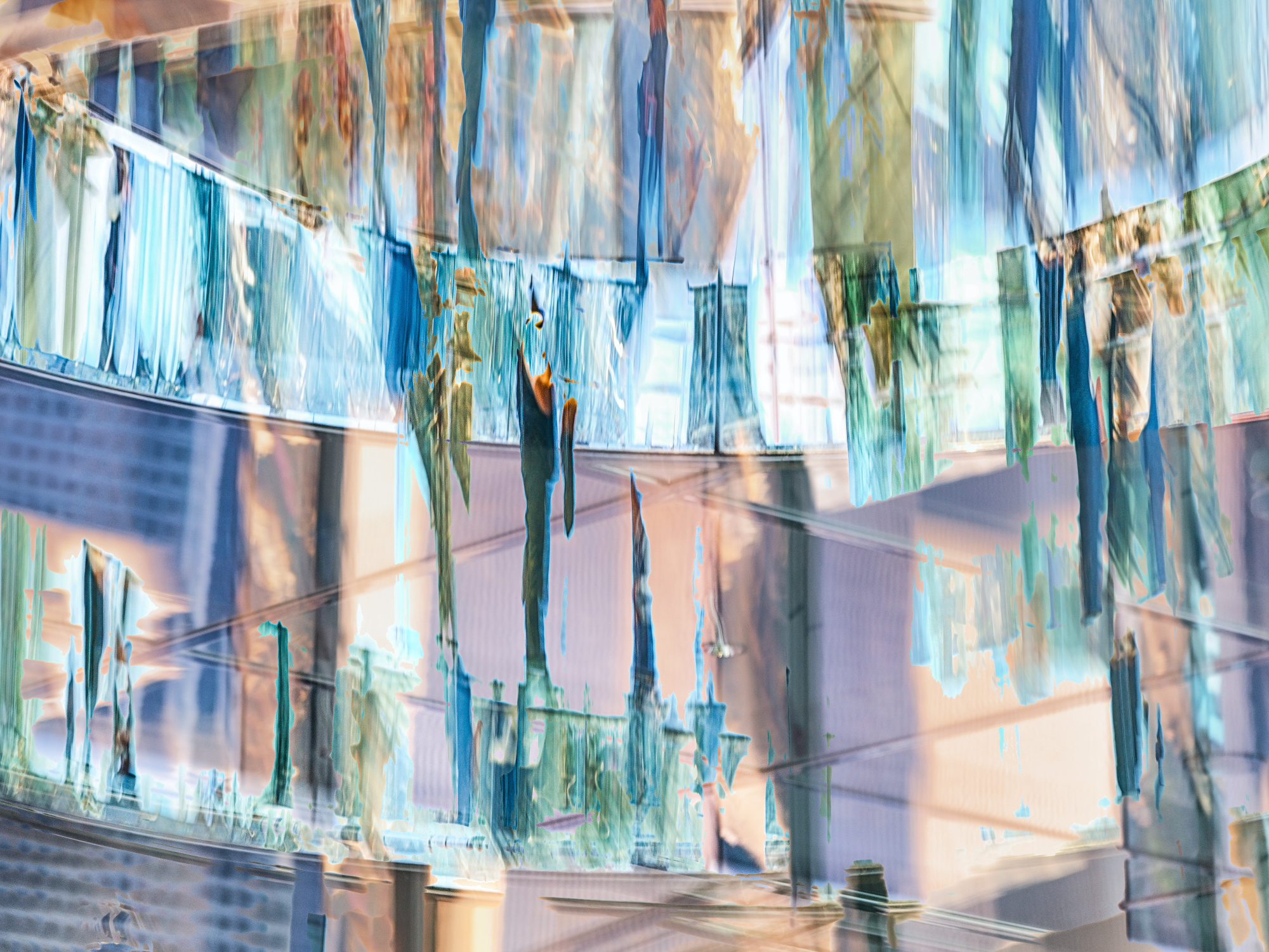
Her latest series takes this philosophy into the extraordinary architectural environment of SUMMIT One Vanderbilt in New York City. Situated high above Manhattan, the immersive observation experience combines panoramic views of the city with mirrored surfaces, glass walls and reflective installations. It is a place designed to challenge conventional perceptions of space, making it a particularly compelling setting for Amy’s experimental photography.
Rather than documenting the architecture or the spectacular skyline in a conventional way, Amy uses the environment as the starting point for an exploration of perception. Reflections multiply the surrounding structures, people appear in unexpected places, and the boundaries between interior and exterior become increasingly uncertain. What initially seems like a recognisable architectural space gradually transforms into a complex visual landscape of overlapping forms and shifting perspectives.
She created the series using intentional camera movement (ICM) and multiple exposures, sometimes separately and sometimes in combination. By deliberately moving the camera during an exposure, Amy allows architectural lines, human figures and areas of colour to stretch, blur or dissolve. Multiple exposures introduce additional layers of visual information, bringing together different moments and viewpoints within a single frame. Importantly, the essential effects are created in-camera rather than constructed afterwards through digital compositing.
The mirrored environment adds another level of complexity to this process. Glass and reflective surfaces already fragment and multiply the surrounding space, creating unexpected relationships between objects that are physically separated.
The photographs have a distinctly painterly quality. Soft blues, turquoise, pale greens and muted pinks dominate many of the compositions, while occasional warmer accents introduce contrast and visual energy. Architectural structures dissolve into translucent planes of colour, and the rigid geometry of the building is transformed into fluid, almost organic forms.
The contrast between the building’s geometric precision and the unpredictable movement of human figures is particularly interesting. Architecture is generally associated with stability, structure and clearly defined spatial relationships. Yet in these photographs, straight lines bend, surfaces seem to melt, and solid structures lose their apparent permanence. Human forms, meanwhile, become fleeting presences, sometimes barely distinguishable from the reflections surrounding them.
The images also challenge the conventional distinction between photography and painting. Their translucent layers, softened contours and expressive use of colour recall abstract painting, yet they remain grounded in photographic observations of a real place. Rather than abandoning reality altogether, Amy transforms it, allowing recognisable elements to coexist with forms that resist immediate interpretation.
Amy’s photographs offer a different way of experiencing one of New York’s most spectacular architectural attractions. Where the conventional visitor might concentrate on the panoramic skyline or the immersive effects of the mirrored installations, Amy discovers an opportunity to explore the fluid relationship between architecture, movement and perception. Sometimes the greatest possibilities emerge when the visible world becomes uncertain, leaving room for imagination, interpretation and discovery.
Click on the photos to see the original larger version.
All photos © AMY NEWTON McCONNEL
See more of her work on Instagram.

