WILFRID ROUFF
// Wilfrid Rouff is a French photographer and conceptual artist whose work gravitates toward abstraction. Rather than chasing technical perfection, he embraces limitation — often working with simple or unconventional tools, from early digital cameras to his iPhone. What defines Wilfrid’s practice is not control, but his relationship to chance.
Wilfrid has spent decades inside images before stepping slightly to the side of them. Born into photography, he began using a camera at a young age and later started his career in New York, assisting Oliviero Toscani. In the 1980s, he was among the few photographers documenting the backstage world of fashion, capturing a more intimate and less visible side of the industry.
Today, Wilfrid lives and works between France and New York. His work has been exhibited internationally, including in New York and Paris, and is part of the collection of the Centre Pompidou.
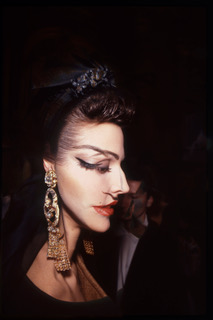
Between 1984 and 1992, he photographed backstage at Haute Couture and ready-to-wear shows in Paris and New York for The New York Times Magazine. It was a rare position — close to the models, close to the transformation, close enough to capture not just fashion, but the fragile, constructed moments behind it. While others documented the spectacle, Wilfrid focused on details: accessories, faces, fragments of identity. Earrings brushing skin, makeup merging with expression. Over those years, he produced nearly 40,000 slides, the vast majority of which remained unseen.
“Chance is my only talent.”
Roland Baladi – video artist
What draws you to the arts?
This is simply part of who I am. I am a practicing artist and I live and breathe and relate to everything artistic.
What do you like best about this project?
I love how the fusions get made. I don’t try to match images together. I don’t look for them. They just appear to me. It’s almost a process from which I am detached. And discovering a match induces a new surprise every time.
It’s a throwback to a vivid memory I have: when I was four or five years old, I remember the exact location of the red lightbulb in my father’s photo lab, and although I don’t remember the actual picture, I have a clear recollection of the magic I felt when he lifted me up and said, “Look!”, pointing to the black and white image gradually appearing at the bottom of a tank filled with liquid. It happened to me. I had no part in the decision that led to this. My father just swept me up and I surrendered to the gift.
It’s as if all my artistic pursuit in photography revolved around trying to recapture this feeling of pure bliss at the moment of discovery, and the absolute certainty that gifts of chance, the ones I involve myself in the least, are the most valuable. And also, I’m a bit hypnotized by the weirdness of the result.
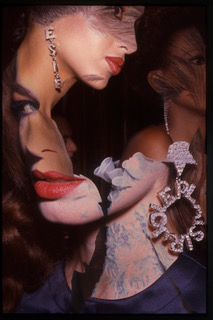
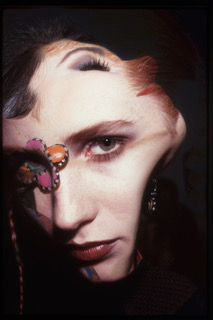
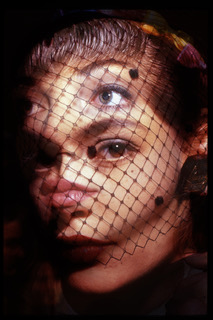
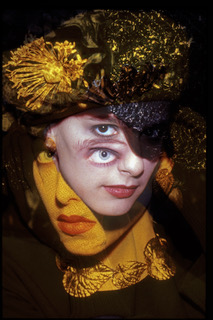
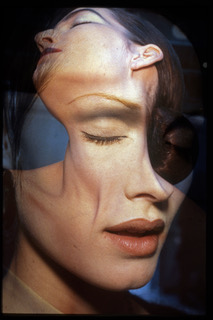
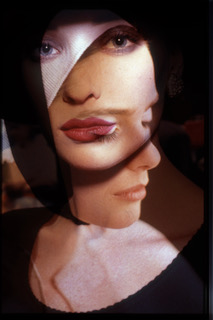
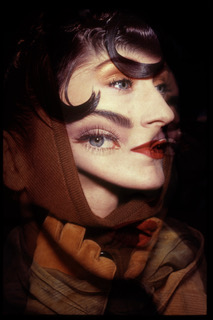
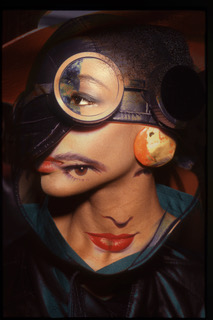
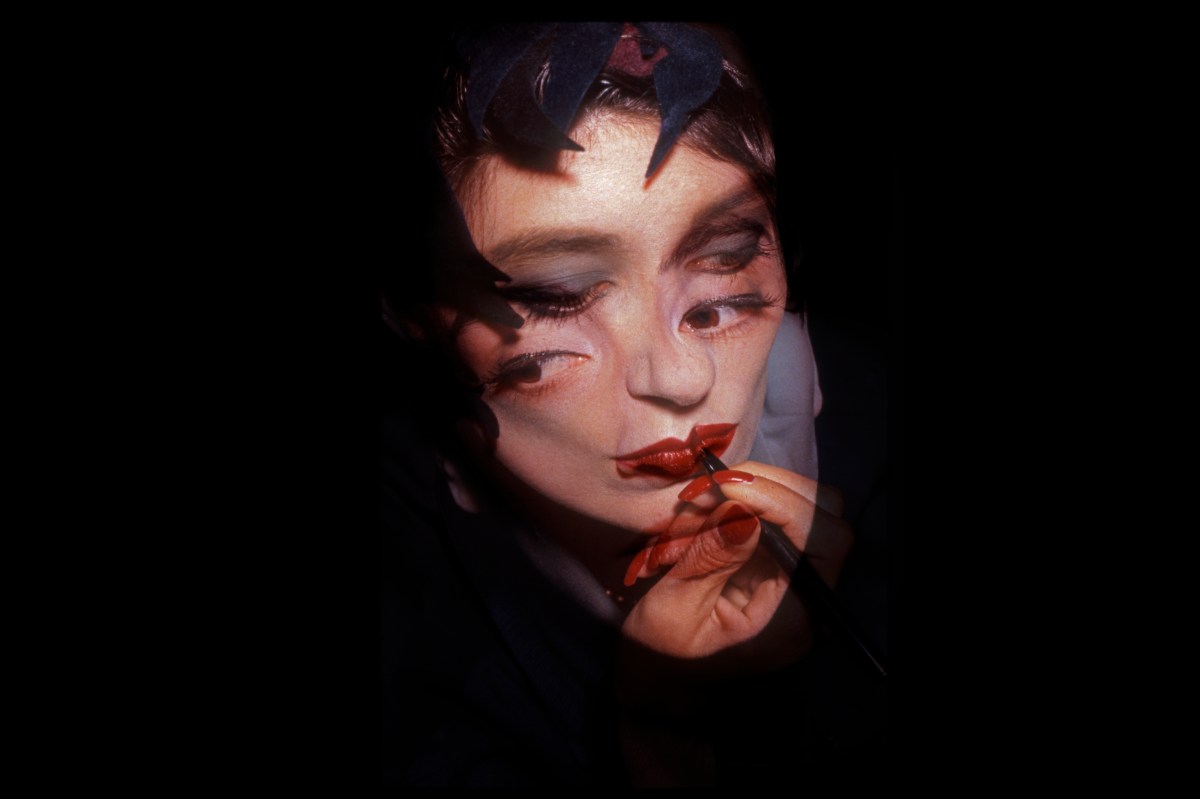
His recent series, Fusions, began with an accident. While arranging slides on a light table, two close-up portraits landed on top of each other. The alignment was unexpected, but immediately striking. The result evoked something beyond simple overlay — a collision of identities that felt at once cubist, surreal, and faintly sci-fi. The experience was unforgettable.
Years later, during the stillness of the Covid period, Wilfrid returned to his archive. Thousands of unpublished images resurfaced — fragments of a past that had never fully entered the present. Alongside this rediscovery, he resumed the process that had once started by accident. Now working digitally, he uses Photoshop’s blending function — aptly named “Fusion” in French — to bring these images together. The title of the series followed naturally.
But even with digital precision at his disposal, Wilfrid resists control. He does not search for images to combine. He does not construct pairings deliberately. Instead, he allows them to appear. The process feels almost detached, as if the work reveals itself rather than being made. Each fusion arrives as a small shock — a recognition rather than a decision.
The mood becomes hypnotic, with overlapping faces dissolving into one another, beauty fractured yet strangely coherent.
In some images, the atmosphere shifts toward something more mechanical, where accessories, skin, and identity merge into a single, unstable surface. Across the series, glamour is still present — but altered, multiplied, slightly disoriented.
There is something quietly radical in Wilfrid´s refusal to force meaning. He connects this instinct to a childhood memory: standing in his father’s darkroom, lifted up to watch an image slowly emerge in liquid under a red light. He had no control over it. No authorship. Only the experience of witnessing something appear. That moment — pure, unrepeatable — seems to echo throughout his work.
Fusions is not about nostalgia though. It is about returning to a state of discovery. When he quotes Roland Baladi´s statement “Chance is my only talent,” it sounds almost dismissive, but it reveals something. In a time where images are engineered, optimized, and endlessly controlled, Wilfrid allows something unpredictable to enter the frame. And in doing so, he reminds us that sometimes the most compelling images are not created through intention, but through the rare ability to recognize when something unexpected happens — and not ruin it.
Click on the photos to see the original larger version.
All photos © WILFRID ROUFF
See more of his work on his website or on Instagram.
 SPECTACULUM MAGAZINE