
Rowell B. Timoteo
// Based in San Fernando, La Union in the Philippines, Rowell B. Timoteo did not arrive at photography through the well-worn path of art school and full-time practice. He works as a Labor and Employment Officer, a role grounded in structure, policy, and the practicalities of everyday life. Photography entered his world in 2017, not as an escape, but as a parallel way of seeing. In his series Echo, he shows us his unique take on a visit to a photo exhibition and art fair.
What makes his trajectory interesting is not the familiar “late bloomer” narrative, but the quiet insistence that both lives can coexist. The bureaucratic and the poetic, side by side. His early development was shaped during the pandemic through online mentorship with street photographer Miguel Lisbona, who encouraged him to interrogate his own “why.” That question lingers in his work. Not loudly, not rhetorically, but persistently.
Rowell approaches the street less as a stage and more as a field of attention. His images are not built on confrontation or irony, but on observation. That sensibility traces back to his earlier engagement with drawing, where looking carefully is not optional, it is the entire method. Photography, for him, is not about hunting moments. It is about recognizing them.
“All that matters is that you are making something you love, to the best of your ability, here and now.”
Rick Rubin
The Creative Act: A Way of Being
What draws you to the arts?
What draws me to art is how it has been part of my life from a very young age. In elementary school, my friends and I were deeply into art; especially drawing and making posters with crayons. That early exposure stayed with me as I grew up, and by the time I reached college, I was actively joining poster-slogan contests, eventually winning one and later becoming a staff artist for our school publication.
Creating art has always been a calming and contemplative practice for me. It helps quiet my thoughts and provides a sense of healing when my mind feels overwhelmed. Music also plays an important role in my life, helping balance everything moving through my thoughts. That is why, even at my age of 43 and facing the priorities in life, I make it a point to visit art and photo exhibits whenever I can. Despite busy schedules, I choose to go, because art continues to ground me and reminds me of who I am.
What did you like best about this photography project?
What I like best about this project is how it brings me back to the time when I was deeply connected to art through drawing. It reminds me of the days when imagination played freely and ideas were translated onto paper. As the years passed, my focus shifted toward career, work, and life priorities, and my time practicing art gradually lessened. Discovering street photography changed that, it reawakened my way of seeing.
When I visited the photo exhibit and art fair, my love for art and my present passion for photography intertwined in that moment. Even with limited time, I took the chance to document what felt like a once-in-a-lifetime experience. The nostalgia I felt became an appreciation of who I have become today—living a life where art still has a place in my everyday life.
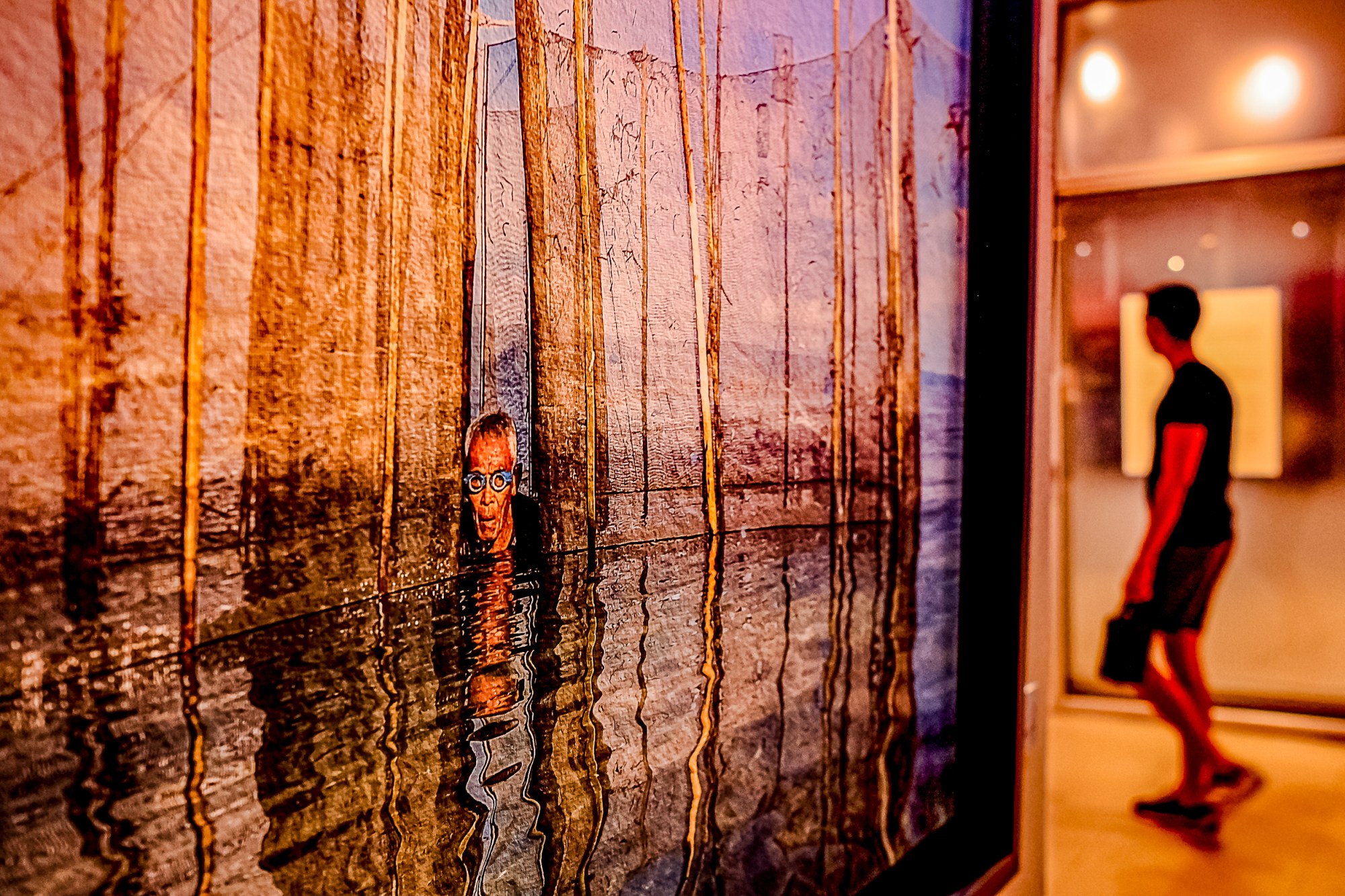
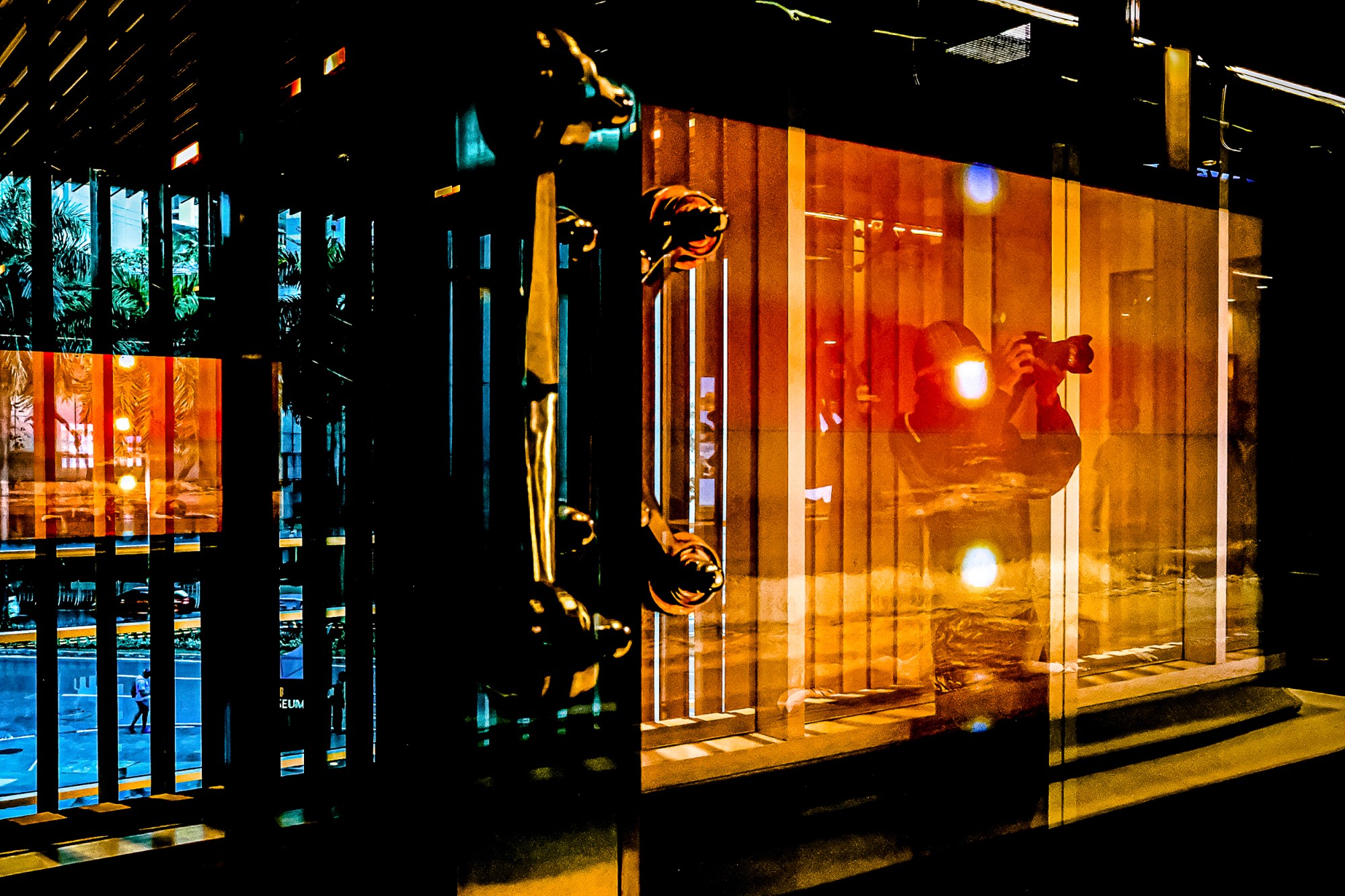
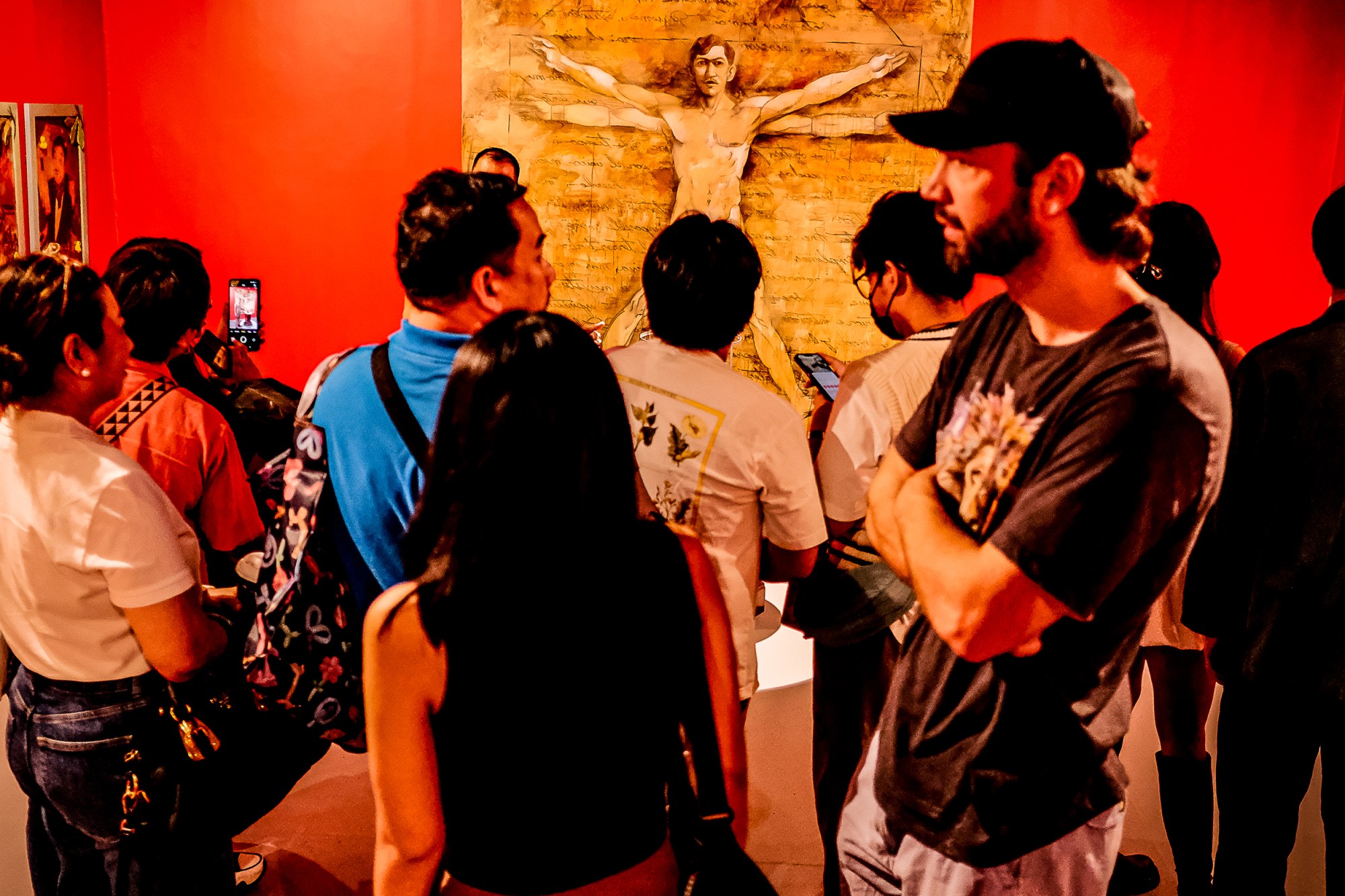
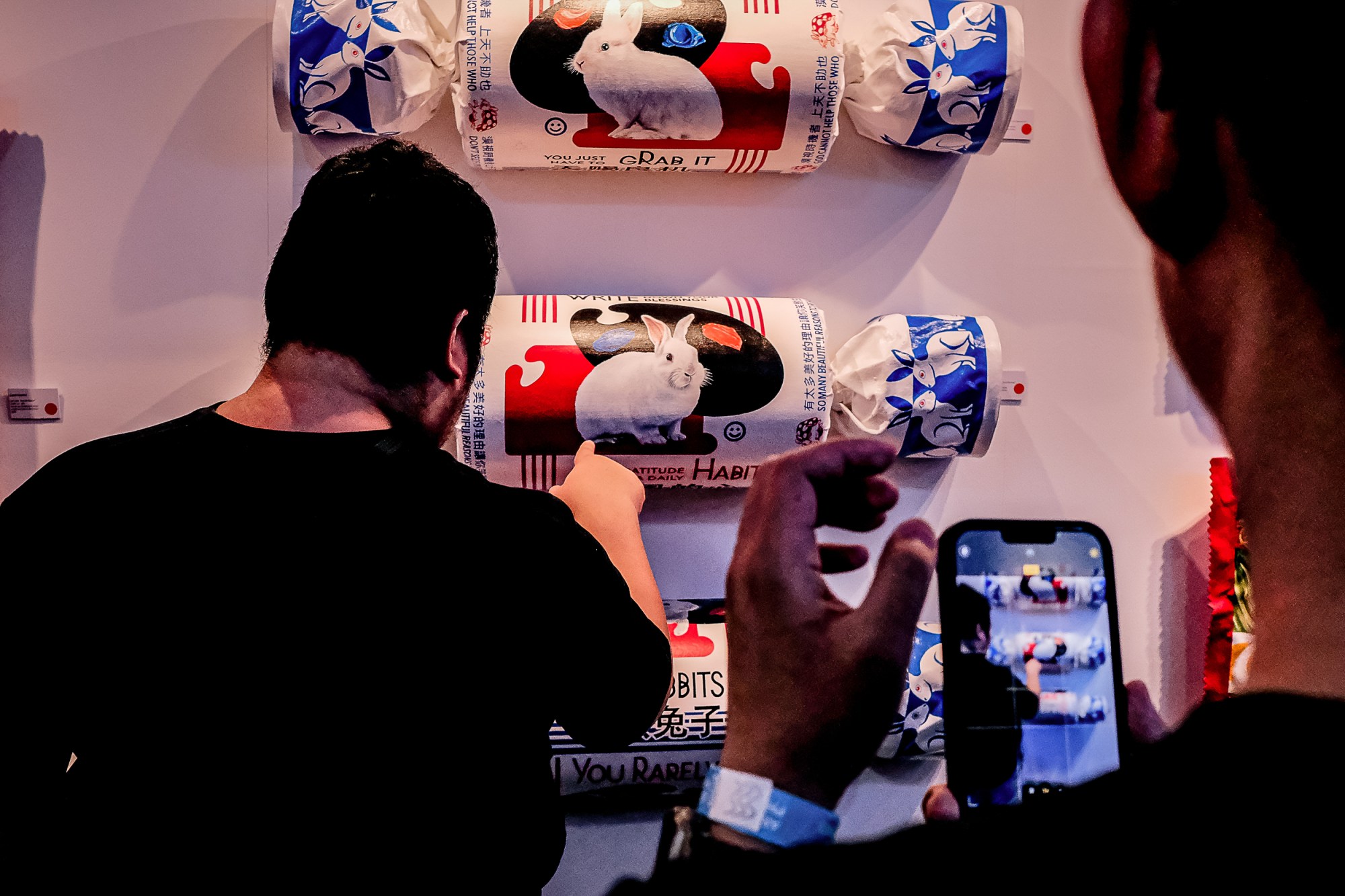
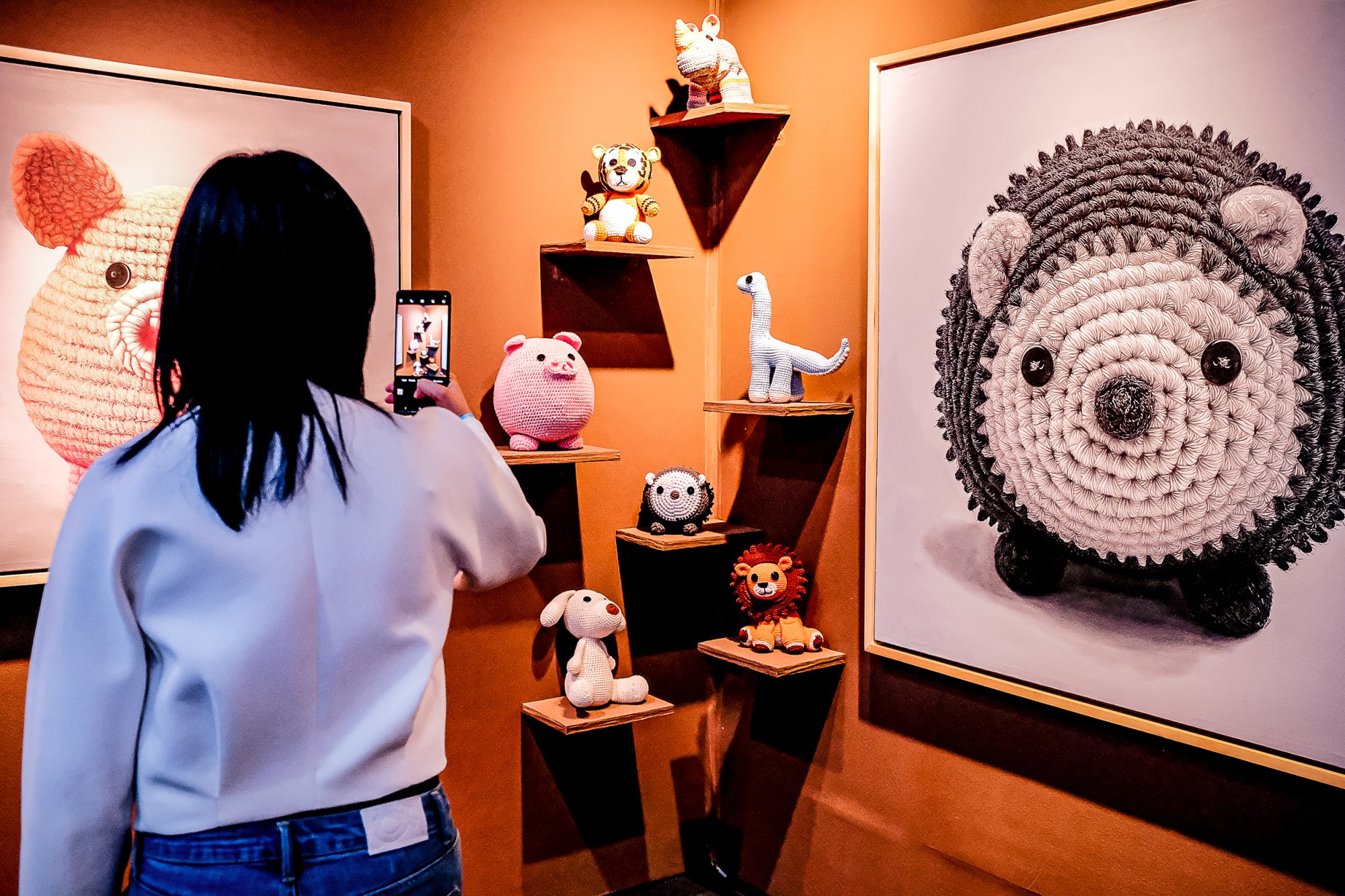
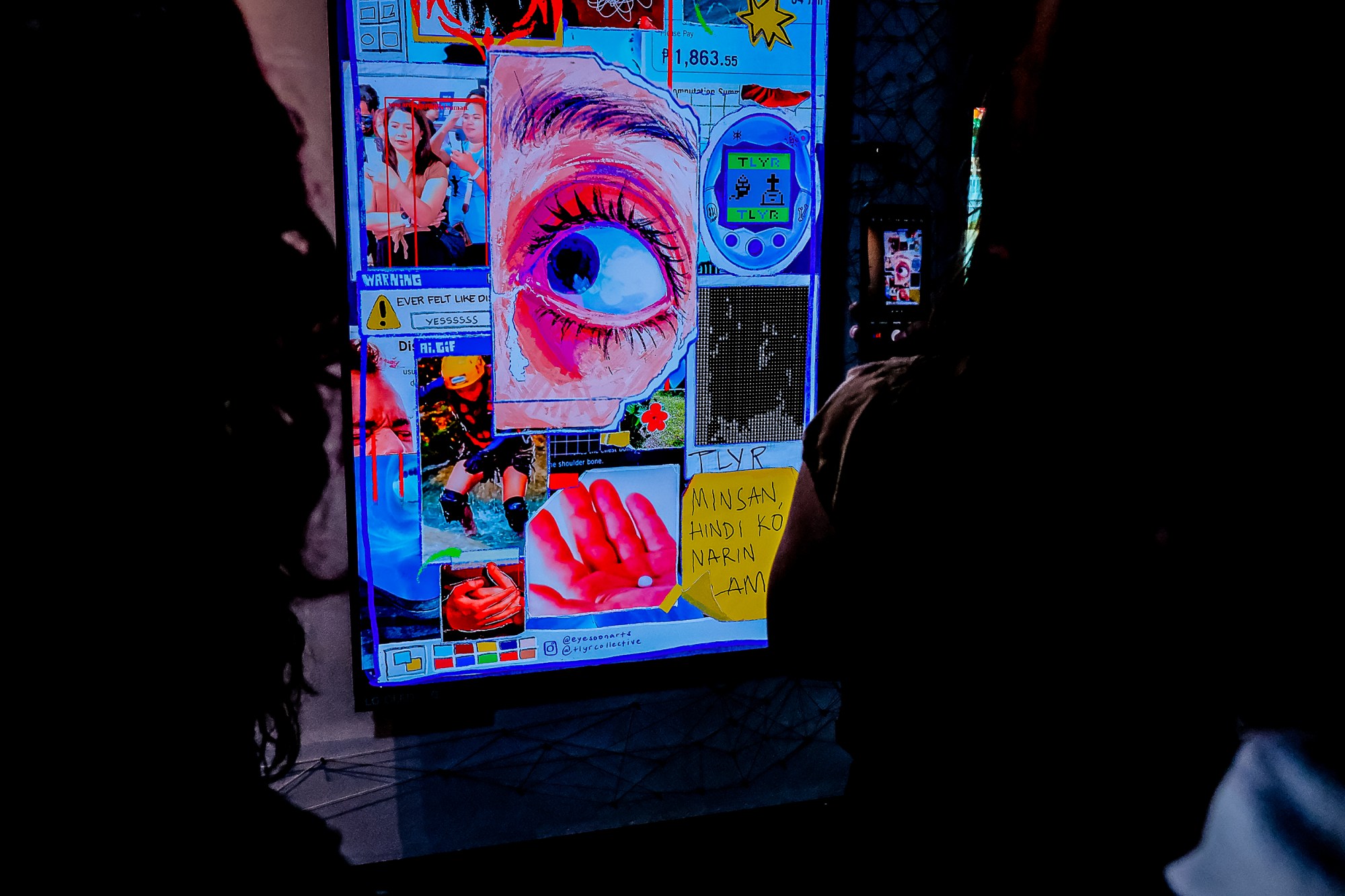
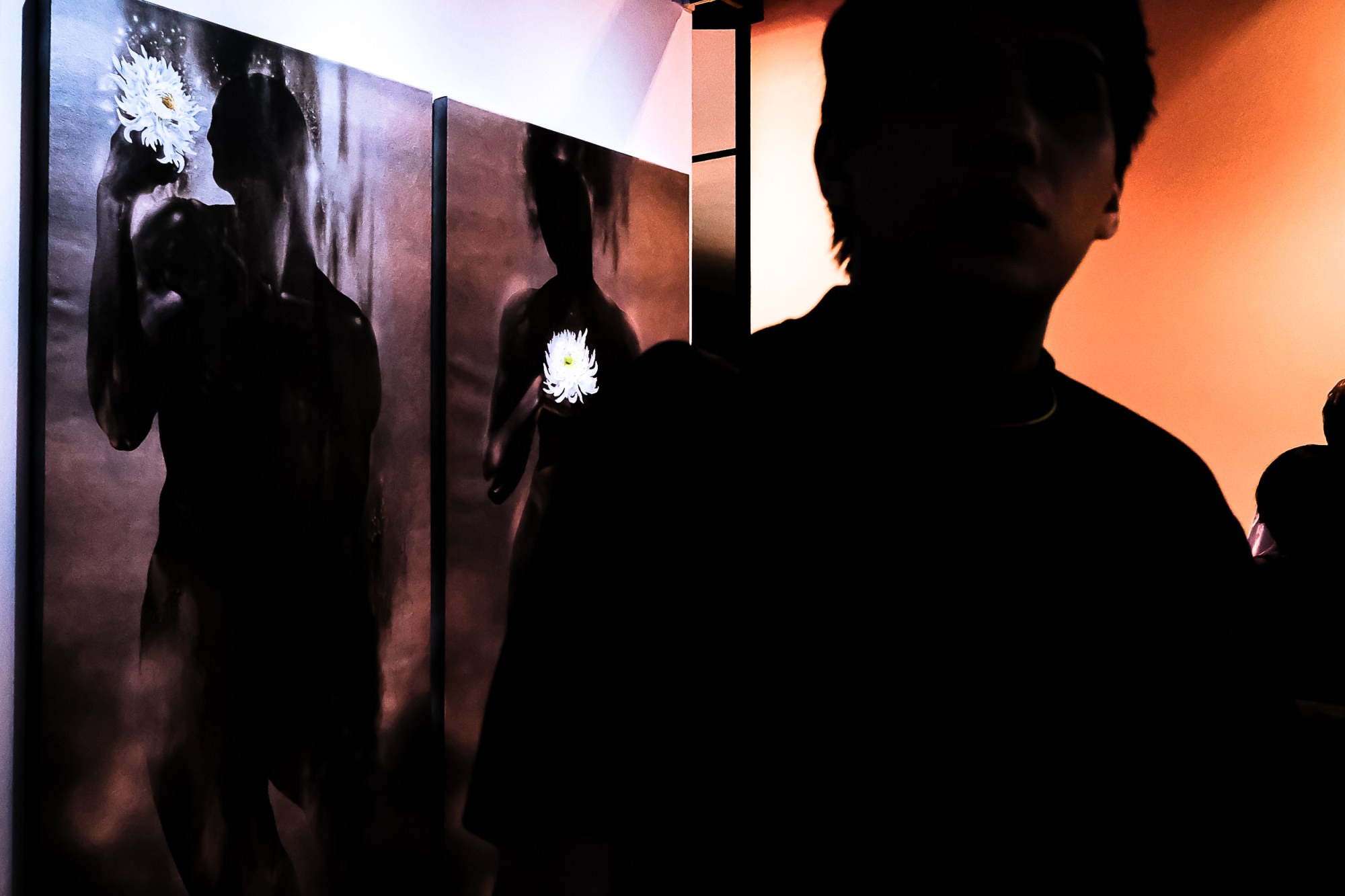
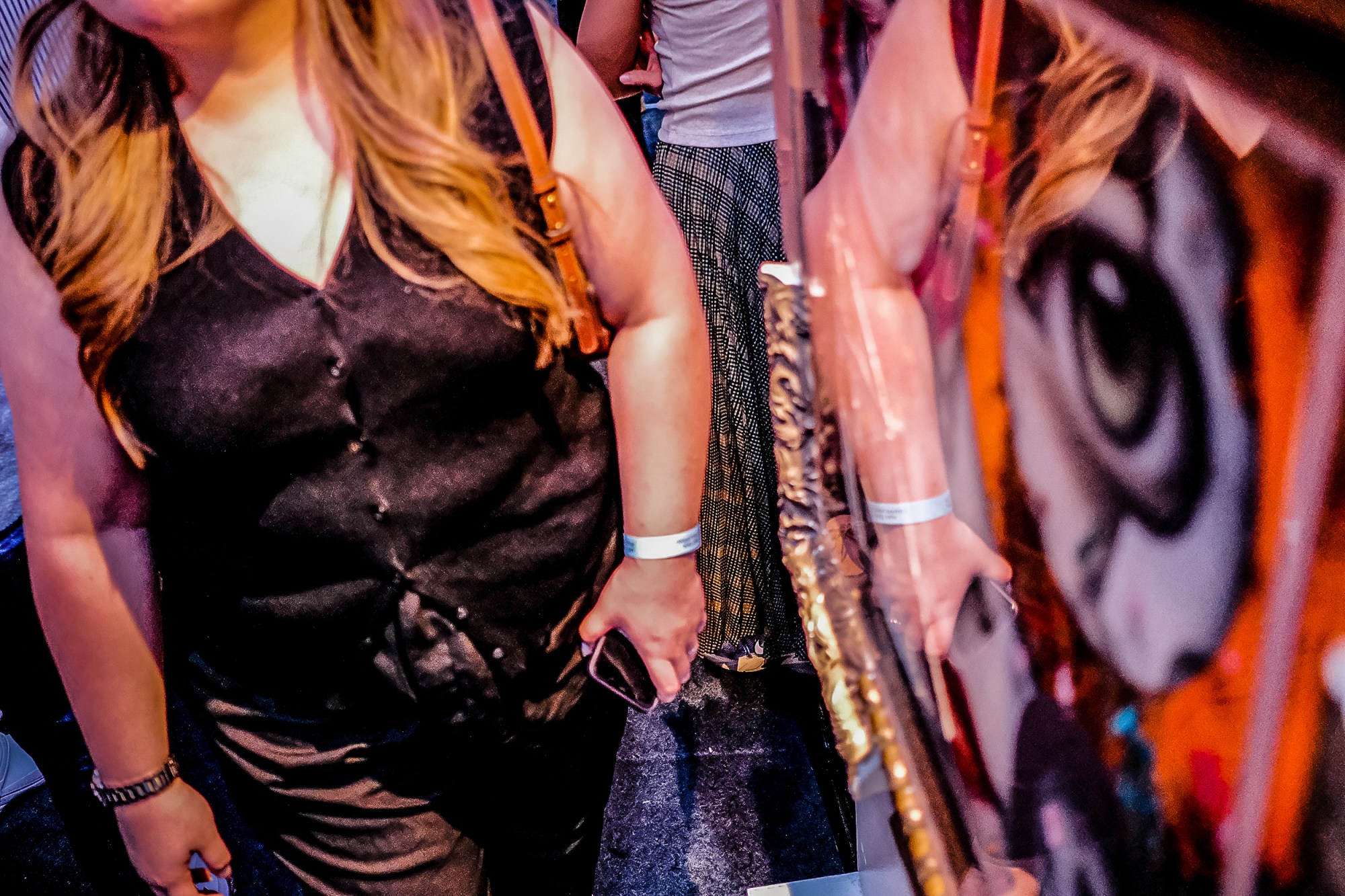
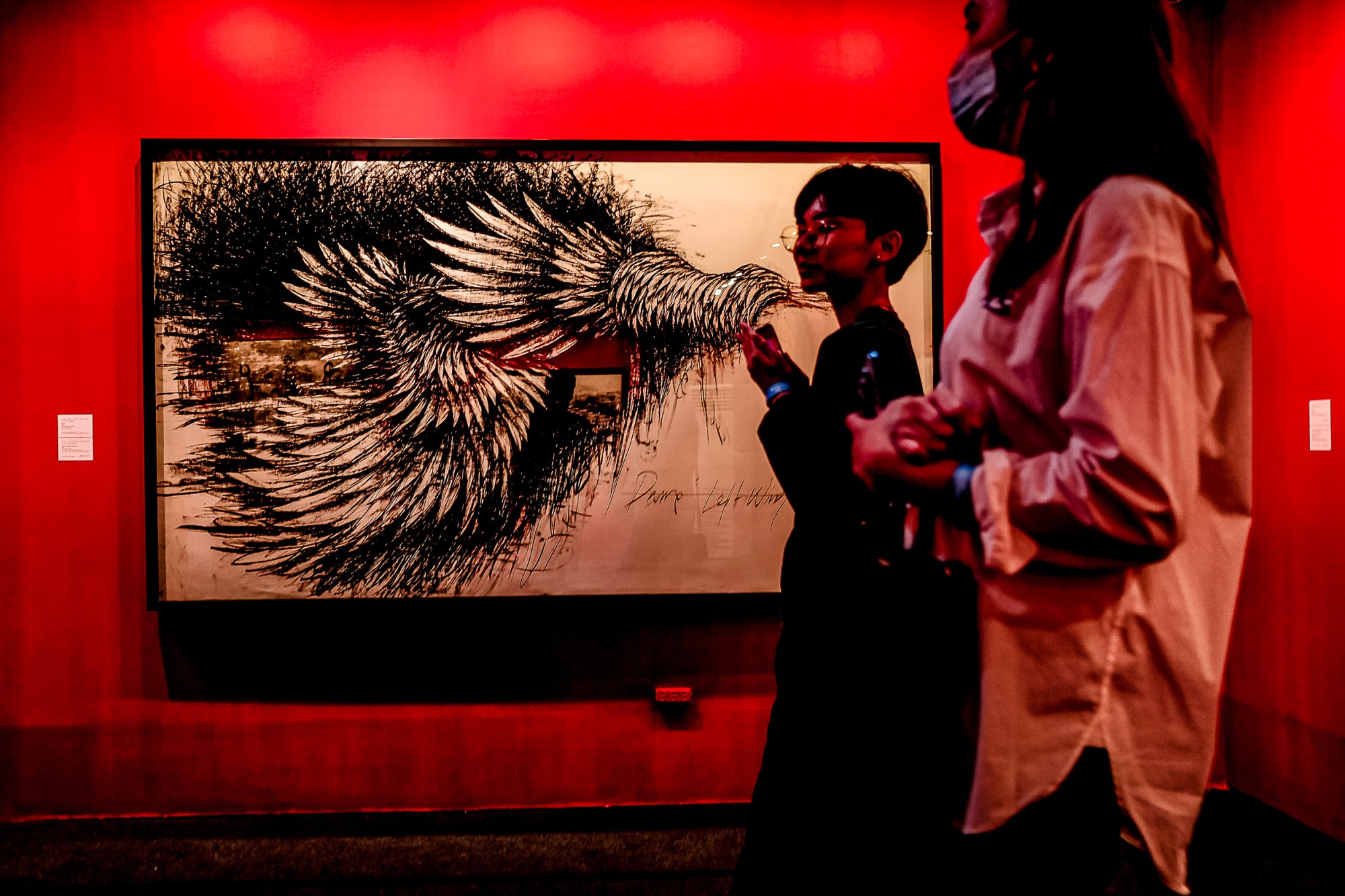
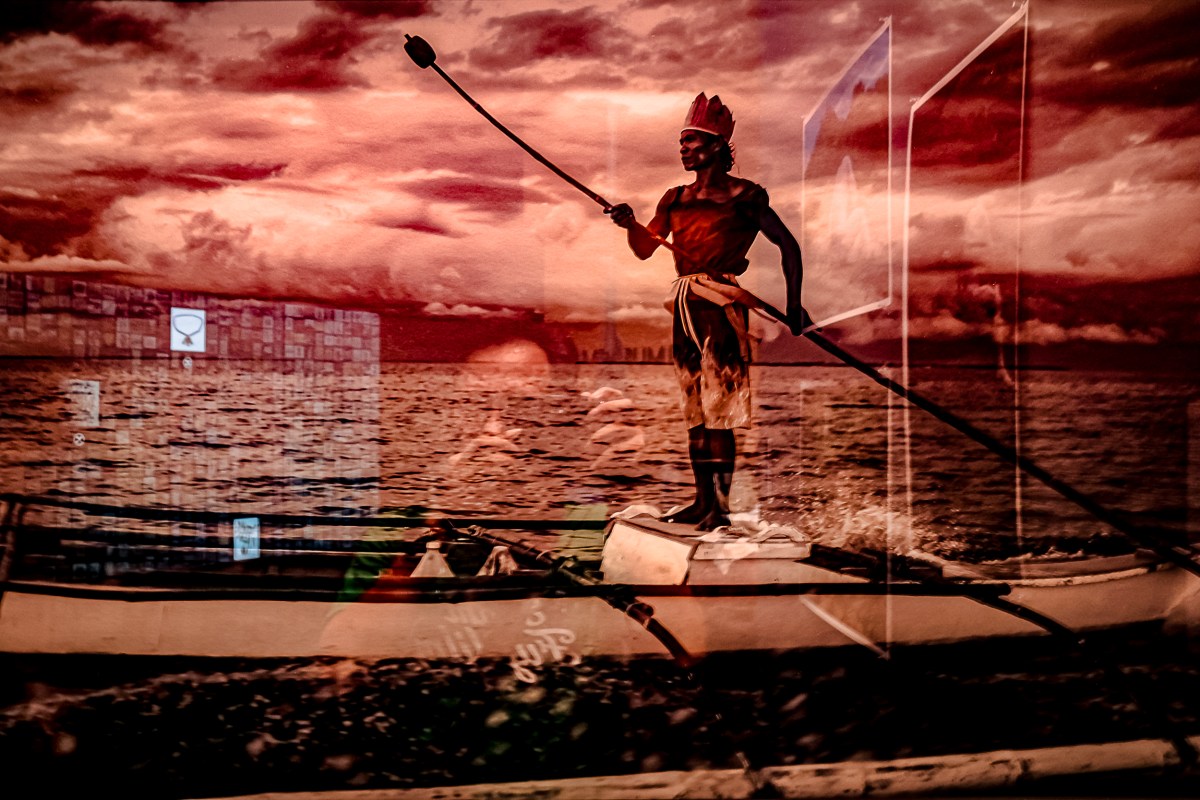
In the series Echo, his approach becomes visible. The work unfolds within an art fair and exhibition environment, which is already a layered space: people looking at art, becoming part of it, reflecting it, distorting it. Rowell steps into this loop and does something deceptively simple. He watches.
The resulting images operate in a kind of visual echo chamber. Reflections, glass surfaces, saturated colors, and overlapping planes create compositions where it is not always clear what is being looked at and who is doing the looking. A man stands in front of a painting, but the painting seems to watch back. A photographer appears inside his own frame, dissolved into light and reflection. A figure emerging from water becomes both subject and illusion, hovering somewhere between documentation and myth.
There is no aggressive manipulation here. The work relies on timing, instinct, and the ability to anticipate how elements will align for a fraction of a second. Natural light, ambient conditions, and spatial awareness do most of the heavy lifting. The complexity comes not from technical excess, but from restraint.
What elevates the series is its emotional undercurrent. Rowell describes the project as nostalgic, and that word is not used lightly. The images carry a sense of return, not to a place, but to a way of seeing.
His earlier life in drawing re-emerges here, not in form, but in attitude. The careful observation, the quiet absorption in detail, the patience to let a scene unfold.
You can feel that he is not just documenting an event. He is rediscovering something he thought he had left behind. This is also where the project avoids a common trap. Work about art spaces often becomes self-conscious or overly referential. Echo resists that. It does not try to explain art, or critique it, it stays grounded in human presence. People stand, observe, take photos, hesitate, move on. The extraordinary and the ordinary collapse into each other, which is, frankly, what most real encounters with art actually feel like.
Rowell’s images invite the viewer to slow down, to look again, to notice how easily perception shifts depending on angle, light, and timing. Rowell´s work shows engagement with the act of seeing.
Echo is less about the artworks themselves than about what happens between them. The small dislocations. The mirrored gestures. Seeing is never a one-way act.
It is always, in some form, returned.
All photos © ROWELL B. TIMOTEO
To see more of his photography visit his Instagram page.
 SPECTACULUM MAGAZINE