MARK MARDON
// Mark Mardon has spent most of his life in Portland, Oregon, building a steady professional life that, for a long time, left little room for uncertainty. He worked for decades in product development, improving and refining objects designed for other people’s needs, until that chapter ended abruptly. Photography, which in his practice is now distinctly impressionist, has been the through-line. It is not a late-life reinvention, but as a sustained activity that has gradually clarified its purpose.
Mark decided, after turning 63 and ending his professional career, to make a major move: relocating to Portugal. In his photo blog he writes about the anxiety of pulling up roots after three decades, about living in a strange in-between where the comfort of staying put competes with the relief and excitement of leaving, and where both impulses can feel true at once. That state of suspension is not incidental to his photography. It is effectively the subject.
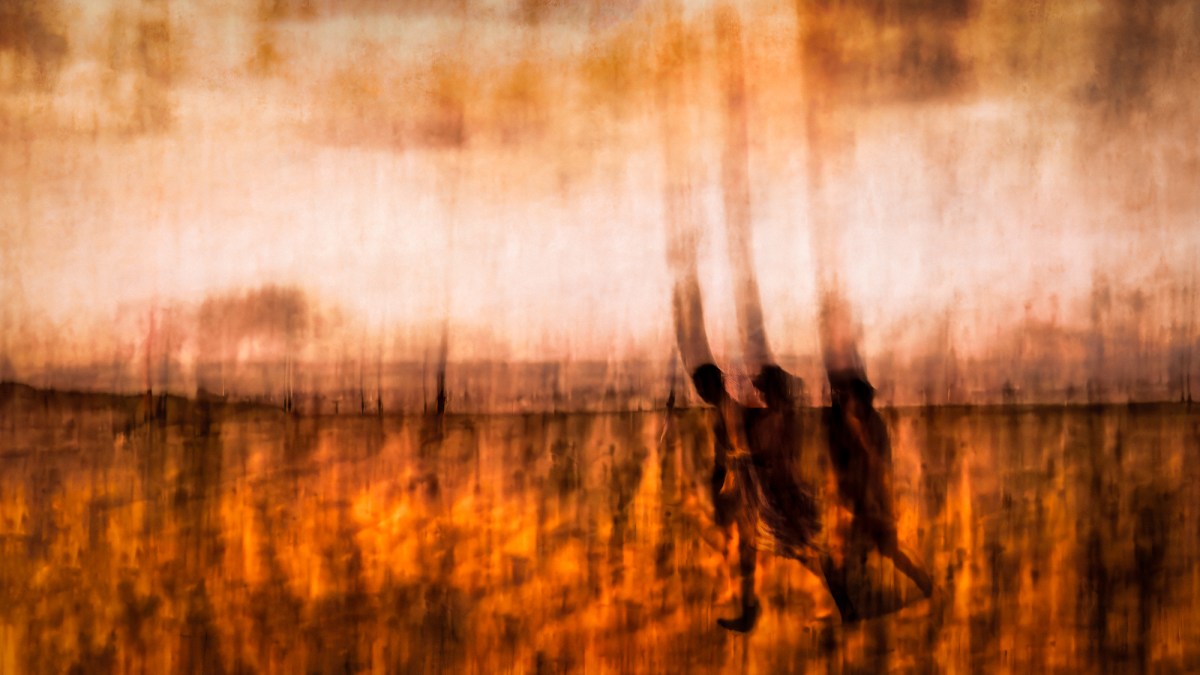
Mark describes his approach as impressionist, using intentional camera movement to tell stories about the imperfection of memory. The aim is not to reproduce events faithfully, but to visualise what memory does to experience: how it softens edges, misplaces emphasis, and turns specifics into sensations.
“If I could say it in words there would be no reason to paint.”
Edward Hopper
What draws you to the arts?
Like most people, I think, art provides a mechanism for visualizing our emotions. It speaks for us when we can’t find the words.
What did you like best about this photography project?
I’m starting to recognize something in the work that feels true. Not perfect – true. The blur, the motion, the way an image can suggest a feeling without being literal about it. The way it hits people differently. Sadness, hope, fun, transformation, transition. I’m making images that pull me out of dark places, and I want to talk about that process. I really like the notion of people seeing themselves in the work. I also enjoy the different conclusions people come to about what they’re seeing. I especially like that even I see different things depending on when I view them.
Liminal spaces
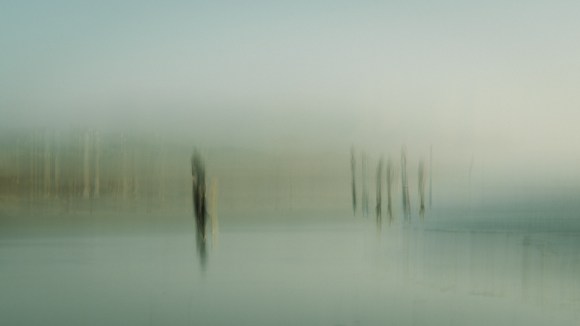
Mark is using intentional camera movement as a way to tell stories about the imperfection of memory, and in recent writing he connects this directly to his long-standing pull toward what he calls “liminal space”, the territory between the certainty of sharp, grounded focus and the uncertainty created by time, distance, and recollection. In that context, blur is not an error to be corrected but a deliberate language, chosen because it can hold ambiguity without forcing it into a single, clean interpretation. He goes as far as to describe himself as “living inside one of his own photographs” now, recognizing the terrain but still finding it difficult to navigate.
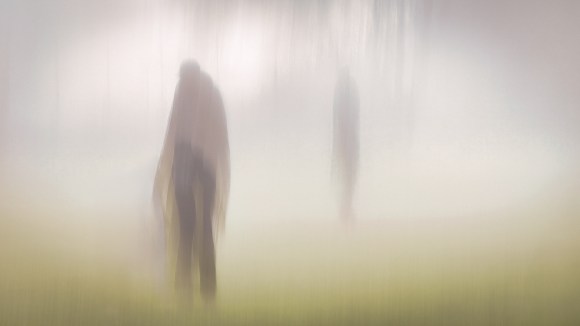
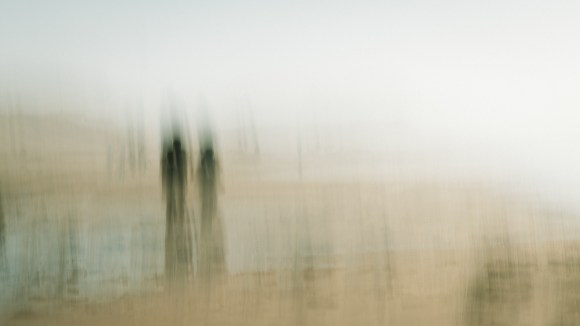
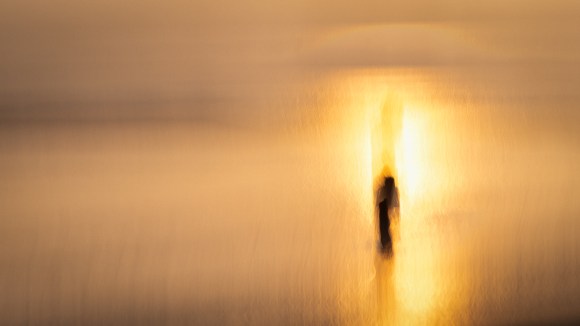
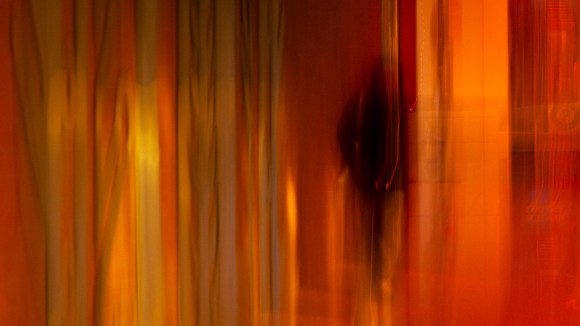
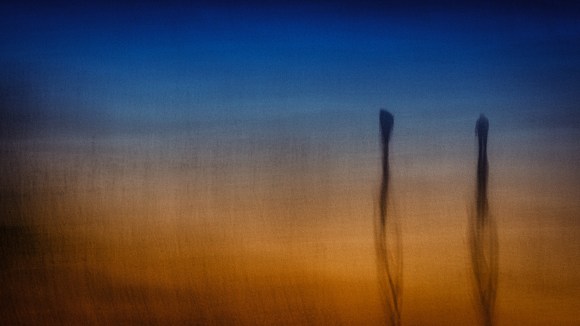
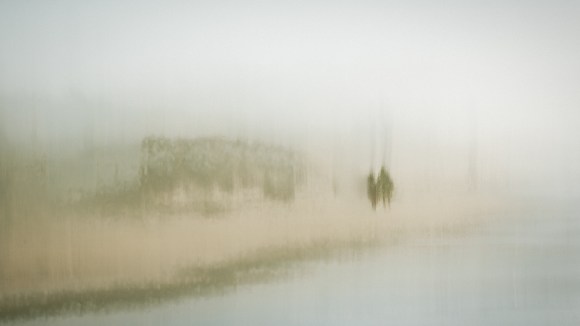
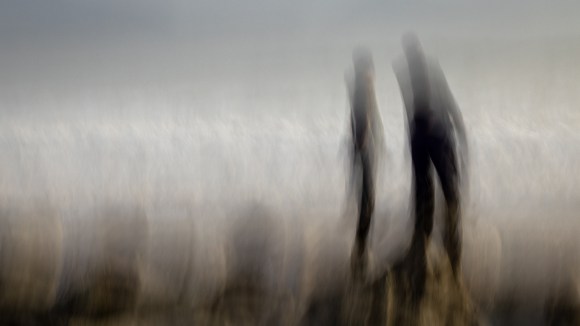
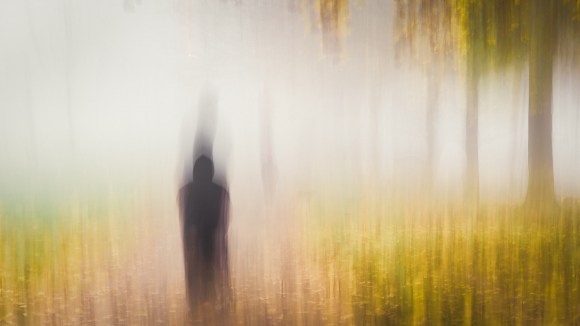
The submitted series, focused on human connection and how it changes over time, makes his philosophy visible. Multiple exposures and intentional camera movement dissolve specificity: figures become presences rather than portraits, and settings become atmospheres rather than locations. The images are structured to resist closure. Instead of delivering a fixed narrative, they leave interpretive room, inviting viewers to locate themselves inside the scene and to recognize familiar emotional patterns without being instructed exactly what they are seeing. This is consistent with Mark’s stated interest in how differently people read the work, and in how even his own perception shifts depending on when he returns to the images, as if the photographs are designed to behave the way memory behaves: unstable, revised, and intensely personal.
In Carried Away, for example, a lone figure stands in a wash of gold, almost swallowed by light, with just a darker center holding it in place. It feels intimate and slightly overwhelming, like being pulled into a memory that’s more feeling than detail. The blur isn’t there to hide anything, it’s what gives the image its charge. Left Behind, on the other hand, shifts the mood completely. Two figures appear in a pale, misty space. One feels closer and more present, the other already fading into the background, like someone drifting out of reach. Nothing is spelled out, it’s separation shown quietly, not as a big moment, but as distance that has been growing for a while and suddenly feels permanent.
Mark’s photographs sit in the uneasy space where relationships actually live over time: half remembered, half reinterpreted, shaped by longing, distance, and the stories we keep telling ourselves.
By letting details dissolve, the work makes room for something more honest than clarity. It gives viewers the freedom to recognize their own versions of closeness and separation, and to feel how those states shift without warning. The result is quietly immersive.
All photos © MARK MARDON
To see more of his photography visit his website or his Instagram page.
 SPECTACULUM MAGAZINE